5 Tips for Buying a Mattress Tape Edge Machine
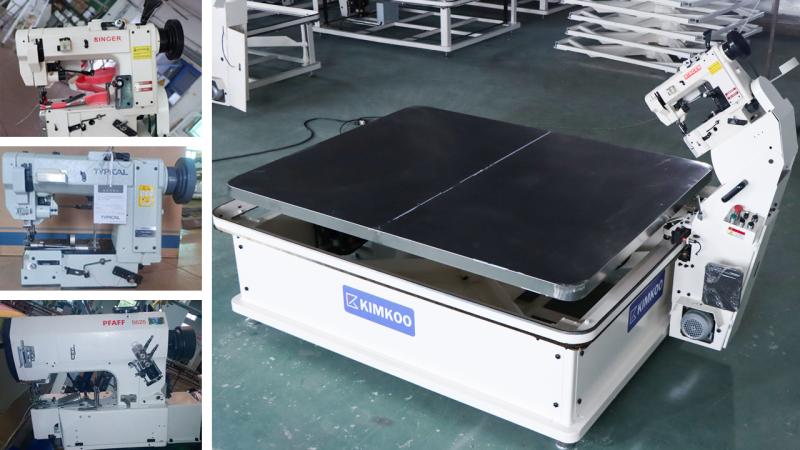
Buying the right mattress tape edge machine can make a significant difference in your mattress production efficiency, seam quality, and overall operational costs. With multiple types available—fully automatic, semi-automatic, and manual—choosing a machine without understanding your production needs can lead to unnecessary expenses or reduced efficiency. Here are five essential tips to help mattress manufacturers make an informed decision in 2026.
1. Assess Your Production Volume
Your factory size and output demand should be the first consideration. For large-scale mattress factories producing high volumes, a fully automatic tape edge machine is often the best choice. These machines offer automatic flipping, 90° corner turning, adjustable sewing head height and angle, and synchronized conveyor systems to produce 15–18 mattresses per hour with minimal labor. On the other hand, small workshops or startups with limited production may find manual or semi-automatic machines more practical, allowing precise control at a lower investment.
2. Consider Stitch Type and Sewing Head
Different tape edge machines use either chain stitch or lock stitch sewing methods. Chain stitch machines, often found in electronic drive or semi-automatic models, offer flexibility, easy rework, and high-speed production, making them ideal for versatile manufacturing needs. Lock stitch machines, typically used in manual models, provide strong, permanent seams for long-lasting mattress edges. Additionally, the choice of sewing head—Singer 300U, PFAFF 5625, TYPICAL, or SEIKO—affects durability, stitch quality, and performance on thick mattresses.
3. Evaluate Automation and Features
Automation can greatly improve productivity, but it comes at a higher cost. Fully automatic machines handle mattress flipping, corner stitching, and variable sewing speeds, requiring minimal operator involvement. Semi-automatic or electronic drive machines strike a balance between efficiency and affordability, with features like electric lift tables, adjustable sewing head angles, and variable speed control. Manual machines provide hands-on control and are suitable for smaller production lines or customized projects where flexibility is more important than speed.
4. Match Your Budget and Operational Goals
Price is a key factor. High-end fully automatic machines are suitable for established factories aiming to maximize output and minimize labor, while semi-automatic or manual machines are more affordable and ideal for startups or smaller workshops. Consider both initial investment and long-term operational costs. Sometimes, a slightly less automated machine with reliable performance can deliver better ROI for smaller operations.
5. Check After-Sales Support and Machine Reliability
Reliable machines backed by professional service ensure consistent production and minimal downtime. Look for brands that offer on-site support, spare parts availability, and technical guidance. Machines with durable construction, precise sewing head adjustments, and stable operation reduce maintenance needs and improve seam quality, ensuring your mattress products maintain a premium standard.
Choosing the right tape edge machine is about aligning machine capabilities with your production volume, budget, and product quality expectations. By carefully considering production needs, stitch type, automation level, cost, and after-sales support, mattress manufacturers can select equipment that improves efficiency, enhances seam quality, and supports business growth.
At Kimkoo, we provide professional and reliable mattress machine solutions for all types of mattress production. Our range of tape edge machines is designed to meet diverse factory requirements, helping you increase productivity, maintain consistent quality, and simplify mattress manufacturing processes.
Post Your Ad Here
Comments