Understanding MCAT Percentile Ranks and What They Mean for Your Application
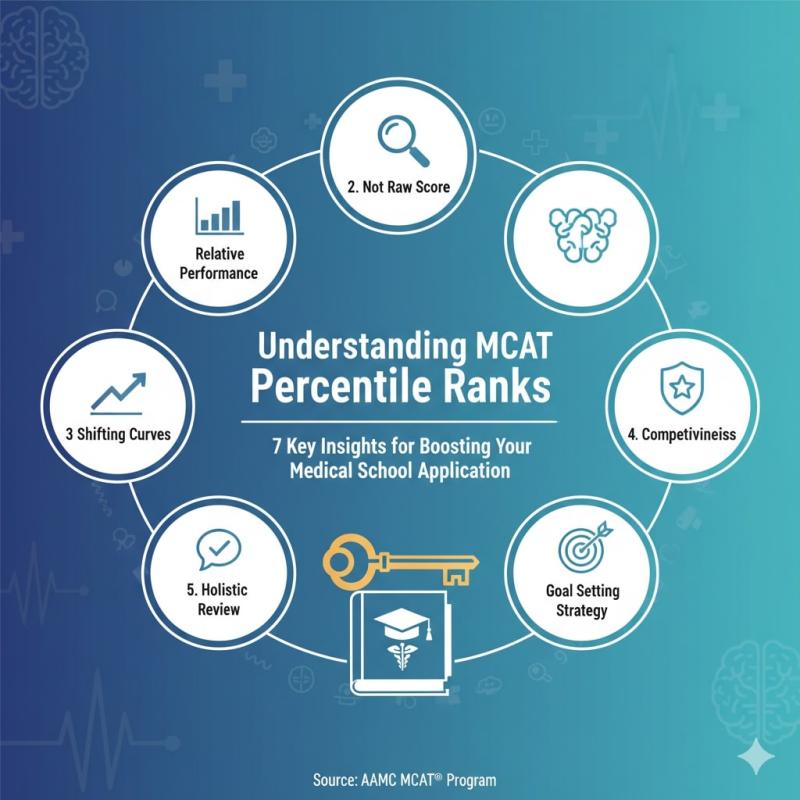
Scoring high on the MCAT can open doors to the nation’s most prestigious medical schools. Yet, understanding how MCAT percentile ranks work and how they’re interpreted by admissions committees is often confusing for students. In this guide, we’ll break down what percentile ranks truly mean, how they affect your application, and how professional MCAT tutoring NYC and the best MCAT prep classes can give you a competitive edge.
What Is the MCAT and Why It Matters for Medical School Admissions
The Purpose and Structure of the MCAT Exam
The Medical College Admission Test (MCAT) is a standardized, multiple-choice exam required by most U.S. and Canadian medical schools. It measures critical thinking, problem-solving, and knowledge of natural, behavioral, and social sciences. The MCAT includes four sections:
Chemical and Physical Foundations of Biological Systems
Critical Analysis and Reasoning Skills (CARS)
Biological and Biochemical Foundations of Living Systems
Psychological, Social, and Biological Foundations of Behavior
Each section is scored from 118 to 132, with a total score ranging from 472 to 528.
How MCAT Scores Influence Medical School Acceptance Rates
Medical schools use MCAT scores to assess applicants’ academic readiness. According to AAMC data, applicants with scores above the 90th percentile (515+) often have acceptance rates nearly double those of applicants below the 50th percentile. However, while a strong MCAT score matters, it’s one piece of a larger admissions puzzle.
Decoding MCAT Percentile Ranks
Difference Between Raw Scores, Scaled Scores, and Percentiles
Your raw score is simply the number of questions you answer correctly. That raw score is then converted into a scaled score, which adjusts for differences in test difficulty across versions. Finally, the percentile rank compares your performance to all other test-takers over the past three years.
How MCAT Percentiles Are Calculated by the AAMC
The AAMC updates percentile ranks every May using data from the most recent three years of test-takers. For example, a percentile rank of 80% means you scored better than 80% of test-takers. These rankings help medical schools compare applicants fairly, even when exam versions vary slightly in difficulty.
What a Competitive MCAT Percentile Looks Like
A strong MCAT percentile typically falls between 85th and 95th percentiles. For context:
MCAT Percentiles vs. Raw Scores: Which Matters More?
How Percentiles Reflect the Applicant Pool’s Performance
Percentiles give schools context. A 510 might be strong one year but average another, depending on overall test-taker performance. That’s why schools rely more on percentile ranks than raw scores—they indicate your relative competitiveness.
Interpreting Score Distributions for Strategic Advantage
Understanding how your percentile fits within your target schools’ accepted averages can help you apply strategically. For example, top-tier institutions like Harvard or Columbia typically admit applicants above the 95th percentile, while many excellent programs welcome those in the 80th–90th percentile range.
How MCAT Percentiles Affect Your Medical School Application
Balancing GPA, Extracurriculars, and MCAT Scores
Your MCAT percentile is vital, but admissions committees consider multiple factors—GPA, research, clinical experience, and personal statements. A balanced application with a solid MCAT percentile can outweigh a slightly lower GPA.
How Top Medical Schools Use MCAT Percentiles in Selection
Elite programs use percentile data to predict success in rigorous coursework. However, they also look for leadership, compassion, and real-world medical exposure. High percentile ranks help you pass academic thresholds, allowing your personal story to shine through.
Using MCAT Tutoring in NYC to Improve Your Percentile Rank
Benefits of One-on-One MCAT Tutoring in NYC
Choosing personalized MCAT tutoring NYC gives you access to experienced instructors who know the exam inside out. They tailor study plans to your strengths and weaknesses, ensuring focused, efficient preparation that can dramatically boost your percentile rank.
How to Choose the Best MCAT Prep Classes for Your Learning Style
The best MCAT prep classes blend expert instruction with adaptive learning technology, full-length practice exams, and data-driven performance analysis. Look for programs that offer small group sizes or one-on-one coaching, flexible schedules, and comprehensive review materials.
Strategies from Expert Tutors to Boost Your MCAT Percentile
Top tutors recommend:
Simulating real test conditions regularly
Reviewing missed questions deeply
Tracking timing and pacing
Building endurance with full-length practice exams
These strategies, coupled with mentorship from MCAT tutoring NYC, can help you climb to higher percentile ranks efficiently.
Common MCAT Percentile Myths Debunked
Myth #1: A High Percentile Guarantees Admission
While a high percentile improves your chances, it’s not a golden ticket. Medical schools seek well-rounded candidates, not just high scorers.
Myth #2: Retaking the MCAT Always Improves Your Percentile
Not always. Some retakers perform worse if they don’t address their weak areas or prepare effectively. It’s better to invest in the best MCAT prep classes and master the content before reattempting.
FAQs About MCAT Percentile Ranks
Q1. What is a good MCAT percentile for medical school?
A: A score in the 85th percentile or above (around 512–515) is considered competitive for most U.S. medical schools.
Q2. How often does AAMC update MCAT percentile ranks?
A: The AAMC updates percentiles annually in May based on the past three years of data.
Q3. Do medical schools care more about percentile or raw score?
A: Percentiles are more important because they reflect how you compare to other applicants.
Q4. Can MCAT tutoring really improve my percentile?
A: Absolutely. With targeted strategies and consistent feedback, many students raise their scores by 10+ percentile points.
Q5. Are online MCAT prep classes as effective as in-person ones?
A: Yes, as long as they provide interactive sessions, personalized feedback, and realistic test simulations.
Q6. How long should I prepare for the MCAT?
A: Most students study for 3–6 months, depending on their familiarity with the content and target score.
Conclusion: Making Your MCAT Percentile Work for You
Understanding MCAT percentile ranks empowers you to plan smarter, apply strategically, and maximize your medical school prospects. With guidance from MCAT tutoring NYC and enrollment in the best MCAT prep classes, you can turn your percentile rank into a stepping stone toward your dream medical career.
Post Your Ad Here
Comments