The Global Financial Reset My New Ebook
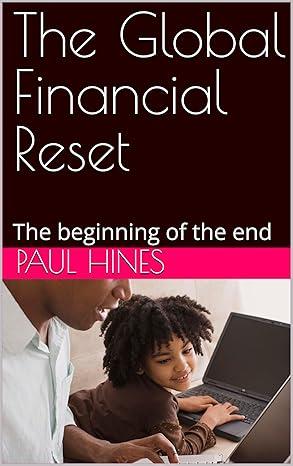
In The Global Financial Reset, Paul Hines provides a broad perspective on the international monetary system as it exists today and posits that we are on the cusp of a paradigm shift. He delves into the reasons behind this shift, including decades of policy decisions, the accumulation of debt and a world that has become increasingly interconnected and interdependent. Hines argues that these developments have created vulnerabilities that will be difficult for many governments and financial institutions to manage. He suggests that the period following the 2008 financial crisis is just the beginning of a much larger and more fundamental “reset” of the financial architecture on a global level.
Central to Hines’s thesis is the idea that the existing model of international finance, which is anchored in major currencies and based on the notion of sovereign debt, large exposures and central banks stepping in to “put out the fires,” is under stress. He provides a deeper analysis of what he believes to be the triggers of this stress, including unsustainable sovereign debt burdens, the potential de-anchoring of inflation expectations, the digitisation of money and a changing geopolitical order. Hines contends that these forces are coalescing to create a new paradigm in which some of the basic assumptions about asset valuations, risk-management and the relative hierarchy of currencies will no longer hold true.
Hines not only identifies the problems but also offers potential scenarios for what the “reset” could look like. These range from alternative currency regimes to a greater reliance on digital central‐bank money, a redistribution of power among global financial centres and new rules for sovereign borrowing. For readers, the key message is both cautionary and prescriptive: the first step in preparing for the future is to acknowledge that the system is changing.
The Global Financial Reset is a book for investors, policy-watchers and anyone who is interested in the large-scale shifts that are taking place in the world economy. By framing the current period of turmoil not just as “another cycle” but as a more fundamental structural transformation, Hines challenges us to ask: What happens when the old financial rules no longer apply—and how do we navigate the new ones?
https://www.amazon.com/dp/B0G1JWWZ47

Post Your Ad Here
Comments (1)
Paul Hines16
Ai Marketing For Beginners
Thanks Sophie for the love, I really appreciate it.