Tips for Office Space Optimization

Office space optimization today is not just a design trend but a strategic tool for businesses. Efficient use of every square meter directly impacts productivity, employee engagement, and even financial performance. Instead of renting more space, it’s smarter to use what you already have — making your office flexible, comfortable, and tech-driven. Below are five proven strategies to transform a standard workspace into a modern, adaptive environment.
1. Start with Data: Assess Real Space Utilization
Don’t build plans on assumptions — start with facts.
Conduct employee surveys to identify where quiet zones are needed and which areas remain underused.
Analyze meeting room booking statistics to see overloaded and empty spaces.
Use access system data to learn which areas are popular and on which days.
Compare this data with rental and maintenance costs to see which spaces actually bring value.
This analysis turns subjective impressions into actionable management insights — helping you decide which zones to expand and which to repurpose.
2. Create Zones for Different Work Styles
An office should support multiple work modes — from focused work to collaboration.
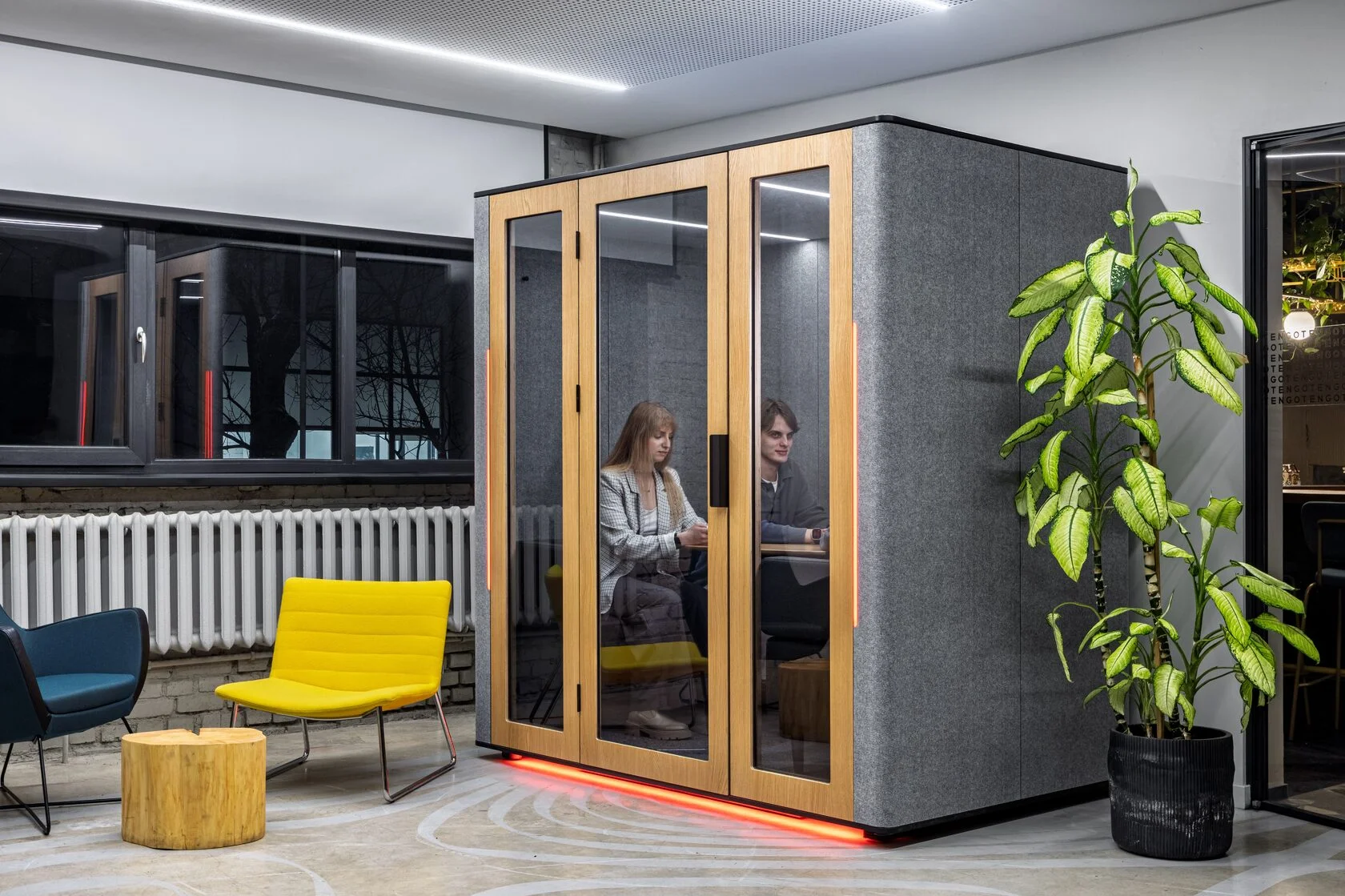
Quiet zones. Use soundproof office pods to create private spaces for deep work.
Collaboration spaces. Add team tables, small meeting rooms, or cabins for 2–4 people to boost idea exchange, for example:
One-Person Office Pod
2-Person Phone Booth
4-Person Office PodLounge zones. Sofas, chairs, and high tables — for short meetings and informal communication.
Balance open and private. Ensure employees can easily switch between open and private work formats.
Such zoning makes the office dynamic and adaptive, improving both comfort and productivity.
3. Implement Flexible, Modular Solutions
A modern office should evolve along with your company.
Use mobile furniture and partitions on wheels.
Add modular constructions that don’t require renovations.
Install soundproof office booths — an “office within an office” for calls and meetings.
Plan power and internet points in multiple locations so employees can easily change their workspace.
The result: minimal cost, maximum flexibility. The space adapts to your business needs, not the other way around.
4. Rethink Unused Areas
Every office has “dead” zones — they can become functional.
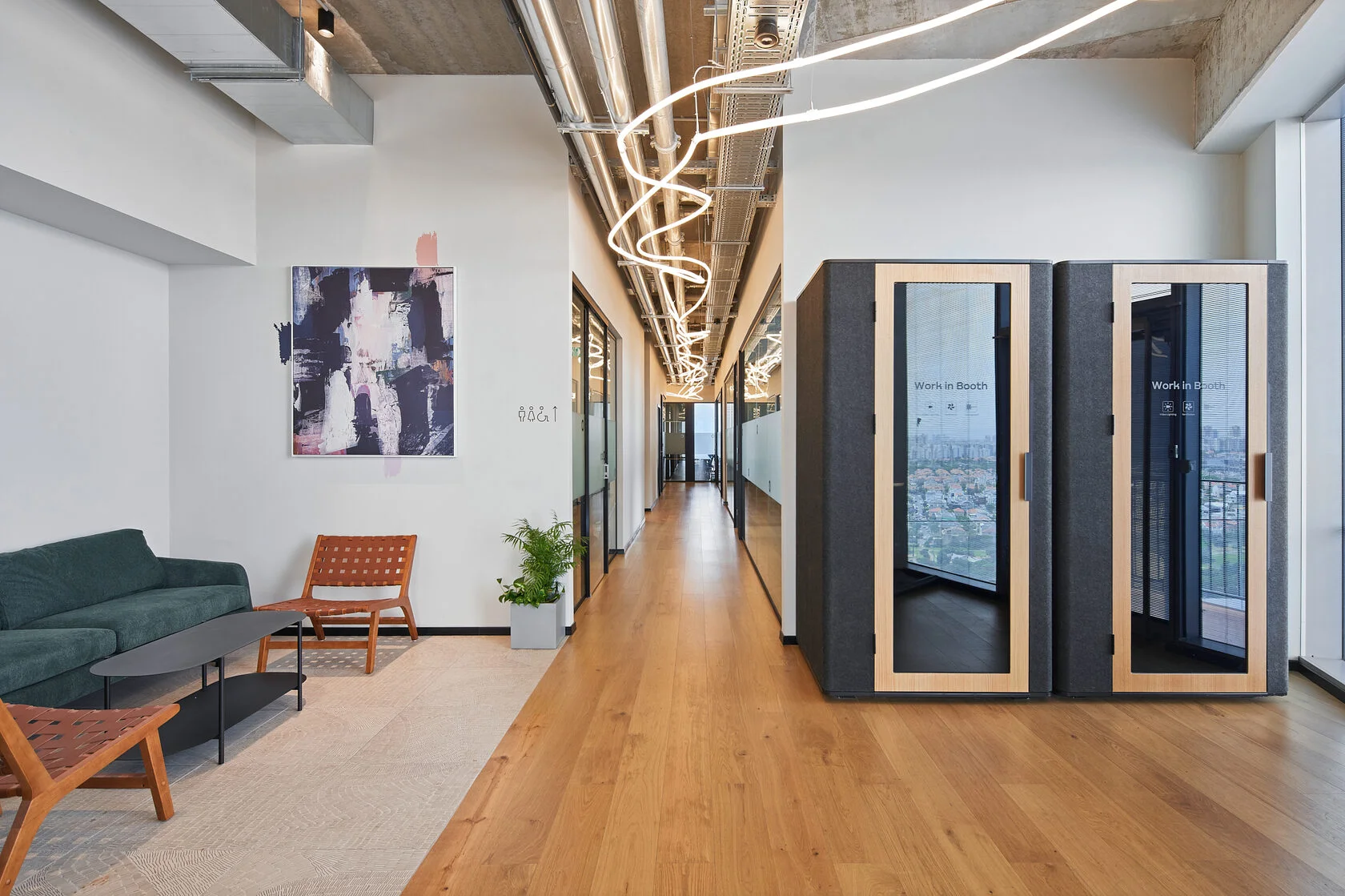
Install mini phone booths in corners and hallways.
Turn wide corridors into cozy lounge zones.
Set up solo workstations by windows with acoustic panels.
Split a large meeting room into two WorkBooth cabins — you’ll get twice as many productive spaces.
This approach reduces rental costs and increases the efficiency of every square meter.
5. Integrate Smart Technologies
Technology makes your office truly manageable.
Booking systems help plan usage and reduce conflicts.
Smart lighting and ventilation reduce costs and improve comfort.
Occupancy dashboards show which zones are really used.
Integration with Microsoft Teams and Outlook synchronizes the workspace with business processes.
A smart office doesn’t just function — it analyzes itself and provides insights for data-driven decisions.
Conclusion: Smart Solutions Over Chaos
Optimizing an office isn’t just rearranging furniture. It’s a shift toward a flexible, intelligent, and well-designed environment where every zone has a clear purpose.
Modern soundproof office booths are key to this transformation — offering quiet, privacy, and comfort, integrating with corporate systems, and helping companies save money without sacrificing efficiency.
Post Your Ad Here