How Train Ambulances from Patna Make Rural Healthcare Accessible
In rural Bihar, reaching a hospital with advanced medical
care often feels like a race against time. Poor road conditions, limited ICU
facilities, and long distances to metro hospitals make emergency transfers a
nightmare for families. Many patients lose precious hours — and sometimes their
lives — simply because they can’t get timely treatment.
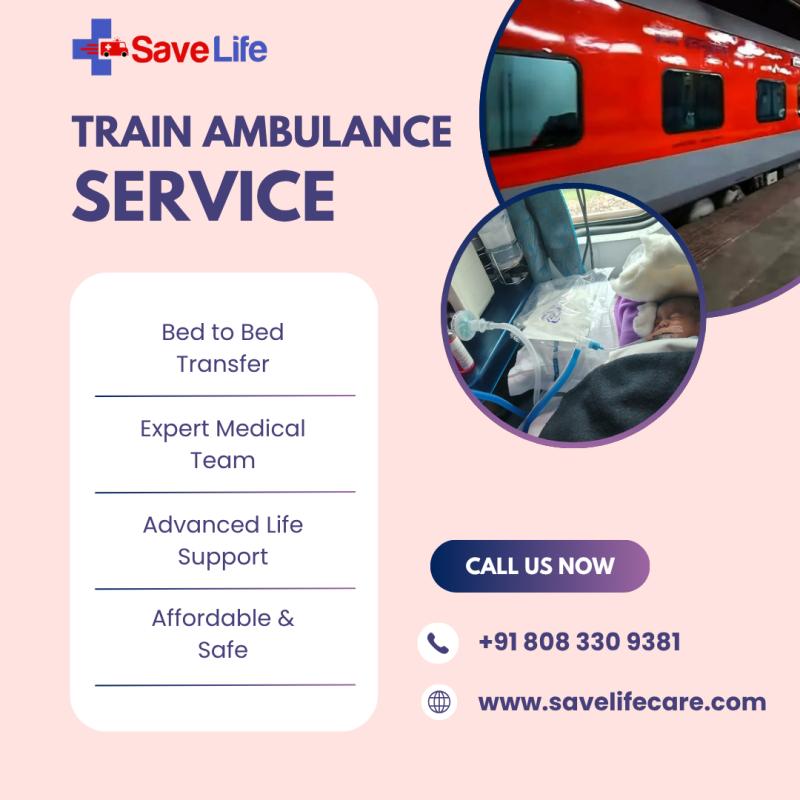
That’s where Train Ambulance Service in Patna is changing the game. Acting as a lifeline for patients from remote areas, these services are ensuring that distance no longer decides a patient’s fate.
The Harsh Reality of Rural Healthcare in Bihar
Despite significant progress, Bihar’s rural healthcare
system still struggles with limited resources. Most district hospitals lack
advanced ICUs, ventilators, or specialized doctors. When a patient in Gaya,
Siwan, or Darbhanga needs critical care, the only option is to transfer them to
super-specialty hospitals in Delhi, Kolkata, or Mumbai.
Road ambulances often take more than 15–20 hours to cover
these distances, while air ambulances are simply out of reach for most families
due to high costs. This gap between affordability and accessibility left rural
Bihar vulnerable — until ICU Train Ambulance from Patna emerged as the perfect
solution.
What Makes a Train Ambulance Different?
A Train Ambulance is not just a coach with medical staff —
it’s literally an ICU on wheels. These specially equipped compartments are
designed to handle critical patients during long-distance travel.
Each coach includes:
- Advanced ventilator support, oxygen cylinders, and cardiac monitors.
- A dedicated team of doctors, paramedics, and nurses on board.
- Continuous monitoring of vitals throughout the journey.
- Bed-to-bed service — from the patient’s home or local hospital to the destination hospital.
Companies like Save Life Train Ambulance in Patna coordinate
every step — from railway booking to medical supervision — ensuring a safe,
seamless, and stress-free journey.
Connecting Rural Areas to Metro Hospitals
Here’s how it works: when a patient in rural Bihar requires
immediate transfer, the Save Life team arranges a train ambulance from Patna
Junction. The patient is first stabilized by a local medical team, then brought
to Patna via road ambulance. From there, the train ambulance — fully equipped
and staffed — takes the patient directly to Delhi, Mumbai, or Kolkata.
This setup has helped patients from remote towns like
Begusarai, Purnea, Bhagalpur, and Samastipur reach advanced hospitals in just
hours, receiving care comparable to air transfers — but at less than half the
cost.
Real Impact: Affordable and Accessible Medical Transport
One of the biggest advantages of rail ambulance service in
Patna is its affordability. While an air ambulance can cost anywhere between
Rs. 5 to Rs. 8 lakhs for a Patna–Delhi transfer, a train ambulance costs only
around Rs. 70,000 to Rs. 1.5 lakh, depending on medical requirements.
Example: Recently, a patient suffering from liver failure in
Muzaffarpur was transferred to AIIMS Delhi through Save Life’s train ambulance.
The patient received continuous oxygen and ICU support during the 14-hour
journey — and reached safely for a successful transplant.
Practical Tips for Families Considering Train Ambulance from Patna
If you or your family ever face a medical emergency
requiring long-distance transfer, here are a few practical tips to make the
process smoother:
- Call Early: Contact the train ambulance provider as soon as the doctor recommends transfer. Early coordination ensures timely train reservation and setup.
- Keep Documents Ready: Always have the patient’s ID proof, recent medical reports, and doctor’s referral letter ready. These are needed for railway and medical approvals.
- Share Full Details: Inform the ambulance team about the patient’s condition — oxygen level, ventilator requirement, or medication. This helps them prepare suitable equipment.
- Accompany with Caregiver: One or two family members can travel along, but they should follow medical staff instructions strictly.
- Confirm Bed at Destination Hospital: Before departure, book an ICU bed at the receiving hospital to avoid last-minute delays.
These small steps can save precious time — and lives.
How Train Ambulances Are Strengthening Rural Healthcare
Beyond emergency transport, train ambulances are reshaping
the healthcare ecosystem in Bihar. By connecting tier-3 towns to metro
hospitals, they’re creating a chain of reliable medical accessibility.
Reducing delays in patient transfers.
Lowering treatment costs by providing affordable transport.
Boosting rural healthcare confidence, as families now know
help is reachable.
Patna has now become the central hub for train ambulance
operations, making it easier to coordinate patient movements from across Bihar
and Jharkhand.
How to Book Train Ambulance Service in Patna
Booking a train ambulance from Patna is simple and fast.
- Call Save Life’s 24×7 helpline at +91-8083309381.
- Provide patient details and destination city.
- Their team arranges railway approvals, medical staff, and equipment.
- Pickup from home or local hospital is managed seamlessly.
With one call, the entire medical transfer process — from
rural Bihar to top hospitals in Delhi or Mumbai — is taken care of.
Conclusion: A Journey of Hope and Healing
The rise of Train Ambulance Service in Patna is transforming
rural healthcare. What was once a dream — accessing metro-level treatment from
small towns — is now a reality. With cost-effective solutions, skilled medical
staff, and seamless coordination, train ambulances are giving Bihar’s rural
population a fighting chance at life.
For emergency train ambulance support from Patna, call Save
Life today at +91-8083309381 — because every second, and every mile, matters
when it comes to saving lives.
Post Your Ad Here
Comments