The Untold Challenges of Moving Critical Patients Across States
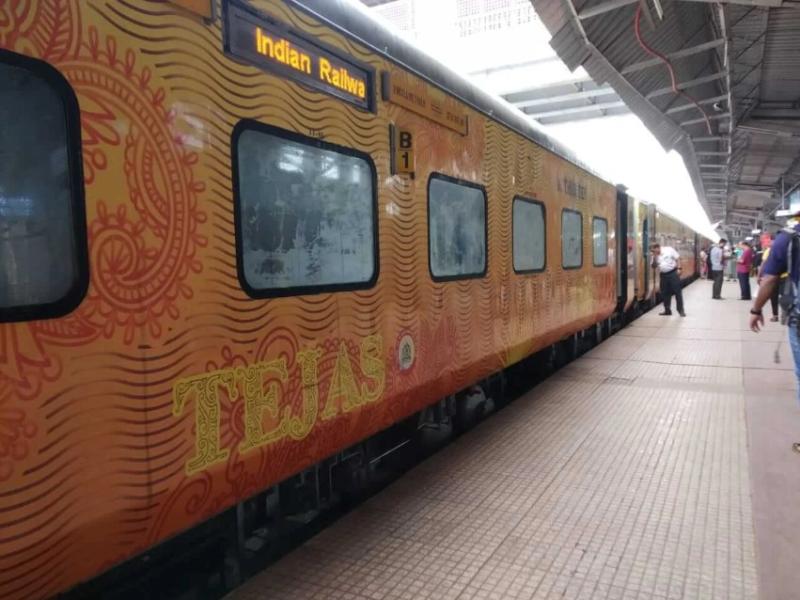
When someone’s life hangs by a thread, every second becomes
priceless.
Now imagine that person is your loved one — lying
unconscious on a ventilator — and the doctors tell you they need to be shifted
from Patna to Delhi immediately for advanced treatment. The clock starts
ticking, and suddenly, what should be a simple journey turns into a race
against time, paperwork, and uncertainty.
Moving a critically ill patient across states in India is
not just about transportation. It’s about orchestrating a delicate medical
operation on wheels — or in this case, on rails or in the sky. Behind every
successful patient transfer lies a story of coordination, courage, and
compassion that few outside the industry ever hear.
Why Inter-State Patient Transfers Are Rising
Over the last few years, India has witnessed a sharp rise in
patients traveling to bigger cities for specialized medical care. Hospitals in
Delhi, Mumbai, Chennai, and Hyderabad have world-class infrastructure, but
patients from smaller towns often have limited access to such facilities.
Families now make tough decisions every day — to move their
loved ones hundreds of kilometers in search of hope. Post-pandemic awareness,
growing trust in advanced treatments, and the expansion of medical connectivity
have all contributed to this trend.
But what seems like a straightforward decision — “let’s take
him to Delhi” — is, in reality, an enormous undertaking that requires precise
coordination, specialized equipment, and round-the-clock monitoring.
The Ground Realities: What Really Happens Behind the Scenes
1. The Logistical Maze
The first hurdle is logistics. Coordinating an inter-state
transfer means aligning multiple systems — hospital authorities, ambulance
services, railway or aviation departments, and the patient’s family.
In a train ambulance service in Patna transfer, tickets must be confirmed,
medical coaches must be equipped, and medical teams need to be ready at both
departure and destination points. Timing becomes everything. A delay of even 30
minutes can mean the difference between stability and emergency deterioration.
2. The Medical Challenge
Every patient is different — some are on ventilator support,
others require continuous medication or cardiac monitoring. Inside the
ambulance, the setup must mirror an ICU. Portable ventilators, multi-parameter
monitors, infusion pumps, oxygen cylinders — everything must function
flawlessly even when the vehicle is in motion.
If the patient’s condition worsens mid-journey, the onboard
doctor and nurse must stabilize them instantly. There’s no scope for panic,
only precision.
3. Administrative Barriers
Hospital discharge forms, transfer letters, consent
paperwork, and inter-state permissions often take hours to prepare. In
emergencies, families have to run between departments, trying to get signatures
and clearances, while also dealing with emotional exhaustion.
4. Emotional Turmoil
And then there’s the human side.
A mother watching her child being moved into an ambulance, a
father clinging to hope as the train departs — these are moments filled with
both fear and faith. Families often spend the entire journey praying silently,
waiting for updates from the onboard medical team.
The Backbone of Every Transfer: The Medical Team
Behind every successful patient transfer stands an invisible
army of professionals — doctors, nurses, EMTs (Emergency Medical Technicians),
and logistics coordinators.
Their job doesn’t end when the ambulance starts moving. They
monitor vital signs continuously, adjust oxygen flow, administer medications,
and maintain real-time communication with both hospitals. Their calm under
pressure is often what keeps the patient alive.
These professionals work through sleepless nights,
unpredictable weather, and logistical challenges — yet they rarely get
recognized. They are the unsung heroes of India’s evolving medical emergency
system.
Why Road Ambulances Aren’t Always Enough
For long-distance transfers — especially beyond 200–300
kilometers — road ambulances often fall short.
Traffic congestion, unpredictable road conditions, and
extended travel time make it risky for critical patients. Continuous
vibrations, limited oxygen storage, and lack of rest opportunities for medical
staff can further complicate things.
That’s where train and air ambulances come into play —
offering safer, faster, and more stable environments for inter-state medical
travel.
How Train and Air Ambulances Solve These Problems
A train ambulance is essentially a moving ICU on rails. A
reserved compartment is transformed into a full-fledged intensive care unit,
equipped with ventilators, monitors, oxygen support, emergency drugs, and
trained staff.
Advantages:
- Stable environment (no road bumps or turbulence)
- Cost-effective compared to air ambulances
- Ideal for patients who need care but not extreme urgency
On the other hand, air ambulances are used for extremely
critical patients or time-sensitive emergencies. They minimize travel time
drastically — what would take 20 hours by train can be completed in just 2–3
hours by air.
Both modes of transport share one goal: to provide
uninterrupted care during the journey. In many cases, this continuous
monitoring becomes the bridge between life and loss.
The Human Side: What Families Go Through
While medical teams focus on vitals and procedures, families
face a different kind of battle — emotional and financial.
They’re dealing with uncertainty, anxiety, and hope, all at
once.
One father once said during a transfer from Patna to Delhi,
“I don’t know what will happen when we reach, but at least we’re doing
something. Staying still was not an option.”
This sentiment captures what most families feel — they cling
to action as a form of hope. And for many, seeing the professionalism of the
medical team during the journey brings a sense of comfort, even amidst chaos.
How Save Life Care Makes These Transfers Possible
At Save Life Care, we’ve handled hundreds of inter-state
patient transfers — by train, air, and road — across India.
Our team understands that moving a patient isn’t just about
logistics; it’s about empathy, coordination, and timing.
We provide:
- Fully equipped ICU train and air ambulances
- Experienced doctors, nurses, and EMTs onboard
- End-to-end coordination with hospitals and authorities
- 24/7 support so families can focus on their loved ones, not paperwork
- Affordable pricing without compromising safety or quality
Every transfer we handle is a mission to save a life — and
behind each success is a team that refuses to give up, no matter how
challenging the journey.
If you ever need to transfer a critical patient across
states, call Save Life Care at +91-8083309381 or visit www.savelifecare.com
Conclusion: Every Journey Is a Story of Hope
Moving a critical patient from one state to another isn’t
just a medical process — it’s a story of resilience, teamwork, and human
spirit.
From the doctor who stays awake through the night to the
mother who refuses to lose hope, each person plays a part in turning fear into
faith.
As India’s emergency medical infrastructure continues to
evolve, one thing remains unchanged — the power of compassion. Because in the
end, saving a life isn’t just about reaching a destination; it’s about the
journey itself.
Post Your Ad Here
Comments