The Science of Suspension: What Every Mountain Bike Rider Should Know
You don’t need to be an engineer or mechanical whiz to appreciate what suspension does—it’s magic under the skin of your bike. But having a solid grip on how it works (and why it matters) can make all the difference when you're railing berms, popping over roots, or trying not to get thrown from your seat on rock gardens. In this post, we’ll roll deep into the world of suspension, comparing front-only systems vs full suspension, and showing how each affects control, comfort, and performance depending on your terrain. (For extra reading on suspension theory, check out this deep dive by this overview in Forbes.)
Whether you're eyeing something from BikesDirect.com’s mountain bike lineup or tinkering with upgrade ideas, consider this your science-backed playbook to smarter riding.
What Suspension Actually Does
At its core, suspension is about energy management. When your wheel hits a bump, rocks, roots, or a drop, that impact wants to send energy upward—through the frame, the handlebars, your arms, and ultimately into your body. A suspension system absorbs and dissipates a portion of that energy, so the tires stay in contact with the ground, keeping you stable and reducing fatigue.
Technically speaking, suspension systems include a spring element (coil or air) that compresses under load, and a damper (oil or hydraulic) that controls how quickly things rebound. Without damping, a spring would oscillate violently (bounce you off the trail). The balance between spring and damping determines how “plush” or “firm” your ride feels.
In practice, a smartly tuned suspension system lets the wheel follow trail undulations, smoothing impacts, preserving traction, and giving you confidence in sketchy sections.
Front Suspension (Hardtail Fork): Simplicity Meets Efficiency
When most people say “mountain bike,” they at least expect a suspension fork up front. That front-only setup is what you get with a hardtail design.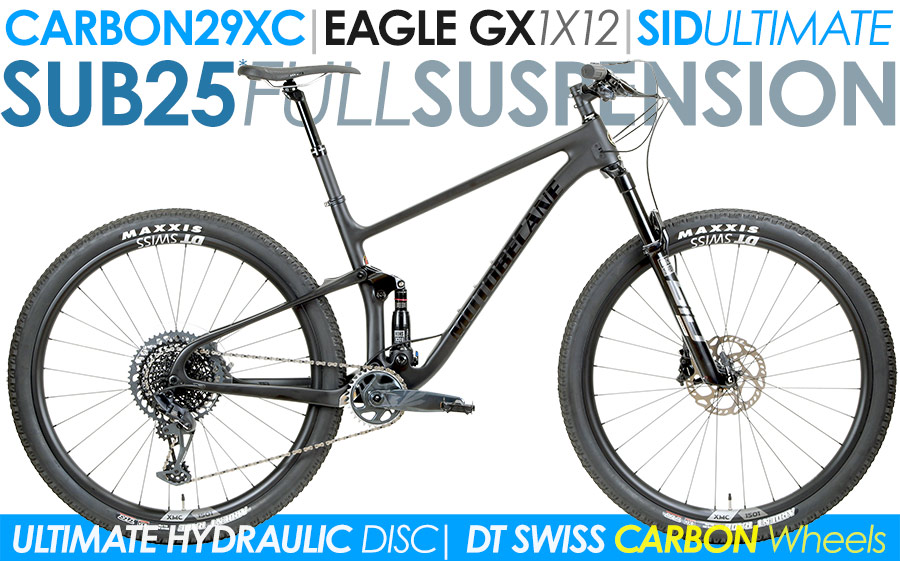
How the Fork Works
Your fork consists of two telescoping legs (stanchions sliding into lowers), with an internal air or coil spring and damping cartridges. When you hit a bump, the fork compresses; on rebound, the damper slows how fast it returns. The amount it can move is called travel—for trail bikes, 100–120 mm is common.
As engineers explain, the stanchion diameter is critical: wider stanchions resist flex better, giving more precise steering under load. Also, many good forks let you lock out or partially lock the suspension for climbing or smooth terrain.
Benefits & Trade-Offs
● Pros:
o Lighter and mechanically simpler → less maintenance, fewer parts to go wrong.
o More efficient for climbs: no rear shock “bob.”
o Lower cost relative to full suspension bikes.
o Crisp steering and responsiveness on smoother trails.
● Cons:
o Less comfort on very rough terrain—big hits go straight to your arms.
o Less rear-wheel traction over roots and rocks, especially in technical sections.
o Reduced confidence when you want to push hard on choppy downhills.
So if your riding tends toward cross-country loops, fire roads, non-technical singletrack—hardtails still shine.
Full Suspension: Double the Absorbers, Double the Comfort
A full suspension bike adds a rear shock to absorb impacts from the rear triangle. That means both wheels can actively respond to terrain, reducing the jarring forces felt by your body and maximizing grip when things get messy.
Rear Shock & Linkage Dynamics
The rear shock (either air or coil) connects through a linkage system (single pivot, four-bar, virtual pivot, etc.) that determines how the suspension compresses throughout the stroke (its leverage ratio curve). Good designs keep it supple early on for small bumps, but firm up mid-stroke to resist pedaling bob, and then control bottom-out on big hits.
Shock damping is tuned in multiple dimensions—low-speed compression, high-speed compression, rebound, sometimes platform or lock-out modes. This allows you to adjust how the bike reacts to slow inputs (like leaning into a berm) vs. fast impacts (rock strikes).
How Full Suspension Enhances Control & Comfort
● Traction gains: Because both wheels can move independently, they stay in better contact with uneven ground, letting you power through sections you’d otherwise scrub speed off.
● Reduced rider fatigue: Impacts don’t slam into your palms, arms, or spine as much, letting you ride longer and more aggressively.
● Confidence on the rough stuff: You can charge through whoops, rocks, and drop-offs without feeling totally out of control.
Of course, those benefits come with caveats:
● Weight & complexity: More hardware, more pivots, more maintenance.
● Efficiency losses: Poorly designed frames may bob under pedaling, though modern systems often mitigate that.
● Cost: You're paying for extra parts, tuning options, and frame complexity.
When One Works Better Than the Other (Terrain-Based Advice)
Smooth / Rolling Trails & Long Climbs
Front suspension (hardtail) often wins, due to efficiency and lower weight. On fire roads, gravel connectors, or XC trails with modest roughness, you’ll gain more by climbing faster than absorbing every bump.
Mixed Terrain / All-Around Trails
Many riders gravitate toward short-travel full suspension in the 120–130 mm range. It offers a sweet spot: enough absorption for moderate root and rock sections, yet still efficient enough to climb and pedal decently. This is the kind of mountain bike you'll find in many BikesDirect.com collections.
Technical Downhills / Enduro / All-Mountain
Once you’re staring down steep, gnarly drops or aggressive downhill segments, full suspension with more travel (150–160 mm or more) is essential for control and safety.
Rock Gardens, Roots, and Big Impacts
Full suspension shines here. The rear can absorb what the front can't, smoothing transitions and keeping traction.
Jump and Pump Tracks
If your trails feature jumps and transitions, a full system helps manage both takeoffs and landings—whereas a hardtail can feel harsh and unforgiving.
Front vs Full: Side-by-Side Impact on Control, Comfort, Performance
Metric | Front Suspension Only (Hardtail) | Full Suspension |
Control on rough terrain | Limited—rear wheel drifts over obstacles | Superior—both wheels actively track the ground |
Comfort | Decent, but rough hits pass through the body | Much smoother for the rider, especially on repeated impacts |
Pedaling efficiency | Excellent—less energy lost to bob | Good, if suspension is well-tuned and efficient |
Maintenance burden | Minimal | Moderate to high (extra parts, pivots, shock service) |
Weight and cost | Lower | Higher |
The decision often comes down to your trail style and tolerance for maintenance. But performance advances have made full suspension bikes much more efficient than they used to be—shrinking the trade-offs.
Why BikesDirect.com Cares About Suspension
When BikesDirect.com curates their mountain bike collection, they balance value with performance. They offer a variety of full suspension and front suspension models to match different trail needs and budgets. For riders who prioritize low maintenance and lightness, a good hardtail is available. For those chasing comfort and control over gnarly terrain, full suspension options like the Gravity FSX series deliver advanced aluminum frames and single-pivot linkages.
In short: BikesDirect.com understands that suspension is not a one-size-fits-all decision and aims to help riders find the match that makes their riding better.
Choosing Smart: Tips to Pick What Works for You
1. Assess your trail style – If you ride mostly flowing singletrack, a hardtail may suffice. If you descend technical trails often, full suspension is likely worth it.
2. Don’t overspend on travel – More isn’t always better if your trails don’t demand it.
3. Check frame & shock compatibility – Rear shocks come in many sizes, stroke lengths, and mounting styles.
4. Test ride both types – Nothing beats feeling the difference under your own wheels.
5. Consider long-term costs – Full systems require more upkeep, but parts are getting more affordable.
Riding a mountain bike is already part physiology, part thrill-seeking, and a little bit of art. But knowing the science behind suspension gives you a sharper edge: you’ll ride smoother, choose smarter, and push harder. Whether you’re scanning BikesDirect.com’s offerings or tweaking your own setup, you now have the insight to dial in what matters most.
Ride On & Stay Tuned
If you're ready to upgrade or explore your ride options, choose BikesDirect.com. BikesDirect.com has been selling high-quality bicycles on the internet for over 20 years—longer than many bike shops near you. They believe in bringing you the best deals possible—some are almost unbelievable! Over 20 years ago, Dr. Mike Spratt combined his passions into BikesDirect.com, and since then, over 100,000 cyclists have chosen to save on high-grade bikes. Whether you're after a hybrid bike, gravel bike, road bike, fat bike, beach cruiser, or mountain bike, explore their selection at BikesDirect.com. Want peace of mind? See their warranty. Curious about their story? Learn more about them. Need help or have questions? Call them now.
Post Your Ad Here
Comments