How Psoriasis Care Pack is the Best Ayurvedic Combo for Psoriasis
Abstract
Skin is the largest organ of our body. It is more than just a covering- it’s your body’s superhero suit, protecting you from germs, sun, and all sorts of daily chaos while silently reflecting your overall health. Healthy skin stays smooth, soft, and resilient by maintaining a proper balance between the production and shedding of skin cells. When this balance is disturbed due to overactive immunity of our body, there is excessive growth of skin cells. Rather than shedding naturally, these extra cells accumulate on the surface, forming thick, scaly patches on the skin. And this skin condition is called Psoriasis. In India, Psoriasis affects around 0.44–2.8% of the population, mostly hitting people in their 30s and 40s. Men are about twice as likely to develop it compared to women. Beyond the visible skin patches, Psoriasis can take a heavy toll on daily life. It’s not just a physical condition- it affects emotional well-being, confidence, and social interactions, impacting not only patients but also their families. Flare-ups can be unpredictable and stubborn, making routine activities challenging. Understanding and managing Psoriasis is important, as it’s a condition that affects the body, mind, and lifestyle, not just the skin. In Ayurveda, skin, or Tvak, is seen as an outer tissue influenced by the balance of Vata, Pitta and Kapha Doshas. Maintaining Dosha balance is key for healthy, radiant skin. Ayurveda emphasizes proper digestion, Shodhan (detoxification), herbal remedies, and lifestyle practices to nourish the skin from within.
Introduction
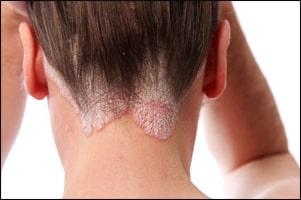
Let us learn a bit about how the term ‘psoriasis’ came into existence. This word was first used by the Greek physician Galen (133–200 CE) to describe an itchy, peeling condition affecting areas such as the eyelids and scrotum. This condition closely resembled what is now known as seborrheic dermatitis, and in ancient times, it was treated using a preparation made from viper’s broth. Psoriasis is a chronic, immune-mediated skin disorder characterized by the accelerated proliferation of epidermal keratinocytes, accompanied by inflammation in both the epidermis and dermis. This hyperproliferation disrupts the normal maturation of skin cells, leading to the formation of thickened, scaly lesions. Clinically, psoriasis typically presents as well-defined, red or erythematous papules and plaques topped with silvery-white scales, often symmetrically distributed over extensor surfaces such as elbows, knees, scalp, and lower back. Importantly, psoriasis is not contagious- you cannot contract it from someone else.
Types of Psoriasis
Generally, it is of five types- Guttate Psoriasis, Pustular Psoriasis, Plaque Psoriasis, Inverse Psoriasis and Erythrodermic Psoriasis.
- Guttate Psoriasis- It is a specific form of psoriasis, often triggered by streptococcal infections such as throat (pharyngitis) infections. It occurs more frequently in children and adolescents compared to adults. Clinically, it is characterized by numerous small lesions that are commonly described as “drop-like” and usually present as small papules measuring 2 to 6 mm. They often demonstrate the Koebner phenomenon, also known as the isomorphic response, where new psoriatic lesions appear at sites of skin injury. Such triggers can include scratches, sunburns, or areas previously affected by other eruptions like chickenpox (Varicella).
- Pustular Psoriasis- It is a type of psoriasis characterized by scaly, discolored patches of skin accompanied by fluid-filled blisters or pustules. These lesions can appear on any part of the body and may cause pain or discomfort, especially if the pustules rupture. Generalized pustular psoriasis is the rarest subtype of pustular psoriasis. It involves widespread psoriatic symptoms affecting large areas of the body. In addition to the rapidly spreading plaques on the skin, affected individuals may experience systemic symptoms such as fever and muscle weakness.
- Plaque Psoriasis- This is the most prevalent form of psoriasis, affecting approximately 80–90% of individuals with the condition. It is characterized by raised, inflamed, and scaly patches of skin that can be itchy or painful. In people with lighter skin tones, these plaques usually appear as red, elevated areas covered with silvery-white scales. On darker skin tones, the plaques may look thicker, with shades ranging from purple or grayish to dark brown.
- Inverse Psoriasis – Also known as intertriginous or flexural psoriasis, this type can occur at any age, including infants as psoriatic diaper rash. It is more common in overweight individuals and affects skin folds such as underarms, under breasts, the genital area, and between or under the buttocks. Friction and sweating can worsen symptoms. On darker skin, lesions appear purple, brown, or darker than the surrounding skin, while on lighter skin, they are bright red, often smooth and shiny.
- Erythrodermic Psoriasis – A rare and severe form of psoriasis, erythrodermic psoriasis can involve nearly the entire body and may pose serious health risks. It affects the body’s fluid and temperature regulation, sometimes causing swelling in the feet or ankles and episodes of chills. The condition typically covers more than 75% of the skin, with redness, discoloration, or peeling. On darker skin, affected areas may appear brown or purple rather than bright red. Additional signs include intense itching, poorly defined plaques, nail and hair changes, fever, fatigue, dehydration, and a fast heart rate.
Causes of Psoriasis
Although the exact cause of psoriasis remains unclear, researchers understand that both the immune system and genetic factors play significant roles in its onset. Some triggers are-
- Individual Triggers: Psoriasis triggers vary; what affects one person may not affect another.
- Stress: Common trigger; stress management and relaxation can help reduce flares.
- Skin Injury: Psoriasis can appear at injured sites (Koebner phenomenon) from scratches, sunburn, bug bites, or vaccinations.
- Illness: Immune-related illnesses, like infections, can trigger flares. For example, strep throat is linked to guttate psoriasis.
- Weather: Cold, dry weather can worsen symptoms.
- Other Triggers: Allergies, certain foods, alcohol, or environmental factors may trigger flares.
Symptoms of Psoriasis
Symptoms of psoriasis can differ among individuals, but common signs include:
- Well demarcated red, raised patches of skin covered with silvery-white scales that may itch or burn, often appearing on the elbows, knees, scalp, trunk, palms, and soles.
- Dry, cracked skin that can cause itching or bleeding.
- Thickened, pitted, or ridged nails.
- Difficulty sleeping due to discomfort.
- In some cases, psoriasis may lead to psoriatic arthritis, causing joint pain and stiffness as a complication.
Diagnosis
- Patient History: Doctors assess symptoms, recent illnesses, stress levels, medication use, and family history to support diagnosis.
- Physical Examination: Dermatologists inspect the skin, scalp, and nails for characteristic signs such as red, scaly plaques.
- Blood Tests: While not used to directly diagnose psoriasis, blood tests can help rule out similar conditions such as rheumatoid arthritis or lupus and monitor for complications like psoriatic arthritis.
- Imaging: Techniques like ultrasound may be employed in certain cases to evaluate skin thickness and the degree of inflammation.
- Skin Scraping: Skin flakes may be collected and studied microscopically to aid in diagnosis, particularly when combined with visual assessment.
- Skin Biopsy: A tiny portion of skin is removed and examined under a microscope to identify psoriasis-related changes like thickened skin and inflammation.
Treatment
For Psoriasis, topical treatment along with light therapy and oral medications are given for effective treatment.
Topical treatment includes
- Corticosterids- Hydrocortisone 1-2.5%, Betamethasone valerate 0.05%, Fluticasone propionate 0.05%, Clobetasol propionate 0.05%.
- Synthetic Vitamin-D- Analogues like calcipotriol, tacalcitol, and calcitriol help manage psoriasis.
- Topical Calcineurin Inhibitor- Tacrolimus ointment and Pimecrolimus cream are used to treat psoriasis and reduce inflammation.
- Tazarotene- Tazarotene 0.05% or 0.1% works by normalizing keratinocyte differentiation, slowing epidermal proliferation and modulating inflammatory pathways.
- Roflumilast Cream or Foam- It is a topical phosphodiesterase-4 (PDE4) inhibitor which reduces pro-inflammatory cytokines, decreases keratinocyte hyperproliferation and improves plaque thickness and scaling.
- Tapinarof Cream- It is a topical aryl hydrocarbon receptor (AhR) modulating agent that regulates keratinocyte differentiation, reduces inflammation and also restores skin barrier function.
- Coal Tar- Suitable for long-term use at low concentrations (usually 0.5–5%). It reduces scaling, redness, and itching, and can be combined with salicylic acid or topical corticosteroids for better effect.
1. Light therapy
Also called phototherapy, used for moderate to severe psoriasis when topical treatments are insufficient. It is used to slow skin cell growth and reduce inflammation.
- UVB Phototherapy- Most effective for plaque psoriasis.
- PUVA Therapy- Useful for thick or resistant plaques.
- Excimer Laser- Ideal for localized psoriasis and minimise exposure to healthy skin.
- Other medications (to be taken orally)- Apremilast, Biologics, Methotrexate and most recently used for psoriasis treatment- TYK2 Inhibitor. All these medicines act throughout the body to relieve patients from symptoms of Psoriasis.
Ayurvedic Overview
Skin disorders in Ayurveda are called Kushtha Roga. It is one of the four diseases caused by Papakarmas (actions or deeds that generate negative karma and lead to physical, mental, or spiritual suffering). It is said that people with Kushtha Roga will suffer from it in even coming lifetimes. There are seven Mahakushtha (Major skin disorders) and eleven Kshudrakushtha (Minor skin disorders). Psoriasis can be correlated with Eka Kushtha and Kitibh Kushtha- two of the eleven Kshudrakushtha. Here is a verse from Charaka Samhita explaining the seven factors involved in the origin of Kushtha Roga-
The above shloka (Sanskrit text) means that- The skin disorder arises from the disturbance of seven key factors associated with the skin. These include the aggravated states of Vata, Pitta, and Kapha doshas, along with the derangement of four dhatus—Tvak (Skin/Rasa dhatu), Mamsa (Muscular tissue), Shonita (Blood), and Lasika (Lymphatic fluid). When these seven elements lose their balance, they give rise to different types of Kushtha (Skin diseases). In the beginning, the condition may appear in a mild or preliminary form, but as it progresses, it may gradually spread and involve the entire body.
Major causes include abrupt exposure to heat and cold, irregular alternation between nourishing and depleting foods, and frequent intake of Viruddha Ahara (incompatible foods) like honey, fish, radish, Lakucha (Artocarpus lakoocha), and Kakamachi (Solanum nigrum). Overeating, eating on indigestion, or combining milk with fish, cereals, pulses, and heavy unctuous foods further aggravate the condition. Excessive sexual indulgence, strenuous activity after meals, sudden cold-water immersion in fatigue or grief, suppression of natural urges, intake of Vidahi Ahara (Foods causing burning sensation), and overuse of Snehana (Oleation therapies) also contributes. These causative factors result in the simultaneous vitiation of all three doshas (Vata, Pitta and Kapha), along with weakening of the four Dushyas (Tvak, Mamsa, Rakta and Lasika), including the skin (Tvak). The aggravated Tridoshas (Vata, Pitta and Kapha) settle in these vulnerable tissues, where they localize, further impair their function, and ultimately give rise to Kushtha (Skin diseases).
Now let's learn about the symptoms of Eka Kushtha and Kitibha Kushtha as seen in patients. The shloka (Sanskrit text) describing symptoms of Eka kushtha is-
It means, in Eka Kushtha there is absence of sweat, this skin disorder covers a large portion of the body and resembles scales of fish.
And on the other hand, shloka (Sanskrit text) for Kitibha Kushtha is-
श्यावं किणखरस्पर्शं परुषं किटिभं स्मृतम्|
This shloka (Sanskrit text) says that the skin becomes blackish brown in complexion, and on touching it, it feels hard and rough like a scar tissue.
For the treatment of Kushtha Roga, Ayurveda recommends leading a life guided by Dharma (Ethical conduct), following a Sattvic diet (foods that promote purity of mind, clarity, calmness, and overall well-being), practicing mental discipline (Manonigraha), and undergoing Panchakarma therapies to counteract the effects of papakarmas. Ayurveda also suggests the use of Parada (Mercury), Gandhak (Sulphur), Madhvasava, Mahatiktak Ghrita, Mahakhadir Ghrita, Kanakbindvarishta, Triphalasava, Kanak Ksheeri Taila and bathing with decoction made of Siddharthak and other herbs. Manahshilaadi Lepa is also beneficial for external application in Kushtha Roga.
Dietary Habits and Lifestyle Modifications
- Follow Diet- Light, digestible, and easily absorbable foods are preferred. Use Ghrita (clarified butter), Milk (Ksheera), Honey (Madhu), and Herbal decoctions for Rasayana and Rakta-purifying effects.
- Avoid Diet- Do not consume excessively salty, sour, spicy, and oily foods, which aggravate Pitta and Kapha. Do not take incompatible foods like fish with milk etc.
- Water Intake- Drink adequate room-temperature water throughout the day. Avoid excessive cold water, as it may aggravate Kapha and reduce Agni (digestive fire). Decoctions of Guduchi (Tinospora cordifolia), Manjistha (Rubia cordifolia) can be taken as part of daily water intake to support blood purification and skin health.
- Yogasana- Anulom Vilom (Alternate Nostril Breathing), Bhramari (Bee Breath), Sheetali & Sheetkari Pranayama, Bhujangasana (Cobra pose), Shavasana are useful in psoriasis.
- Exercise/Gym- Hard exercises and high intensity exercises or gyming should be avoided as it may aggravate Pitta Dosha.
Herbal Remedies for Psoriasis by Planet Ayurveda
Planet Ayurveda is a trusted name in Ayurveda, known for offering pure, natural, and authentic herbal remedies inspired by classical Ayurvedic wisdom. We follow strict GMP (Good Manufacturing Practices) standards and use only high-quality herbal extracts for the best results. Guided by a team of skilled Ayurvedic doctors, Planet Ayurveda believes in holistic healing that nurtures the body, mind, and spirit. With a wide variety of herbal products and specially designed health packs, it has earned trust worldwide for safe and effective wellness solutions. We have Psora Care Pack especially for the treatment of Psoriasis, giving wonderful results and relief from the symptoms. It includes 8 medicines-
- Navkarshik Churna
- Gleaming Skin, Hair, Nails Formula
- Neem Capsules
- Manjishtha Capsules
- Pitta Balance
- Gandhak Rasayan
- Radiant Skin, Hair, Nails Lotion
- Jatyadi Tailam
Product Description
1. Navkarshik Churna
It is a herbal powder with key ingredients like Amalaki (Emblica officinalis), Haritaki (Terminalia chebula), Bibhitaki (Terminalia bellirica), Daruharidra (Berberis aristata), Nimba (Azadirachta indica) and Manjistha (Rubia cordifolia). It balances all three doshas (Vata, Pitta and Kapha), detoxifies Rakta (blood), reduces itching, scaling, controls plaque formation and prevents secondary infections in Psoriasis.
Dosage- 1 teaspoonful twice daily with warm water after a meal.
2. Gleaming Skin, Hair, Nails Formula
These capsules are made of key ingredients like Manjishtha (Rubia cordifolia), Pit papad (Fumaria officinalis) and Chirayata (Swertia chiretta). These herbs balance Vata, Pitta and Kapha doshas. Alkaloids, flavonoids, tannins and glycosides present in these herbs have antioxidant and immunomodulatory properties that protect skin cells and prevent flare-ups, while promoting regeneration of Twak Dhatu (skin tissue) healing chronic psoriatic patches
Dosage- 2 capsules twice daily with warm water after a meal.
3. Neem Capsules
These capsules are made from pure extract of Nimba (Azadirachta indica). Neem pacifies Pitta and Kapha dosha. It has azadirachtin, nimbin, flavonoids and essential oils that help in reducing itching, inflammation, and redness of skin. It also supports skin healing, reduces discoloration and hyperpigmentation after healing.
Dosage- 1 capsule twice daily with warm water after a meal.
4. Manjishtha Capsules
These capsules are made from potent Manjishtha (Rubia cordifolia) herb. It balances Pitta and Kapha dosha. It contains alkaloids, glycosides and flavonoids which are responsible for Rakta Shodhana (blood purification), anti-oxidant, anti-inflammatory and wound healing effects.
Dosage- 2 capsules twice daily with warm water after a meal.
4. Pitta Balance
This capsule contains key ingredients like Jahar Mohra Pishti (Red Mercury Compound calx), Akik Pishti (Agate compound) and Mukta Pishti (Pearl calx), which pacifies Pitta dosha. The combined action of these Pishtis targets dosha imbalance, purifies Rakta, and restores healthy skin, making them highly effective in managing Psoriasis and minimizing recurrence.
Dosage- 1 capsule twice daily with warm water after a meal.
5. Gandhak Rasayan
These tablets are made from purified sulphur. It primarily helps in calming Pitta and Kapha doshas while aiding in Rakta shodhana (blood purification). It alleviates scaling, redness, itching, and thickened plaques as its chemical constituents (sulphur and processed mineral elements) provide antimicrobial, anti-inflammatory, and skin-regenerative effects.
Dosage- 2 tablets twice daily with warm water after a meal.
6. Radiant Skin, Hair, Nails Lotion
This lotion is prepared by using key ingredients like Curcumin (Curcuma longa), Neem (Azadirachta indica), Jasmine (Jasminum officinale), Coconut (Cocos nucifera) and some other herbs. It is Tridosha (Vata, Pitta and Kapha) balancing in nature. Polyphenols, flavonoids and other active compounds protect skin from oxidative stress. This lotion is cooling, moisturizing, soothing and also supports healing of psoriatic patches.
Dosage- It is to be applied twice daily on the affected area after cleaning the area.
7. Jatyadi Tailam
This oil is made from Neem (Azadirachta indica), Patola (Trichosanthes dioica), Mulethi (Glycyrrhiza glabra), Turmeric (Curcuma longa) and many others. These ingredients primarily help in pacifying vitiated Pitta and Kapha doshas. Active components like curcumin, flavonoids, azadirechtin etc. help in Ropana (wound-healing) and acts as Shothahara (anti-inflammatory) and Tvachya (skin nourishing), providing relief to Psoriasis patients
Dosage- It is to be applied twice daily on the affected area after cleaning the area.
Conclusion
We can come to a conclusion that Psoriasis is a chronic auto-immune disorder, affecting skin and causing a great deal of discomfort in people experiencing it. People crippling with Psoriasis (Kushtha Roga/Skin disorders) often become underconfident as they don't feel comfortable exposing their skin. Other than this, the dry, irritated flaky skin, causes more discomfort when there is friction from the clothes. It usually comes as flare-ups and makes daily life tough and uncomfortable. Thanks to our timeless and time-tested Ayurvedic medicinal system, we at Planet Ayurveda, have been curing Psoriasis effectively, relieving patient symptoms and helping them lead a healthy life with skin they feel confident in.
Frequently Asked Questions (FAQ’s)
Is psoriasis a fungal infection?
Psoriasis is an autoimmune condition, not a fungal infection. In this disorder, the immune system wrongly targets healthy skin cells, causing inflammation and abnormally fast skin cell turnover. Fungal infections, however, occur due to the growth of fungi on the skin. While both may show symptoms like redness, itching, and scaling, their origins and treatments are completely different.
2. What age does psoriasis start?
Psoriasis can develop at any age, but it most frequently occurs between 15 and 25 years and again between 50 and 60 years. These represent the two primary age-related peaks, although some individuals may experience onset either earlier or later in life.
3. What happens if psoriasis is left untreated?
If left untreated, psoriasis may result in worsening skin lesions, a higher risk of developing psoriatic arthritis, and increased susceptibility to related health issues. Additionally, the condition can negatively affect mental well-being and significantly reduce overall quality of life.
4. What is the difference between eczema and psoriasis?
Eczema and psoriasis share several similarities, yet they have distinct differences. Eczema is more prevalent, particularly in children, and usually causes intensely itchy rashes that often appear in skin folds, such as the elbows and behind the knees. Psoriasis, on the other hand, is characterized by thick, dry, scaly patches on the skin.
5. Can psoriasis cause swelling in the legs?
Yes, psoriasis- especially erythrodermic and pustular types- can lead to swelling in the legs. In severe cases like erythrodermic psoriasis, fluid retention may cause edema in the lower legs and feet. Furthermore, psoriatic arthritis, a condition associated with psoriasis, can result in joint swelling, including in the legs and other lower extremities.
6. What vitamin deficiency causes nail psoriasis?
Severe vitamin D deficiency may contribute to nail psoriasis, although it is not widely recognized as a common cause.
7. Can you be hospitalized for psoriasis?
Depending on the severity of your symptoms, hospitalization may be required for proper treatment. Once the erythrodermic symptoms improve, your treatment plan might be adjusted. Your healthcare provider may suggest topical treatments, including over-the-counter creams, topical steroids, and non-steroidal topicals.
Post Your Ad Here
Comments