How to SEO in the Era of AI overviews?
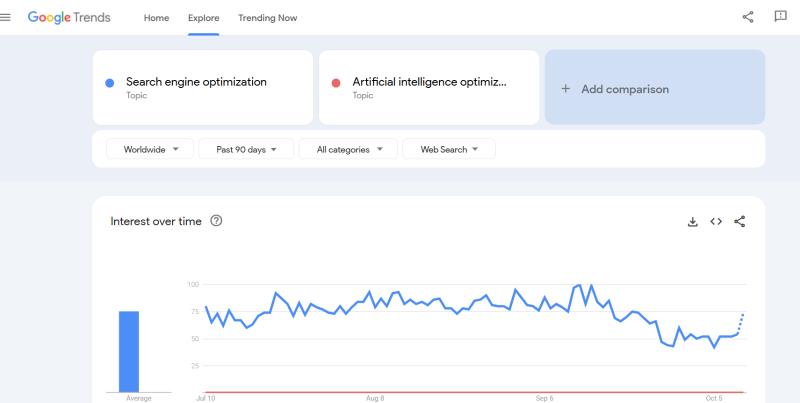
SEO vs AIO: Understanding the Differences and How They Complement Each Other
SEO (Search Engine Optimization) and AIO (Artificial Intelligence Optimization) are two terms often discussed in digital marketing and website optimization contexts. While they share the goal of enhancing online visibility and performance, they differ in approach, techniques, and technologies used. This article explores the meaning, components, benefits, and interplay of SEO and AIO, providing a comprehensive AI overview enriched with semantic SEO elements, key entities, subtopics, and frequently asked questions.
Summary
SEO (Search Engine Optimization) is the practice of improving website visibility and ranking on search engines by optimizing content, technical aspects, and backlinks. AIO (Artificial Intelligence Optimization) leverages AI technologies like machine learning, natural language processing, and automation to enhance SEO efforts and overall digital marketing strategies. Both are complementary: SEO provides foundational techniques, while AIO introduces advanced data-driven automation and personalization, driving smarter, more adaptive online optimization.
What is SEO?
SEO refers to a collection of strategies and techniques used to improve a website’s ranking on search engine results pages (SERPs). The primary objective is to drive organic (non-paid) traffic to a site by making it more relevant and authoritative for specific keywords and topics.
On-Page SEO: Optimizing content, title tags, meta descriptions, headers, and internal linking.
Off-Page SEO: Building backlinks, social signals, and brand mentions.
Technical SEO: Improving site speed, mobile-friendliness, crawlability, and structured data.
Content SEO: Creating valuable, keyword-optimized, and user-intent-focused content.
Local SEO: Optimizing for geographic-specific searches.
Entities related to SEO: Google Search, Bing, keywords, backlinks, content marketing, user experience, RankBrain.
What is AIO?
Artificial Intelligence Optimization (AIO) is an emerging practice in digital marketing that employs AI-powered tools and algorithms to refine and automate optimization processes. AIO can analyze vast amounts of data, identify patterns, and execute actions that would be difficult or time-consuming for humans.
Machine Learning: Continuously improving algorithms that adapt SEO strategies.
Natural Language Processing (NLP): Understanding searcher intent and generating semantically relevant content.
Predictive Analytics: Forecasting trends and user behaviors.
Automation: Automating content creation, keyword research, site audits, and personalization.
Voice Search Optimization: Tailoring strategies for voice assistants like Siri, Alexa, and Google Assistant.
Entities related to AIO: AI algorithms, chatbots, Natural Language Generation (NLG), Google BERT, neural networks, Big Data.
SEO vs AIO: Key Differences
Aspect |
SEO |
AIO |
Focus |
Manual and tactical optimization of website and content |
AI-driven automation and intelligent decision-making |
Techniques |
Keyword targeting, link building, technical fixes |
Machine learning, NLP, AI content creation, analytics |
Human vs Machine Role |
Primarily human-led, with tools for assistance |
Predominantly machine-led with human oversight |
Adaptability |
Reactive to algorithm updates |
Proactive and adaptive through continuous learning |
Scope |
Website and content optimization |
Broader digital marketing optimization including SEO |
How SEO and AIO Work Together
SEO provides essential groundwork—ensuring websites are technically sound and content-rich for search engines. AIO enhances these efforts by imparting efficiency, scale, and sophistication through automation and deeper insights. For example, AI tools can:
Generate SEO-friendly content based on semantic analysis.
Automate keyword research and competitive analysis.
Personalize user experiences dynamically.
Predict algorithm changes and user intent shifts.
Together, SEO and AIO enable a more strategic and responsive optimization framework.
Subtopics to Explore
Semantic SEO and the Role of AI: How AI aids in understanding search intent and contextual relevance.
AI-Generated Content: Benefits and ethical considerations.
Voice Search and AI Optimization: Adjusting SEO strategies for AI-powered voice queries.
AI Tools for SEO: Overview of popular AI-powered SEO platforms like SEMrush, Ahrefs with AI features, Clearscope, and Jasper AI.
Impact of AI on Search Engine Algorithms: Understanding Google’s use of AI (RankBrain, BERT).
Frequently Asked Questions (FAQs)
Q1:
Is AIO replacing traditional SEO?
No,
AIO complements SEO by automating and enhancing various SEO
processes, but foundational SEO knowledge and manual efforts remain
crucial.
Q2:
Can AI create better SEO content than humans?
AI
can generate relevant and optimized content rapidly, but human
oversight ensures accuracy, creativity, and brand voice consistency.
Q3:
What are the best AI tools for SEO?
Popular
AI tools include SEMrush with AI integrations, Clearscope, Jasper AI,
Surfer SEO, and Moz’s AI-based recommendations.
Q4:
How does AI improve keyword research?
AI
analyzes search patterns, trends, competition, and semantic
relationships to suggest keywords that align closely with user
intent.
Q5:
Should I hire AI experts or SEO specialists?
A
combination is recommended: SEO specialists bring domain expertise,
and AI experts help implement advanced optimization technologies.
Conclusion: SEO and AIO are interlinked dimensions in modern digital marketing. Combining traditional SEO’s strategic approach with AI’s powerful analytics and automation capabilities creates a competitive edge in search engine performance and user engagement.


Post Your Ad Here
Comments