Fantasy Sports App Development: From MVP to Full-Fledged Platform
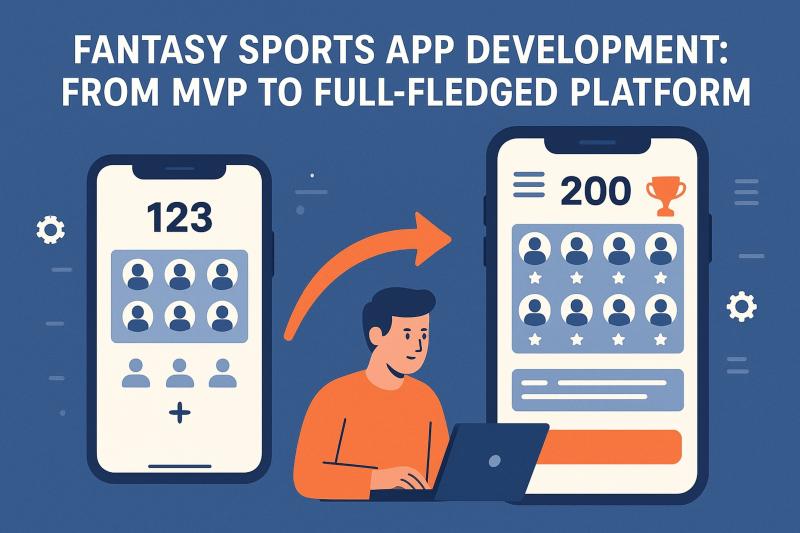
Who doesn’t have a sports idol they worship like the Almighty? We admire them and even wish to get their superpowers on the field. While this might sound impossible in real life, fantasy sports can make this dream come true.
A go-to fascination for sports fandom, the fantasy sports app has multiple virtual sports teams consisting of real-life sportsmen. Each individual app user creates their own team and then competes against the other users and earns real money based on their team’s gameplay.
This makes me wonder what the logic is behind making a fantasy sports app. Are you also seeking a Minimum Viable Product (MVP) or a full-fledged fantasy sports application? If yes, then this article discusses the same in detail from scratch. So, let’s get started.
Step 1: Conducting Market Research
The first phase to build a fantasy sports app is to analyze the market and discover the niche. This involves answering the following queries:
Which and how many sports would the app be focusing on?
Who would be the target audience (country, age group, etc.)?
Is it legally feasible to launch a fantasy sports app in that target region?
Which type of monetization model works best for the app (Free-to-Play, Pay-to-Play, etc.)?
Step 2: Designing the MVP for the Fantasy Sports App
Any app development starts with devising basic core functionality, called the MVP in the case of fantasy sports.
Setting Up the Basic MVP Functions
MVP app development for startups must support basic utility for:
User Authentication
User login can be done through email or through any social media platform.
Dashboard Panel
It stores each user’s profile details, including other game-related information such as contests to be hosted, etc.
Contest Selection
It involves the collection of the entry fee and the selection of the type of contest- a public league or a private one.
Team Formation
It allows team creation by checking the player availability and their budget.
Leaderboard Update
A live-score recording system that dynamically updates fantasy points for each player by collecting information from a sports data API.
Admin Login Features
An admin dashboard storing information about the number of users, the type of content, contests being held, and payouts.
Payment Gateway
A payment platform to support the secure inflow and outflow of money.
Technological Requirements
At this point, you must hire fantasy sports app developers for:
Front End Development
Designing cross-platform applications using frameworks such as Flutter or React Native that work for both Android and iOS.
Back End Development
Using scalable options such as Django or Node.js with Express, along with cloud integration to support high traffic.
Database Management
A DBMS such as MongoDB or PostgreSQL for storing user, player, and contest data.
Step 3: Checking for Upscaling
Once an MVP fantasy sports app is developed, it is launched in the market and regularly monitored for further enhancement. In this phase, developers collect app feedback and focus on the following areas:
Scope for Scalability
Developers check for scalability options by optimizing the backend code so as to accommodate more players and control heavy traffic.
User Engagement
The best way to enhance user activity on the app is by implementing user interactive elements. These can be buttons, push notifications, etc., as well as incentives such as rewards, discounts, VIP access, etc.
Data Security
At this point, ensuring security and transparency of user data is of utmost importance, including the payment gateway.
Step 4: Converting MVP into a Full-Fledged Fantasy Sports App
After successfully laying the foundation of the MVP app and stabilizing its performance, it’s now time to upgrade the fantasy sports app features. Some of the advanced features could be:
Referral Programs
Inviting friends and like-minded individuals in the community to create teams and give discounts or bonuses to loyal users.
Social Interaction
Socializing with others in the community through social media, one-to-one chats, groups, or forums to initiate bonding and strong communication.
Customized Gaming
Using AI-based technology for predicting user behaviour and their performance for personalizing recommendations for contests.
Immersive Experience
Integrating AR and VR capabilities into an MVP fantasy sports application, thus creating a dynamic 3D virtual imagery for the users.
Different Formats
Implementing different game formats catering to diverse sports personalities and app users, involving an introduction to multiple games or leagues.
Step 5: Ways to Monetize the App
Let us now discuss how fantasy sports app developers can generate revenue through the application. The ideal strategy is to start revenue generation in the MVP phase only and then extend it further.
Partnership & Sponsorships
Inviting investment from major brands acting as partners and sponsors.
Advertising Brands
Displaying promotional ads on the platforms and earning revenue from the respective brands.
Subscription Model
Adding different subscription packages for advanced users or those who wish to unlock VIP features. The free version would be reserved for MVP users only.
Platform Fees
Charging minimal entry fees on the platform, keeping major contests paid, and claiming a share of the prize money.
In-App Purchases
Encouraging users to buy in-game assets or VIP passes to leagues using virtual currency.
Step 6: Marketing the Application
An essential part of fantasy sports app development is implementing marketing strategies through different channels.
Using social media platforms for a wider reach.
Promoting the app through Google and Facebook Ads.
Optimizing the app for different Operating Systems, such as the App Store and the Play Store.
Collaborating with influencers and famous sports personalities.
Giving discounts or rewards to early users.
Conclusion
Fantasy sports let users create their dream sports team and earn real money. However, developing the app involves strategic planning, whether it’s MVP app development for startups or a full-fledged platform.
While the initial app development helps in setting up the game idea and starts early earnings, the constant updates upscale it. Hence, it’s a great opportunity for both big and indie game studios to reach out to and connect with sports fandom across the globe.
Post Your Ad Here
Comments