Adaptive AI in Retail: Real-Time Demand Forecasting and Inventory Optimization for Competitive Edge
Introduction
The retail industry has long relied on forecasting and inventory management to meet customer demands, control costs, and maximize profitability. Yet, traditional forecasting models often struggle to adapt to fluctuating market conditions, seasonal changes, and consumer behavior shifts. In today’s digital economy, where customer preferences evolve rapidly and supply chains face unprecedented disruptions, retailers require a more agile, data-driven approach to stay competitive.
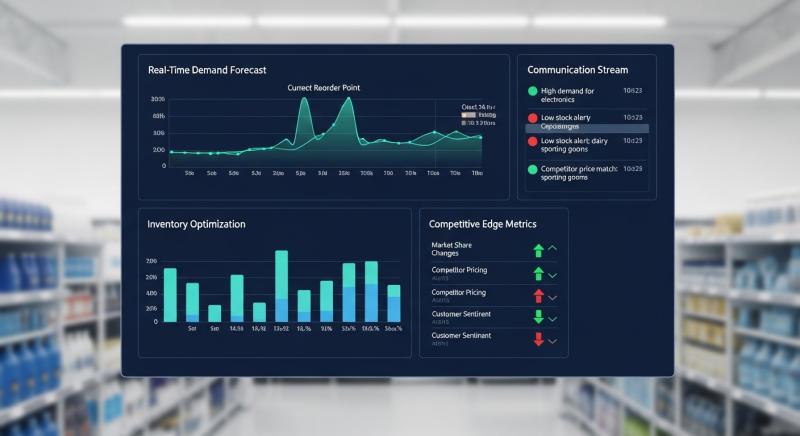
Adaptive AI has emerged as a transformative force in addressing these challenges. By continuously analyzing vast amounts of real-time data—ranging from point-of-sale transactions and customer browsing patterns to supply chain disruptions and external factors like weather—retailers can make informed decisions that reduce waste, enhance customer satisfaction, and drive profitability. Adaptive AI’s ability to learn from new data, adjust forecasts, and fine-tune inventory management processes in real time is a game-changer for modern retail operations.
Retailers partnering with experts in adaptive AI development can access tailored solutions that integrate seamlessly with existing platforms, scale with business needs, and ensure data-driven agility. Adaptive AI development services empower organizations to not only predict demand more accurately but also optimize inventory levels, reduce carrying costs, and improve service levels—all while adapting to changing conditions without manual intervention.
This article explores how adaptive AI is reshaping retail through real-time demand forecasting and inventory optimization, highlighting the challenges it helps overcome, the technologies behind it, and how adaptive AI development companies are enabling retailers to build smarter, more resilient operations.
The Challenges of Demand Forecasting and Inventory Management in Retail
Despite advancements in analytics, retailers still face a host of persistent challenges when forecasting demand and managing inventory. These challenges are compounded by external shocks such as global supply chain disruptions, changing consumer behaviors, and market volatility. The limitations of conventional forecasting methods, such as statistical models based on historical data, are increasingly apparent.
Key Pain Points in Retail Forecasting and Inventory Optimization
-
Inaccurate Forecasts Due to Static Models
Traditional forecasting models rely heavily on historical sales data, seasonal patterns, and occasional expert judgment. While this approach works in stable environments, it fails to account for sudden market shifts or unexpected events, leading to stockouts or overstock situations. -
Lack of Real-Time Adaptability
Inventory replenishment decisions often depend on fixed schedules or periodic review. This rigid approach cannot respond quickly to changes in demand, such as promotional campaigns, competitor activities, or supply delays. -
Complexity in Multi-Channel Retailing
With the rise of omnichannel retailing, demand patterns differ between in-store and online shopping. Coordinating inventory across channels requires more granular, adaptive forecasting mechanisms that can respond to distinct customer behaviors. -
Waste and Overstock Costs
Poor forecasting leads to excessive inventory, resulting in higher holding costs, markdowns, and waste—particularly for perishable goods like food and fashion items. -
Customer Satisfaction and Brand Loyalty
Stockouts frustrate customers and drive them to competitors, while excess inventory may lead to discounts that erode brand value. Accurate forecasting and inventory management are critical for maintaining customer trust and ensuring a seamless shopping experience.
These challenges highlight the need for forecasting and inventory solutions that are dynamic, scalable, and data-driven. Adaptive AI development solutions address these challenges by enabling systems that learn continuously, adjusting forecasts and inventory plans as conditions change.
How Adaptive AI is Transforming Retail Forecasting and Inventory Optimization
Adaptive AI development brings together machine learning algorithms, predictive analytics, and automation to create self-correcting systems that improve over time. Retailers using adaptive AI development services can benefit from solutions that process real-time data from multiple sources, identify patterns, and recommend actions that align with changing customer behaviors and supply chain constraints.
Real-Time Data Processing and Insights
Adaptive AI development solutions integrate data from various sources, such as:
-
Point-of-sale systems
-
E-commerce platforms
-
Customer behavior tracking
-
Social media sentiment analysis
-
Weather patterns and macroeconomic indicators
-
Supply chain and logistics updates
This data is continuously fed into adaptive AI models, which learn from each new interaction and refine forecasts accordingly. For example, if a sudden increase in demand is detected for a particular product category, the system adjusts inventory allocation and replenishment schedules instantly.
Adaptive AI development companies offer tools that create feedback loops, where forecast accuracy is constantly measured and improved based on actual sales outcomes. Over time, this reduces forecast error rates and allows retailers to respond more effectively to market changes.
Enhanced Forecasting Algorithms
Unlike traditional statistical models, adaptive AI-powered forecasting systems employ machine learning techniques such as:
-
Time-series forecasting enhanced by deep learning
-
Anomaly detection to identify unexpected spikes or drops in demand
-
Bayesian models that incorporate prior knowledge and uncertainty
-
Reinforcement learning to test and optimize inventory decisions dynamically
These algorithms are capable of recognizing non-linear relationships and adjusting predictions based on a wider variety of inputs than conventional methods can handle. As a result, retailers experience more accurate demand forecasts even in complex, high-variability environments.
Optimizing Inventory Across Channels
Adaptive AI development services enable inventory optimization strategies that reflect the nuances of modern retail. For instance, inventory levels can be automatically adjusted based on channel-specific demand, regional trends, and lead times from suppliers.
Retailers can implement policies such as:
-
Dynamic Replenishment: Inventory is restocked as needed, rather than according to fixed schedules.
-
Safety Stock Adjustments: Safety stock levels are optimized based on forecast uncertainty and supply chain risk.
-
Multi-Echelon Inventory Optimization: Inventory is managed across warehouses, distribution centers, and stores to minimize transit times and reduce excess stock.
By leveraging adaptive artificial intelligence development solutions, retailers can ensure that the right products are available at the right time and place, reducing both stockouts and excess inventory.
Case Studies: Adaptive AI in Action
Fashion Retailer – Reducing Overstock by 25%
A global fashion brand partnered with an adaptive AI development company to address seasonal fluctuations and promotional demand spikes. Using adaptive AI development solutions, the brand implemented machine learning models that accounted for regional preferences and weather-driven demand.
The results were significant:
-
Inventory waste decreased by 25%
-
Forecast accuracy improved by 35%
-
Customer satisfaction scores increased due to better product availability
The adaptive AI solution dynamically adjusted replenishment orders, enabling the brand to reduce reliance on manual forecasting.
Grocery Chain – Minimizing Stockouts and Perishables Loss
A large grocery chain faced challenges with perishable goods and inconsistent supply due to fluctuating demand. By leveraging adaptive AI development services, the chain integrated real-time demand sensing and adjusted inventory levels daily.
Outcomes included:
-
20% reduction in spoilage-related losses
-
15% increase in order fulfillment rates
-
Enhanced collaboration between stores and suppliers
The grocery chain’s use of adaptive AI development services empowered store managers with actionable insights, helping them make informed decisions without complex manual computations.
Here’s the continuation of the article “Adaptive AI in Retail: Real-Time Demand Forecasting and Inventory Optimization for Competitive Edge.” This segment further deepens the analysis, adding case studies, implementation strategies, and the future outlook.
Implementation Strategies: How Retailers Can Adopt Adaptive AI
While the benefits of adaptive AI development solutions are increasingly recognized, implementation remains a complex process requiring careful planning, collaboration, and investment. Retailers looking to adopt these technologies must understand how to integrate them into existing workflows and ensure they align with broader business objectives.
Assessing Data Readiness
A critical first step in adaptive AI development is evaluating the quality, accessibility, and completeness of data. Many retailers struggle with siloed systems, inconsistent data collection practices, and legacy platforms that hinder real-time processing. Adaptive AI development companies assist in conducting thorough data audits and defining governance frameworks to ensure that data streams are standardized and secure.
Key considerations include:
-
Ensuring real-time access to sales, customer, and inventory data
-
Integrating data from online and offline sources
-
Implementing privacy and compliance protocols
-
Building scalable data pipelines for long-term growth
By addressing these data challenges early, retailers can lay the foundation for adaptive AI development solutions that continuously learn and scale across business units.
Selecting the Right Adaptive AI Development Partner
Not every technology provider is equipped to deliver adaptive AI development services tailored to retail operations. A trusted adaptive AI development company brings domain expertise, experience in machine learning implementation, and a consultative approach to problem-solving.
Retailers should look for partners that:
-
Offer customized adaptive AI development solutions, not off-the-shelf products
-
Support integration with existing enterprise resource planning (ERP) systems
-
Provide analytics tools that are interpretable and actionable for business users
-
Have experience optimizing inventory and demand forecasting across industries
A collaborative approach between retailers and adaptive AI development companies ensures that the solution aligns with strategic goals and delivers measurable results.
Change Management and Workforce Enablement
Introducing adaptive AI into retail workflows often requires a cultural shift in how teams operate and make decisions. Employees must be trained to trust data-driven insights while also understanding the underlying assumptions of AI models.
Adaptive AI development services frequently include change management strategies such as:
-
User-friendly dashboards for managers and frontline staff
-
Training programs to interpret forecasts and act on recommendations
-
Pilot projects to demonstrate value before full-scale deployment
-
Continuous feedback loops to refine algorithms based on user experience
By emphasizing education and collaboration, retailers can accelerate adoption and ensure that adaptive AI development solutions become an integral part of their operations.
Balancing Automation with Human Expertise
One of the concerns with AI-driven automation is the potential erosion of human judgment and expertise. Adaptive AI development solutions are designed not to replace human decision-making but to enhance it.
Human-in-the-Loop Systems
Adaptive AI development frameworks often incorporate human-in-the-loop (HITL) processes, where AI-generated forecasts and recommendations are reviewed and validated by domain experts. This approach ensures that:
-
Anomalies flagged by AI are investigated and contextualized
-
Unexpected market shifts are interpreted using human intuition
-
Ethical and regulatory considerations are applied before action is taken
Retailers benefit from the combination of computational speed and human creativity, allowing for more nuanced and resilient decision-making.
Enhancing Trust in AI Systems
Trust is essential when implementing adaptive AI, especially in industries like retail where decisions impact customer experience and financial performance. Transparent algorithms, explainable forecasts, and audit trails can build confidence in AI-driven recommendations.
Adaptive AI development companies help retailers by:
-
Designing interfaces that explain how predictions are made
-
Providing confidence intervals to contextualize uncertainty
-
Offering simulation tools that show potential outcomes before execution
These measures help ensure that employees are empowered to work with AI rather than feeling threatened by it.
Regulatory and Ethical Considerations
Retailers must also navigate privacy laws, ethical guidelines, and governance frameworks while implementing adaptive AI solutions. With the increasing use of customer data, concerns over data misuse, discrimination, and algorithmic bias have become paramount.
Adaptive AI development services support retailers in:
-
Designing models that avoid bias based on demographics or location
-
Ensuring compliance with data protection regulations such as GDPR or CCPA
-
Implementing secure access protocols to prevent data breaches
-
Creating audit mechanisms that allow for external review and accountability
Ethical frameworks reinforce trust with customers and regulators alike, making adaptive AI not only a tool for optimization but also a driver of responsible innovation.
The Future of Adaptive AI in Retail
As adaptive AI development solutions continue to evolve, their role in retail will only expand, offering new opportunities for personalization, efficiency, and sustainability.
Hyper-Personalization at Scale
Future adaptive AI models will leverage deeper insights into customer preferences and behavior, enabling retailers to create highly personalized shopping experiences without overwhelming their systems. Inventory decisions can be tailored to individual customer segments in near real time, improving relevance and reducing waste.
Resilient Supply Chains
Adaptive AI will play a critical role in building more resilient supply chains capable of responding to disruptions. By integrating demand forecasts with supplier data and logistical constraints, retailers can proactively adjust procurement strategies and distribution plans.
Sustainable Retail Practices
With growing consumer and regulatory pressure to reduce environmental impact, adaptive AI development solutions offer pathways to minimize waste, energy consumption, and overproduction. Optimizing inventory levels not only improves profitability but also supports sustainable supply chain practices.
Conclusion
Adaptive AI represents a transformative force in retail, offering solutions to some of the industry’s most persistent challenges. Real-time demand forecasting and inventory optimization empower retailers to make smarter, data-driven decisions that enhance customer experience, reduce operational costs, and improve responsiveness to market changes.
By partnering with experienced adaptive AI development companies, retailers gain access to tailored services and solutions that align with their unique needs. These solutions, built on continuous learning and real-time insights, help businesses navigate uncertainty, improve forecast accuracy, and foster trust among customers and employees alike.
In an era where agility and efficiency define competitive advantage, adaptive AI development solutions are not just technological upgrades—they are essential tools for long-term growth and sustainability in the retail sector.

Comments