Common Items Made Using plastic injection molding products And Applications
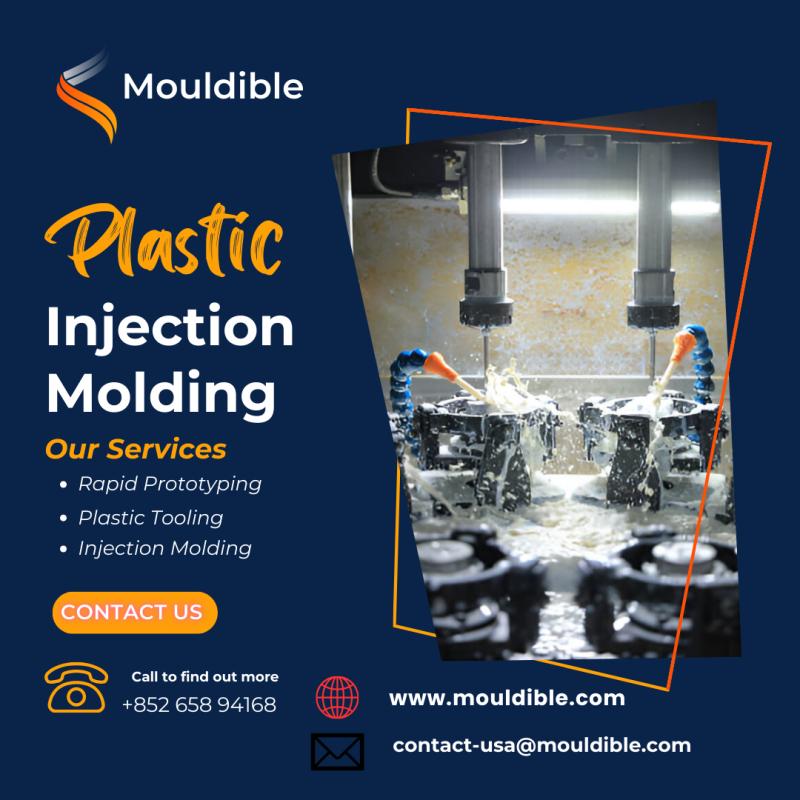
Plastic injection molding is a manufacturing process that has been used for decades to produce low-cost, high-quality parts and products. From the smallest components to entire body panels of cars, plastic injection molded parts are ubiquitous in the automotive industry. Apart from being cost-effective, this manufacturing technique also allows automobile designers and engineers to make extremely complex parts with precision.
Essentially, the more complicated a part or component is with regards to its design, the more it’s potentially going to benefit from plastic injection molding.
Advantages of Plastic Injection Molding Products
What makes plastic injection molding products so prevalent in all industries is the fact that the advantages of using this kind of manufacturing process are undeniable, when compared to traditional options such as machining, casting or 3D printing, injection molding has a great chance to shine due to its unmatchable unfailing combination between speed and cost-effectiveness. Here we’ll break it down for you:
1. Cost-Effectiveness in Mass Production
One of the main benefits of plastic injection molding is its cost-effectiveness, particularly on higher production quantities. After the initial mold has been designed and engineered, the cost per unit becomes incredibly low. Businesses can produce thousands (or even millions) of parts that are perfectly alike with no added costs.
- The cost per unit decreases as volume increases.
- Maximizing the profit margin by reducing the waste of material for production.
- Ideal for sectors such as packaging, automotive and consumer goods where production needs must be met through mass production.
2. High Precision and Accuracy
Plastic injection molding boasts of high dimensional precision for industries where precision is a critical aspect of their products. Parts made can be controlled within the range of ±0.005 inches.
- Perfect for medical devices, where the slightest error can mean unsafe.
- Consistency here means that every product from the 1st to the millionth is necessarily identical.
3. Wide Material Selection
Another advantage to injection moulding products is the wide selection of materials available. Manufacturers can choose from a vast array of thermoplastics, thermosetting plastics and elastomers for their product.
- Polypropylene (PP) for packaging and containers.
- ABS (Acrylonitrile Butadiene Styrene) for automotive parts and electronics.
- Polycarbonate (PC) for high-strength, impact-resistant products.
- Medical-grade plastics for sterile and biocompatible devices.
4. Consistent Quality and Repeatability
One of the strongest advantages of injection-molded products is repeatability. Once the mold is perfected, every product manufactured will have the same shape, structure, and quality.
- Ensures brand consistency across product lines.
- Reduces defects and rework costs.
- Vital for industries like automotive and aerospace, where uniformity is essential.
Applications of Plastic Injection Molding Products Across Industries
Plastic injection molded products are used in nearly every industry because of their versatility, reliability, and durability. The automotive industry uses plastic parts in many different applications and services including upholstery, body panels, dashboards, gears knobs, buttons, switches, and a plethora of other parts too.
1. Automotive Industry Applications
One of the biggest users of plastic injection molded parts is the automotive industry. Everything from a car’s interior to its exterior can be made with plastics. They provide automobiles with everything from interior beauty and design features to functional mechanical parts that make cars lighter, faster, and more fuel efficient as well as safer.
Common Applications:
- Exterior Parts: Bumpers, grilles, mirror housings and headlight casings are manufactured using high-strength plastics in order to provide improved automotive performance.
- Interior Components: Dashboards, cup holders, door panels, seat belt housings and air vent grills are injection molded for better aesthetic look and increased comfort.
- Engine and Functional Parts: Heat resistant plastics like nylon is used in under the hood parts, for examples air intake manifolds, engine covers etc.
- Electric Vehicle Components: Injection molded battery casings, connectors, charging port housing are used more and more.
2. Medical and Healthcare Industry Applications
The medical industry relies heavily on plastic injection molding to produce products that are sterilized, which is why so many of the components used in single use medical devices are made by us.
Common Applications:
- Consumables: Syringes, IV tubes, pill containers and inhalers.
- Surgical Instruments: Forceps, clamps, disposable blades.
- Laboratory Equipment: Test tubes, Petri dishes, specimen containers.
- Prosthetics & Implants: Custom prosthetic limbs and orthopedic devices built with biocompatible plastics.
Conclusion
Plastic injection molding has paved the way for the fast and efficient production of high performance, complex and intricate product designs used in every commercial, industrial, and consumer sector imaginable. The versatility of injection molded plastic parts makes it an ideal option for virtually any industry ensuring feasibility, functionality, sustainability and innovation combined with economy of scale production.
The application of injection molded plastics products is extensive not only in automotive industries but also in healthcare, aerospace aviation , construction,, consumer electronics & house hold appliances as well as packaging to name just a few. This is a globally-competitive that will forever be expanding.
Post Your Ad Here
Comments