Retail POS System | Point of Sale Software
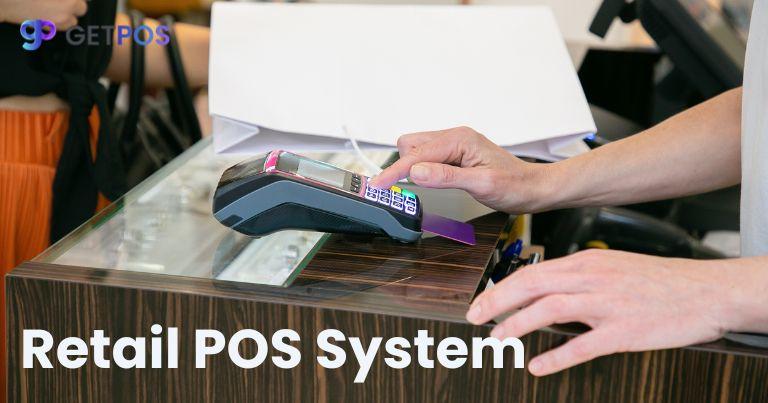
Retail POS System: The Heart of Modern Retail
A Retail POS System powers every retail transaction, tracks inventory, manages customer data, and fuels insights. It’s no longer just a cash register—it’s the operational nerve center. When chosen and implemented effectively, it becomes your ally in increasing revenue, reducing friction, and creating loyalty-driven customer experiences.
What Is a Retail POS System and Why It Matters
A Retail POS System combines hardware—such as touch terminals, barcode scanners, card readers, self-service kiosks—and software that handles payment processing, inventory tracking, CRM, analytics, and reporting
- It accelerates checkout and minimizes errors.
- It synchronizes sales across online and offline channels for omnichannel consistency
- It collects data about inventory movement, customer behavior, and promotions to drive smart decisions.
In a sector where margins are tight, efficiency and insight are critical. Legacy systems that fail to support digital wallets or contactless methods cost retailers billions via queue abandonment and lost sales
Retail POS System Market in 2025
The global retail POS ecosystem is booming:
- The POS software market alone was valued at USD 16.37 billion in 2025,forecast to reach USD 41.53 billion by 2034 at ~10.9% CAGR
- The POS terminal segment (hardware) is projected to grow from USD 26.67 billion in 2024 to ~USD 29.7 billion in 2025 (11.3% CAGR) and further to USD 46.7 billion by 2029
- Meanwhile, the broader POS market is expected to go from USD 33.41 billion in 2024 to USD 110.22 billion by 2032 (CAGR 16.1%)
Asia-Pacific holds roughly 34%, North America ~38%, with retail responsible for about 29–35% of total POS spend
Growth is driven especially by small and medium retailers switching to mobile, cloud-based, and SoftPOS systems that reduce hardware dependency and improve flexibility
Types of POS System for Retail: Fixed, Mobile, SoftPOS, Virtual POS
Fixed POS
Installed at checkout counters, typically includes large terminals, barcode scanners, cash drawers. Still dominating high-volume stores (58% hardware share in terminals market)
Mobile POS (mPOS)
Tablet or smartphone-based systems paired with card readers. Growing fast, popular among boutiques, pop‑ups, clothing stores, and service-based retail
SoftPOS
Transforms a supported mobile device into a payment terminal—no external reader needed. Enables staff to accept payments anywhere in-store, reducing queues and improving conversion rates
Virtual POS (vPOS)
Cloud‑based software running on any internet-enabled device. Eliminates dedicated hardware, integrates CRM, inventory, analytics, and supports omnichannel operations
Retail POS Comparison: Features and Use Cases
Feature: Inventory Management
Accurate real‑time stock tracking prevents out‑of‑stock or overstock. Advanced systems predict replenishment using AI, auto‑reorder, and sales forecasting tools. Retailers can maintain consistent inventory across channels with unified dashboards.
Feature: Customer Data & CRM Integration
Modern systems integrate with loyalty, promotions, and CRM platforms, giving a unified view of each shopper. That allows tailored offers, cross‑sell suggestions, and enhanced personalization—proven to boost ops and retention
Feature: Payment Methods and Speed
Support for all payment types—chip, tap‑to‑pay, QR codes, digital wallets—is standard. SoftPOS modernizes checkout speed and flexibility. Long queues caused by legacy POS resulted in millions in lost sales globally
Conclusion
A Retail POS System is no longer just a checkout tool—it’s the engine behind smarter retail operations. It streamlines sales, manages inventory, improves customer engagement, and supports omnichannel growth. Whether you're running a boutique or a large chain, the right POS helps you sell more, faster, and better. Choose wisely, stay updated, and let your POS work as hard as you do.
FAQs
1. What is the difference between a Retail POS System and a regular POS?
A Retail POS System is designed specifically for the retail sector, with features like inventory control, CRM integration, and multi-store support, while general POS systems may serve restaurants or services without retail-focused tools.
2. Can I use a Retail POS System for a clothing store?
Absolutely. A specialized POS for retail clothing offers size, color, and style variants, return management, and seasonal promotions—essential for fashion retailers.
3. How do I compare different POS systems for retail?
Use a Retail POS comparison chart focusing on inventory features, CRM tools, ease of use, hardware compatibility, customer support, and integration with existing systems.
4. What’s the biggest retail POS trend in 2025?
AI-driven personalization, mobile checkouts, cloud-based systems, and unified commerce platforms are dominating the Retail POS System landscape.

Post Your Ad Here
Comments