Is a Universal Tensile Machine Worth the Investment for Your Lab?
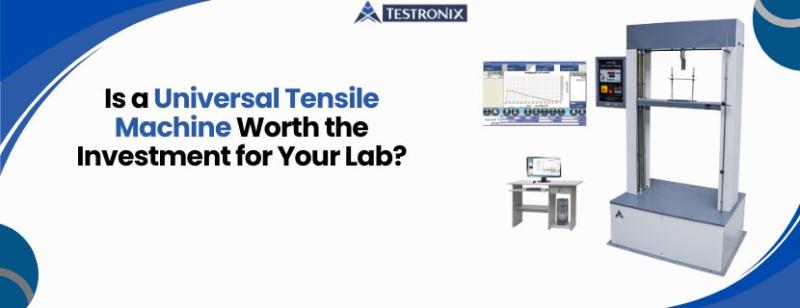
Accurate and reliable material testing is essential for any laboratory focused on quality control, research, or product development. Whether you are testing metals, plastics, textiles, or composites, the ability to measure tensile strength precisely can significantly impact your results and decisions. A universal tensile machine serves this purpose by evaluating the mechanical properties of various materials under tension. However, with advanced features often comes a higher price tag, prompting many lab managers to ask: Is this equipment truly worth the investment?
This article breaks down the core benefits of using a universal tensile machine, explores what affects the universal testing machine price, and helps you assess whether the machine aligns with your lab’s long-term goals.
Understanding the Role of a Universal Tensile Machine in Material Testing
A universal tensile machine plays a critical role in determining how a material behaves under tension. By applying controlled force and measuring elongation, stress, and strain, the machine provides comprehensive data that informs design, quality, and safety decisions. This makes it an indispensable tool in laboratories focused on mechanical performance.
These machines are used across industries such as automotive, aerospace, packaging, construction, and biomedical engineering. Whether you are testing a new composite material or verifying the structural integrity of a metal component, a universal tensile machine provides detailed insights into material characteristics that no visual inspection could offer.
Benefits of Using a Universal Tensile Machine in Your Lab
The decision to invest in a universal tensile machine should be based on both technical requirements and long-term ROI. Fortunately, this device offers numerous benefits that justify its upfront cost.
- High-Precision Testing: Delivers accurate, repeatable results under various loads and speeds
- Versatility: Can test a wide range of materials including polymers, metals, rubber, and textiles
- Compliance-Ready: Supports tests that align with ISO, ASTM, and other industry standards
- Data Logging: Provides detailed digital reports, graphs, and analytics for traceability
- Automation Options: Available with programmable settings for higher efficiency and consistency
Factors That Influence Universal Testing Machine Price
While the performance benefits are clear, the universal testing machine price can vary widely depending on several factors. Understanding these can help you make a more informed purchasing decision without overspending or sacrificing quality.
The key elements influencing cost include:
- Load Capacity: Machines with higher capacity (e.g., 100 kN vs. 10 kN) generally cost more
- Software Capabilities: Advanced software features like real-time graphing and data export add to the price
- Automation & Controls: Fully automated systems come at a premium compared to manual versions
- Accessories: Specialized grips, fixtures, or environmental chambers increase overall investment
- Brand and Support: Established manufacturers may offer better support and warranty services, reflected in the price
How to Determine If It’s Worth the Investment
When evaluating whether a universal tensile machine is a worthwhile investment, consider both the immediate and long-term needs of your lab. It's not just about current test volume, but also future scalability, compliance demands, and efficiency gains.
Ask yourself:
- Will this machine reduce dependence on outsourced testing?
- Can it improve turnaround time and internal R&D capability?
- Will it enhance the lab’s ability to meet regulatory or client-specific standards?
- Are the testing results crucial for improving product performance or safety?
If the answer to most of these questions is yes, then the investment is likely to pay for itself through cost savings, improved product quality, and faster innovation cycles.
Choosing the Right Universal Tensile Machine for Your Needs
Selecting the right model requires a clear understanding of your testing requirements. Overestimating your needs can inflate the cost unnecessarily, while underestimating them could result in an underperforming machine.
Consider the following before making a purchase:
- Maximum load requirements
- Types of materials tested regularly
- Data reporting and software needs
- Future expansion or automation plans
Post Your Ad Here
Comments