Garment Inventory Management: Streamlining Your Apparel Supply Chain with Precision and Insight
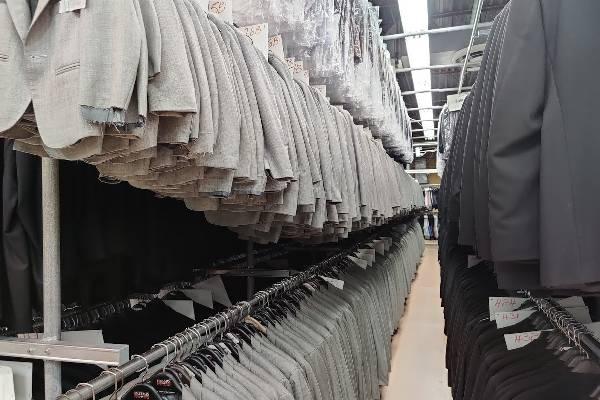
In
today’s competitive apparel market, garment inventory management is not just a
necessity — it’s a cornerstone of operational excellence. Whether you're a
fashion brand, a textile manufacturer, or a retail boutique, maintaining
accurate stock levels, optimising order cycles, and reducing waste are critical
to staying ahead. This comprehensive guide explores strategies, technologies,
and real-world examples that underscore why smart garment inventory management
drives both efficiency and profitability.
The Challenge of Garment
Inventory
Garment inventory brings unique complexities:
Diverse
SKU Attributes:
With
garments, each Stock Keeping Unit (SKU) might vary across size, colour, cut,
material, and even geographic style preferences. Tracking hundreds – or
thousands – of variations across one SKU exponentially increases the data and
management burden.
Seasonal
Peaks & Trends:
Styles,
promotions, and fashion seasons put pressure on forecasting. Demand can shift
rapidly with trends, promotions, or weather changes. Failure to anticipate
these swings often leads to over-stocking, markdowns, or lost sales due to
stockouts.
Shrinkage
and Returns:
Apparel
returns are a significant reality, whether from wear, size issues, or damage.
Combined with shrinkage and theft, these complicate accuracy — and profit.
Multi‑Channel
Distribution:
Modern
brands sell across e-commerce, wholesale, retail, and even pop-up events.
Ensuring real-time visibility across all channels is critical — with
discrepancies directly affecting customer experience and accounting.
These
challenges underscore the importance of robust garment inventory
management
systems — the kind of systems that industry leaders leverage to stay agile and
profitable.
Key Components of Effective
Garment Inventory Management
1.
Centralised Inventory Database
Maintaining one “source of truth” database, where all SKU data — including style, size, colour, unit of measure, cost, location, and demand history — lives centrally is vital. This eliminates channel-based discrepancies and ensures all stakeholders can access consistent, up-to-date information.
2. Real‑Time Stock Visibility
Whether
your warehouse team scans barcodes or RFID tags, real-time updates are
essential. This visibility helps:
·
Identify
low-stock items before a stockout.
·
Track
returns-in-process to prevent miscounting.
·
Detect
missing items or spoilage in your system immediately.
3.
Automated Reorder Point Management
Rather
than manual reordering, intelligent systems monitor:
·
Historic
and projected sales trends.
·
Supplier
lead times and seasonal delays.
·
Minimum
desired stock thresholds and safety buffers.
Automation
prevents under- or over‑ordering — optimising inventory turnover and working
capital.
4.
Batch Tracking & Ageing Reports
Garments
have life cycles: what’s hot this season may not move next season. Batch
tracking and ageing reports highlight slow-moving SKUs, enabling you to plan
promotions, rework, or liquidation strategically.
5.
Integrated Sales Forecasting
Modern
garment inventory solutions interface with point-of-sale (POS), e-commerce
platforms, marketing calendars, and external trend forecasts. By combining
these inputs, you gain predictive demand visibility.
6.
Return & Reverse Logistics Processing
A
streamlined, traceable return process is essential:
·
Check
returns for resale condition.
·
Tag
as “available” or “unsellable.”
·
Trace
returned inventory back into stock counts swiftly — reducing discrepancies and
downstream overselling.
7.
Multi-Location & Channel Management
For
fashion businesses with multiple stores, warehouses, or third-party warehouses
(3PLs), inventory systems must enable:
·
Transfer
orders and inter-location replenishment.
·
Visibility
per channel (e‑commerce vs. store stock).
·
SKU
pools that aren’t siloed but optimised for demand across geography.
8.
Actionable Analytics
Dashboards
and KPIs are the guard rails of intelligent inventory. Understand:
·
Weeks
of supply per SKU.
·
Gross
margin return on investment (GMROI).
·
Sell‑through
rate by collection.
·
Excess
stock and clearance dollar values.
Armed
with data, you can take proactive actions and course correct.
Technologies & Tools: RFID, Barcode, AI, and More
Smart
garment inventory management leans on the sophistication of modern
technologies:
Barcode
& RFID Tracking
·
Barcode systems are
still reliable, cost-effective, and easy to integrate. Paired with mobile
scanning hardware, they support reliable pick‑pack‑ship and receiving actions.
·
RFID tags bring scan‑in‑bulk
capabilities — ideal for high volume, fast rotations, and omnichannel efforts.
Though costlier, RFID yields faster count cycles and better shrinkage
detection.
AI‑Powered
Demand Forecasting
Artificial
Intelligence models consume live sales data, trend signals, weather, calendar
events, and social media sentiment to predict demand. Some even recommend order
volumes per store or warehouse.
Cloud‑Based
Inventory Systems
Cloud
platforms offer:
·
Anywhere
access for store managers, warehouse staff, and buyers.
·
Seamless
integration with ERPs, POS systems, e‑commerce platforms, 3PLs.
·
Continuous
updates, security, and scalability.
Material Handling Integration
Physical
throughput matters. Efficient conveyor systems — such as overhead conveyors
— can move garment racks or totes faster and with less labour, reducing transit
times, damage, and manual handling error. If you're exploring material handling
automation, visit www.alphaconveyor.com or call +1‑416‑557‑3879
to learn about holistic solutions combining inventory and handling.
Strategies & Best Practices
Here’s
how leading garment businesses apply the above tools:
1.
Segmentation & ABC Analysis
·
A-items (high revenue
/ margin) get tight safety stock and frequent review.
·
B-items (mid-tier)
are managed with moderate buffer and batch ordering.
·
C-items are
slow-moving; ordered infrequently or by exception, often tied to promotions.
This
segmentation cuts carrying costs without risking revenue.
2.
Seasonal Buffering & Drop Planning
Align
stocking with fashion-driven launches. Pre-season build could be aggressive;
post-season, emphasise promotions, transfers, or markdowns.
3. Cross‑Channel Rebalancing
When
a shopper abandons an online cart, dynamic stock rebalancing can suggest nearby
store fulfilment. Similarly, end‑of‑day store counts can push replenishment to
under‑stocked locations.
4.
Inventory Audits & Cycle Counts
Full
physical inventories are expensive and disruptive. Cycle counting — small,
daily checks — catch discrepancies early and reduce the shock of full
physicals.
5.
Vendor Collaboration
Share
SKU movement data with suppliers to improve lead-time accuracy, shrinkage
mitigation, and collaborative planning. Co‑managed inventory reduces cost and
increases service levels.
6.
Sustainability & Waste Reduction
With
increasing consumer awareness, minimising waste through efficient inventory is
also an environmental move. Reducing unsold stock mitigates landfill impact.
And better traceability supports ethical garment sources.
Real‑World
Example: Canadian Apparel Brand
Consider
a mid‑sized Canadian outerwear brand. They:
1. Moved from
spreadsheets to a cloud-based inventory system with built-in forecasting.
2. Introduced
cycle counts and segment‑based safety stock — keeping only one week of “A” item
buffer.
3. Added RFID
tags to select best‑selling jackets for seasonal rollouts.
4. Rolled out a
warehouse overhead conveyor line to speed pick‑pack‑ship often demanded during
peak holiday season.
5. End result:
o
20%
reduction in stockouts
o
15%
decrease in working‑capital tied up in stock
o
10%
reduction in return mismanagement (delays or miscounts)
By
integrating garment inventory tracking with smart material handling, they
improved both financial and operational metrics — delighting customers and CFOs
alike.
Conclusion
Expert
garment
inventory management
balances accuracy, agility, and foresight. It’s not just a backroom function —
it’s a strategic differentiator. From SKU-level forecasting and cycle‑counting
to automation via RFID and conveyors, modern apparel businesses are redefining
efficiency.
If
you're ready to take the next step, consider adopting smart inventory systems
and integrated material handling. Enhance flow. Reduce drag. Delight your
customers.
For more detail on conveyor solutions that complement garment inventory systems, visit www.alphaconveyor.com or call +1‑416‑557‑3879.

Post Your Ad Here