The Benefits and Advantages of Hologram Technology for Museums and Exhibits.
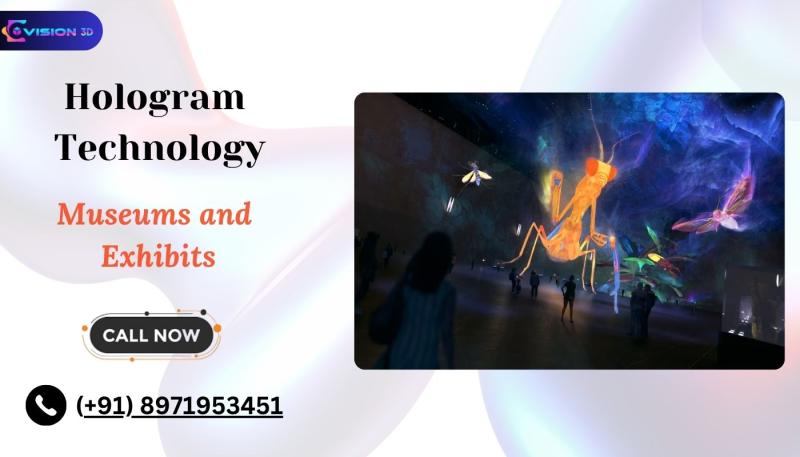
Museums have long been leading the pack when it comes to cultural preservation and edification, yet the adoption of innovative technologies within the past few years has changed the manner of their interaction with the audience. Of all these new technologies, hologram technology can be considered a game-changer, and it has numerous benefits to offer to museums and exhibitions. Whether it is an interactive hologram display or utilizing hologram education, this technology is transforming the experience of museum-going audiences, young and old.
Advantages of Hologram Technology in Museums
1. Active and Interactive Exhibitions
This is one of the main benefits of the hologram technology; it allows making the museum exhibits more lively and attractive. Whereas traditional display may be more or less static, holograms can make objects move, to recreate historical scenes and to make mechanisms or tools of the past work and move. This interactivity engages the mind and feelings of the visitors, and the learning experience becomes more vivid.
2. Space-Saving Solutions
Another constraint that museums have to deal with is physical space, in particular the difficulty of exhibiting large artifacts such as dinosaur skeletons or architectural models. Hologram exhibition services allow displaying such objects in their full scale and detail, yet without taking the precious floor space. This not only makes the best use of available space, but it also enables the exhibiting of objects which would otherwise be impossible to display.
3. Conserving Delicate Objects
A large proportion of the items in many museum collections are too fragile to be put on permanent display because of the damage that light or humidity, or handling could cause. The problem is solved by hologram technology, which makes it possible to make detailed digital copies that can be displayed to the masses without subjecting the original to any possible damage. This will prolong the life of valuable objects and, at the same time, allow them to be used in education.
4. Hologram Interaction Experiences
Interactive hologram exhibits are rewriting visitor engagement. Modern hologram systems respond to gesture and voice commands and movement, which lets users manipulate 3-D objects, animate certain engravings, or get further information about the exhibits. This touch-and-feel kind of interaction addresses different learning styles of the audience and keeps the visitor, particularly the youth, actively engaged throughout the museum experience.
5. Instruction via Holograms
Hologram instruction is a serious education tool for museums, aspiring to make complex subjects easier to grasp. By placing historical figures, scientific ideas, or artistic techniques in 3-D, museums give out information that is easier to digest and retain. For instance, students can interact with holograms of historical figures to see how the people moved and talked, or investigate ancient machinery to better understand through experience.
6. Accessibility from Anywhere and Virtual Connectivity
Holographic stages are not bound only to the physical space. The modern museums are already giving virtual access to their holographic exhibitions so that people all over the world might enjoy the experience.
Real-World Applications: Hologram Exhibition Services in Action
As the hologram exhibit services are implemented around the world in various museums interactive hologram tunnel is one example where visitors pass through and interact with animated holographic animals or historical scenes; another is using holographic projectors to showcase full-sized replicas of artifacts for detailed studies from every angle.
These types of services are not restricted to physical museums. Virtual hologram education exhibitions highlight the advantages of hologram technology by enabling institutions to share their collections globally, set collaborative events with other museums, and provide educational material for schools and researchers around the world.
The Future of Museums: Bridging Tradition and Innovation
Museums are the heritage of the tradition bound by the future. In 2025, museums start experimenting with digitalization, interactive hologram education, AR, and AI-powered guides to create highly engaging, immersive, and personalized experiences for their wide audiences. This serves the overall public better gastronomy through storytelling, better accessibility, and efficiency while conserving cultural heritage. The advantages of hologram technology are evident in the fusion of digital tools with established curation, which is instrumental in presenting fun and dynamic multi-sensory experiences for all age groups, thus ensuring museums will never lose relevance in an ever-evolving technology-driven world.
Conclusion
The hologram technology offers a transformative opportunity that museums and exhibitions can harness for creating immersive, interactive, and space-efficient displays. Dynamic presentations keep visitor engagement high, while fragile artifacts can be preserved with the help of their digital replicas. The ability to use hologram education makes otherwise hard-to-understand concepts much more manageable and much easier to remember. As hologram exhibition services strive to make the art accessible worldwide, museums can portray their culture on the global stage. To know more about holographic displays, get in touch with Vision3D.

Post Your Ad Here
Comments