How to Apply for Postgraduate Programs in Australia
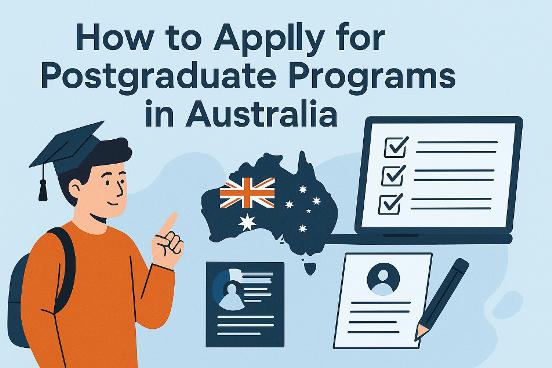
So, you’ve finished your bachelor’s degree and are thinking about what’s next. Studying in Australia is a good option. The country has friendly people, great weather, and some of the best universities in the world. But if you’re not sure how to apply for a postgraduate program there, don’t worry. This guide will explain the whole process step by step in plain and easy language.
What Is a Postgraduate Program?
A postgraduate program is something you study after finishing your first degree. Your first degree is called a bachelor’s degree, and the next level of study is postgraduate.
Some examples of postgraduate programs are:
-
Master’s degree (like Master of Business or Master of Science)
-
Graduate diploma
-
Graduate certificate
-
PhD (which is a Doctor of Philosophy degree)
Most students choose a master’s degree. It usually takes 1 to 2 years to finish, depending on the course.
Step 1: Pick a Course You Like
The first thing you need to do is choose what you want to study. Think about:
-
What subjects you enjoyed during your bachelor’s degree
-
What kind of job you want later
-
What you’re curious about learning more deeply
In Australia, you can find postgraduate courses in:
-
Business
-
Engineering
-
Health and Nursing
-
IT and Computer Science
-
Education
-
Law
It’s important to choose something that matches your career goals and interests.
Step 2: Find the Right University
Next, look for universities that offer the course you want. Some popular ones are:
-
The University of Melbourne
-
The University of Sydney
-
Monash University
-
The University of Queensland
-
UNSW Sydney
But you don’t always have to pick the biggest name. Some smaller universities may be a better fit depending on your budget, location, and course structure. Make a list of a few you like and compare them.
Step 3: Check the Entry Requirements
Every course has its own rules for who can apply. These are called entry requirements. Some of the common things universities ask for are:
-
A bachelor’s degree (from your home country or elsewhere)
-
A certain GPA or grade average
-
English language test scores (IELTS, TOEFL, or PTE)
-
A resume or CV
-
A Statement of Purpose (this is where you explain why you want to study the course)
-
One or two recommendation letters from your teachers or employers
Make sure you read the university’s course page carefully so you know exactly what they want.
Step 4: Take an English Test (If Needed)
If English isn’t your first language, you’ll likely need to show proof that you can read, write, and speak English well. The common tests are:
-
IELTS (most accepted)
-
TOEFL
-
PTE
Each university and course has its own minimum score. For example, many courses need an IELTS score of 6.5 or more. Make sure you prepare well before taking the test.
Step 5: Collect Your Documents
To apply for a course, you’ll need to upload or send some documents. These usually include:
-
Your passport
-
Academic transcripts (your marks and grades from previous studies)
-
English test results
-
Your resume or CV
-
Statement of Purpose (SOP)
-
Recommendation letters
Make sure all your documents are in English and clear to read. Some universities also ask you to upload certified copies (documents signed and stamped by someone official).
Step 6: Apply to the University
Once you have your documents ready, you can apply. Most universities in Australia let you apply online through their websites.
Here’s what you usually need to do:
-
Create an account
-
Fill in the application form
-
Upload your documents
-
Pay the application fee (some universities charge between AUD 50–150)
After applying, you’ll get an email saying they received your application.
Step 7: Get Your Offer Letter
If the university likes your application, they’ll send you an offer letter. This means they’re happy to accept you into the course.
There are two kinds of offers:
-
Conditional offer – You still need to do something (like send final marks or test scores).
-
Unconditional offer – You’ve met all the requirements, and you’re fully accepted.
If you’re happy with the offer, you’ll need to accept it by paying a deposit. This amount goes towards your tuition fees.
Step 8: Apply for a Student Visa
Once you’ve accepted your offer and paid the deposit, it’s time to apply for your Australian student visa (subclass 500).
Here’s what you’ll usually need:
-
Confirmation of Enrolment (CoE) from the university
-
Proof of English language skills
-
Proof that you can pay for tuition and living costs
-
Passport
-
Overseas Student Health Cover (OSHC)
-
Health and character checks
You apply for the visa online through the official Australian Government website. The visa usually takes a few weeks to process.
Step 9: Plan Your Travel
When your visa gets approved, you can start planning your move to Australia. Things to do:
-
Book your flight
-
Find a place to stay (student housing or shared accommodation)
-
Buy travel insurance
-
Pack your important documents and clothes
Also, check when your classes start and try to arrive a week or two early.
Step 10: Start Your New Life
After you reach Australia, your university will have an orientation program. This helps you learn your way around campus, meet teachers, and make new friends.
You’ll also learn about:
-
Student support services
-
Safety and legal rights
-
Public transport
-
Health services
And that’s it—you’re ready to start your studies!
A Few Extra Tips
-
Start your planning at least 6–12 months before the course begins.
-
Keep copies of all your documents in a folder.
-
Double-check deadlines for applications, visas, and fees.
-
If you’re ever confused or need help, don’t hesitate to ask the university or visit OnlineAssignmentsHelp.com.
Final Thoughts
Studying in Australia can be a great choice. The universities are good, and the lifestyle is relaxed. If you take it step by step—choose your course, get your documents ready, apply to universities, and then apply for your visa—you’ll be just fine.
And if you need help writing your Statement of Purpose, organizing your documents, or just have questions about studying in Australia, you can visit: ? OnlineAssignmentsHelp.com
We’re happy to help.
Post Your Ad Here
Comments