Digital Health: The Future of Modern Healthcare?
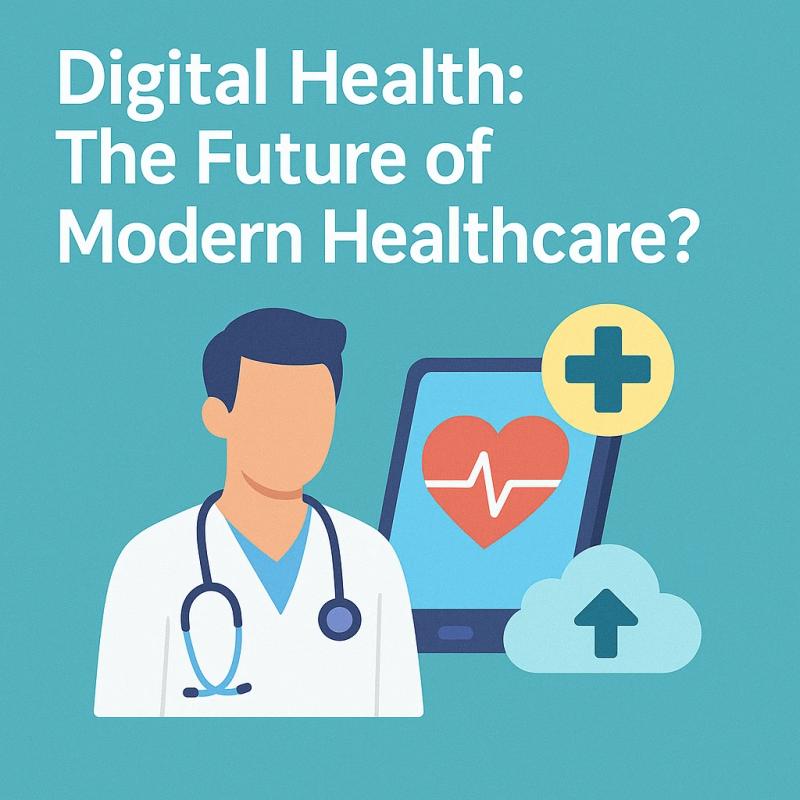
Healthcare trends are changing, even faster than Usain Bolt. Gone are the days when your only option was to visit a clinic or hospital for every medical concern, big or small. This shift has become possible because of technology and digital health. Digital health processes have changed how care is delivered, monitored, and accessed. But, is this the future of healthcare? If you are thinking about this same question, then this blog would be helpful for you to get your answers -
What Is Digital Health, and Why Does It Matter?
Digital health, as the word suggests, is the combination of healthcare and technology to optimize existing healthcare solutions, and offer more convenient, faster, smarter, and effective solutions. One very famous example of this is telemedicine, through which you can speak to your doctor over a video call instead of having to wait in long queues in the waiting room. Over the years, this choice has become a routine for many.
Wearable devices, like fitness trackers or glucose monitors, keep tabs on your health without requiring you to do much. Mobile health apps, further make it easier to manage the patients' diet, sleep patterns, and stress levels.
The goal? To bring care closer and accessible for everyone. With digital transformation services, the emphasis shifts to empowering people by offering them options that fit their lifestyle, and address complex healthcare challenges that traditional methods often struggle to solve.
Why has digital health taken off the way it has?
There are several reasons for this, some of which are:
1. Managing Health Conditions More Effectively
With the growing number of people facing chronic conditions, like diabetes or heart disease, there was an urgent need for tools that go beyond regular doctor visits. So, digital solutions came up with devices that can measure blood sugar levels or blood pressure at home by the patient themselves without having to go to the clinic for this only.
2. The Growing Role Of Technology In Everyday Life
Technology is no longer a fancy term for everyone, it’s part of everyone’s life, involved in nearly everything we do. Ordering food, chatting with friends, and even performing your job duties can be done through digital platforms. So, why not your health? It only makes sense that the medical industry also keeps pace with the rest of the world's operations.
3. Making Healthcare More Accessible
Not everyone lives close to a hospital or clinic. In fact, in many rural and remote areas, clinics are not even available. Access to doctors becomes really difficult here as people have to travel to another village to get to the doctor. Digital health bridges this gap. With a phone or internet connection, anyone can easily consult a doctor from anywhere, monitor their condition, or receive follow-up care.
How Does Digital Health Benefit You?
1. Convenience at Your Fingertips
Ok, so imagine this, you’re unwell and it’s not possible for you to drive to a clinic, wait for your turn there, and get checked. So, instead of opting for all that discomfort, you log in to a virtual consultation, explain your symptoms to the doctor available there, and get checked instantly, yup, without leaving your home! That’s the convenience of digital health.
2. Tools That Work For You
Wearable devices and mobile apps have made it easier for everyone to track their health from time-to-time and stay healthy. Want to track steps, heart rate, sleep quality, stress levels, or even your joint movement, there’s a device for each of these. Want to improve your diet? There’s even an app for that, customized according to your body's needs.
3. Keeping Healthcare Costs Within Budget
Healthcare is expensive, and in some countries, like the US, it’s higher than combining all the other aspects of people. And, it becomes higher, when some conditions are left untreated for too long. Digital health focuses on the prevention and early intervention of such diseases. By doing that, you can avoid those costly treatments and save your wallet from becoming empty with all those soaring high medical costs.
What’s Holding Digital Health Back?
Despite its potential, digital health isn’t perfect. There are challenges to overcome.
1. Trust and Privacy Concerns
2. Not Everyone Has Access
3. Learning to Use New Tools
What Could the Future Hold?
1. Personalized Care That Fits You
2. Better Support for Mental Health
3. Reaching the Unreachable
4. Collaborative Healthcare
Is Digital Health Right for Everyone?
While the benefits are clear, digital health may not suit everyone. Certain conditions or treatments still require hands-on care. Surgery, complex diagnostics, or emergency situations can’t rely solely on digital tools.
But digital health isn’t about replacing traditional care—it’s about complementing it. It fills gaps, enhances efficiency, and makes healthcare more approachable for those who need it.
Final Thoughts, the future of healthcare is already here, and digital health is leading the charge. While it’s not a perfect solution, its potential to make healthcare more efficient, accessible, and personalized is undeniable.
You don’t have to be a tech enthusiast to benefit from digital health. It’s about making healthcare work for you, not the other way around. Whether it’s a virtual consultation, a wearable device, or a mobile app, these tools are shaping a future where care is as close as your fingertips. And, if you are a provider, then also you can easily streamline your tasks through a Salesforce consulting services provider.
Post Your Ad Here
Comments