How Are Analytics Driving Digital Transformation?
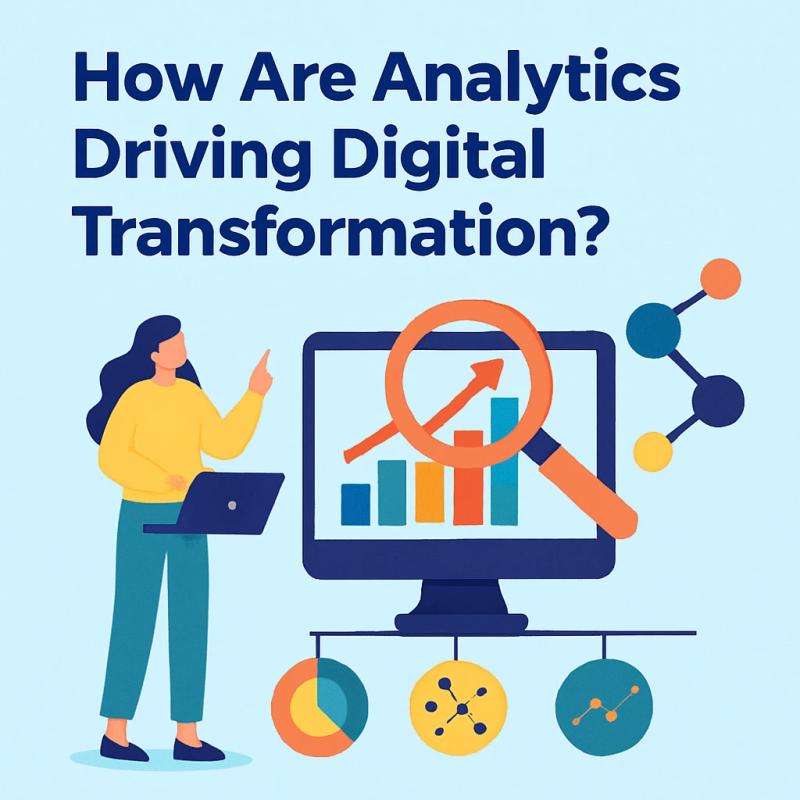
Change is the very essence of business. But what really differentiates successful companies is the ability to make decisions based on facts, not assumptions. Data analytics has become the platform that allows for smarter choices, greater efficiency, and a deeper understanding of clients. It's no longer an extra feature; it's the driving force behind the show.
When businesses use analytics effectively, they don't just count numbers; they predict trends, improve operations, and offer services that people actually need. Whether it's a company improving customer experience or a health care provider shortening wait times, analytics plays a central role. Let’s break it down into the areas where analytics is making the biggest impact in digital transformation.
Understanding Customers
Personalization at Scale
Every business wants to serve its customers better, but the real challenge is understanding what they need—sometimes before they even ask. That's where analytics come in. Retailers, for example, can look at a person's purchase history and browsing patterns to recommend a product that's right up the customer's alley. But such personalization isn't limited to shopping. Streaming services recommend movies based on past viewing; even health-care providers gather patient data to anticipate medical needs.
Real-Time Behavior Adjustment
Ever wonder how some companies seem to know what you need before you do? That's analytics in action. Companies that keep on top of customer behavior don't waste time guessing what will work; they adjust in real time. If a product isn't performing well, they quickly see why and change their approach.
Improving Customer Experience
This level of insight isn’t just about selling more. It improves customer experience by eliminating frustration. No one wants irrelevant ads or unnecessary services. When companies fine-tune their approach using data, they create better interactions for everyone.
Improving Products Without Wasting Time and Resources
Bringing a new product or service to market is expensive. A wrong move can cost millions. But what if a company could test ideas before investing heavily? That’s exactly what analytics makes possible.
Companies now use data simulations to test how a new product might perform before launching it. They gather real customer feedback early in the process, saving time and money on adjustments. That's fewer product failures and more solutions that actually meet people's needs.
A similar approach is being taken in health. Researchers are analyzing gigantic data sets to understand how treatments might work before clinical trials even begin. Instead of following only traditional methods, they find patterns that help speed up research.
By eliminating the need for guesswork, analytics make sure time and resources are being put into what truly counts.
Efficiency: Getting More Done With Less
No one likes to wait—be it for the delivery of a package, a response from customer support, or a doctor's appointment.
Many businesses still rely on outdated processes that don’t keep up with demand. But those using analytics can see exactly where time and resources are being wasted.
Real-World Use Case: Appointment Scheduling
Take appointment scheduling: A busy hospital might be able to experience long patient wait times, not because there are not enough doctors, but because the appointments aren't being scheduled in an efficient way. Analytics will help identify such patterns, including peak hours and no-show tendencies, so the hospitals can respond accordingly.
Real-World Use Case: Supply Chains
The same principle holds good for supply chains. If a company is plagued by repeated delays, analytics will be able to identify whether the problem lies in the shipping routes, supplier reliability, or inventory mismanagement. Once the cause is identified, solutions become pretty obvious.
Companies that optimize their operations in this manner do not merely reduce costs; they also deliver superior service. Customers receive faster responses, employees work more efficiently, and resources aren’t wasted.
Smarter Decision-Making for Long-Term Growth
Many companies collect data, but not all of them know how to use it effectively. Analytics isn’t just about gathering numbers—it’s about turning them into useful insights.
Top business leaders increasingly rely on analytics in their decision-making. Rather than running a business based on past reports or gut feelings, they are using real-time data to measure and assess risks and opportunities.
Better Pricing Strategies
In the example of pricing strategies, rather than merely keeping pace with market trends, firms now analyze customer purchase behavior, competitor pricing, and fluctuations in demand. Consequently, their prices stay competitive without eating into profits.
Predictive Planning
Analytics also enables organizations to project future trends. In the case that a company realizes customer demand for a certain product is increasing, they can stock up before the shortages hit. If an industry shift is occurring, they can prepare ahead of time instead of reacting at the last minute.
Without such insight, companies are bound to act on information that is already passé, thus missed opportunities or needless losses will be incurred.
Challenges: Why Some Companies Struggle to Use Analytics Effectively
While analytics brings huge benefits, not all companies use it to its potential. Among the biggest challenges that remain are:
-
Data overload: Where collecting data is an easy thing to do, making sense of the data collected becomes another tale altogether.
-
Privacy issues: Businesses should use data responsibly.
-
Lack of expertise: Even with the tools in place, what businesses need is experts who can translate and implement insight from the data.
Final Thoughts
Analytics is not just numbers on the screen; it's about making better decisions, improving efficiency, and creating a better experience for businesses and customers alike. Companies that use data to its full potential are not following the trend; they're shaping their industries.
Businesses can remain competitive without making a guess, since the way customer behavior can be understood, products refined, operations optimized, and AI-driven insights used. This rings so true for companies leveraging Salesforce consulting services, whereby advanced analytics can be integrated into the workflow for maximum benefit to the company.

Comments