pH Matters: How the Right pH Makes AHA and BHA Cleansers More Effective for Your Skin?
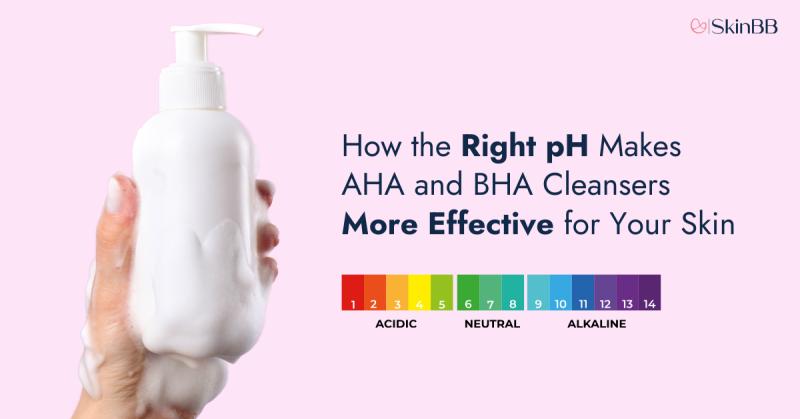
If you've been using or considering AHA (Alpha Hydroxy Acid) and BHA (Beta Hydroxy Acid) cleansers, you're likely drawn to their promise of smoother, brighter, and clearer skin. However, did you know that pH is the unsung hero determining how effective these cleansers truly are? The pH level of your AHA or BHA cleanser can significantly influence how well these acids work. Many products on the market may boast these powerful ingredients, but if the pH isn’t optimal, you might not be getting the full benefit.

Let's explore why the pH level of your cleanser matters, what clinical evidence says about AHA and BHA efficacy at different pH levels, and how you can choose the best cleanser for your skin.
Why pH is Critical for AHA and BHA Efficacy?

The Science of AHA and BHA Activity
AHAs, such as glycolic acid, lactic acid, and mandelic acid, are water-soluble exfoliants that work by loosening the bonds between dead skin cells. BHAs, like salicylic acid, are oil-soluble and penetrate deep into pores to clear out sebum and debris. However, for these acids to perform their exfoliating magic, they need to be in their free acid form. This happens only when the product’s pH is sufficiently low, typically between 3.0 and 4.0.
At this low pH:
AHAs and BHAs Remain Active: The acids stay in their free acid form, which allows them to penetrate the skin and perform their exfoliating functions.
Effective Exfoliation: The acids can effectively break down the bonds between dead skin cells, allowing them to slough off more easily.
Enhanced Penetration: Lower pH helps AHAs and BHAs penetrate the stratum corneum (the skin's outer layer) more efficiently, providing better results.
In contrast, at a neutral or alkaline pH (above 5.5), these acids lose their ability to exfoliate because they are converted into inactive salts. This drastically reduces their effectiveness, meaning you might not see the results you’re hoping for.
? Your cleanser might be doing more harm than good! Check its ingredients with Label Looker and see if it's right for your skin.
What Research Says About pH and Efficacy?
Numerous clinical studies have underscored the importance of pH in AHA and BHA formulations:
Enhanced Absorption at Low pH:
A study by Margaret Kraeling and Robert Bronaugh demonstrated that AHAs like glycolic acid and lactic acid penetrate the skin much more effectively when the pH is around 3.0 compared to a neutral pH of 7.0. The low pH allows the acids to remain in their active form and penetrate deeper into the skin .
Improved Results for Photoaged Skin:
Research by Chérie M. Ditre et al. found that AHA treatments at a low pH significantly improved signs of photoaging, such as fine lines, roughness, and uneven pigmentation. The exfoliating action at low pH also promoted collagen synthesis and enhanced skin renewal, leading to smoother, firmer skin .
Maintaining the Acid Mantle:
The skin’s natural pH is around 4.5 to 5.5, known as the acid mantle. According to Frank Rippke et al., using cleansers with a low pH helps preserve this protective barrier, which defends against harmful bacteria and environmental stressors. Low-pH AHA and BHA cleansers support this natural balance, making your skin healthier and more resilient .
Balancing Efficacy and Safety:
The Final Report on the Safety Assessment of Glycolic Acid and Lactic Acid by F. Alan Andersen emphasizes that while a pH below 3.5 enhances the effectiveness of AHAs, it can also increase the risk of irritation and sensitivity. For most consumers, a formulation with a pH between 3.5 and 4.0 offers the best balance of efficacy and safety .
But if you want real results—fewer breakouts, faded dark spots, or smoother texture—low pH is non-negotiable. If you are struggling with cleansers that don’t deliver? Join the discussion in our Community and find out what ACTUALLY works!
Why Do Some Cleansers Have Higher pH?
Despite the clear benefits of low-pH formulations, some AHA and BHA cleansers on the market have a neutral or higher pH (around 6.0 to 7.0). There are a few reasons for this:
1. Reduced Irritation
A higher pH makes the product gentler, reducing the risk of irritation, redness, and dryness. This can be particularly beneficial for those with sensitive skin who may not tolerate low-pH products well.
2. Daily Use
For cleansers meant for everyday use, a higher pH can be less harsh on the skin. Some people prefer using mild exfoliating cleansers daily rather than strong treatments a few times a week.
3. Limited Contact Time
Because cleansers are typically rinsed off quickly, the short contact time reduces the need for a low pH. Some brands prioritize gentleness over maximum exfoliation, reasoning that a cleanser doesn’t stay on the skin long enough for pH to make a huge difference.
However, while higher-pH cleansers may be gentler, they compromise the effectiveness of the AHAs and BHAs, providing only mild exfoliation. If you’re looking for significant results, such as improved texture, reduced hyperpigmentation, or fewer breakouts, a low-pH formulation is the way to go.
How to Choose the Right AHA/BHA Cleanser?

1. Look for the pH Level
Not all brands disclose the pH of their products, but those that do are often transparent about their formulations. Ideally, choose a cleanser with a pH between 3.5 and 4.5 for effective exfoliation without excessive irritation.
2. Check the Ingredient List
Make sure the active AHA or BHA (e.g., glycolic acid, lactic acid, or salicylic acid) is listed near the top of the ingredient list. Avoid products that contain neutralizing agents like sodium hydroxide early in the list, as these can raise the pH.
3. Consider Your Skin Type
Normal to Oily Skin: You can likely tolerate a low-pH cleanser (pH 3.5 to 4.0) for effective exfoliation.
Sensitive Skin: Start with a cleanser that has a pH around 4.5 to 5.5 to minimize irritation while still benefiting from mild exfoliation.
4. Patch Test First
If you’re trying a new cleanser, perform a patch test on a small area of your skin to see how it reacts, especially if it’s a low-pH product.
Final Thoughts
When it comes to AHA and BHA cleansers, pH matters more than you think. Clinical evidence shows that these acids work best at a lower pH (3.0 to 4.5), where they remain in their active, exfoliating form. This allows them to effectively slough off dead skin cells, boost collagen production, and clear out clogged pores.
While higher-pH cleansers might be gentler for daily use, they won’t deliver the same transformative results as low-pH formulations. By understanding the importance of pH and choosing the right formulation, you can maximize the benefits of AHAs and BHAs, revealing smoother, brighter, and healthier skin. Your skincare routine deserves the science behind it — make sure your cleanser is doing the work it promises!

Post Your Ad Here
Comments