The Future of Cellular Network Providers: 5G, Satellite Integration, and What's Next?
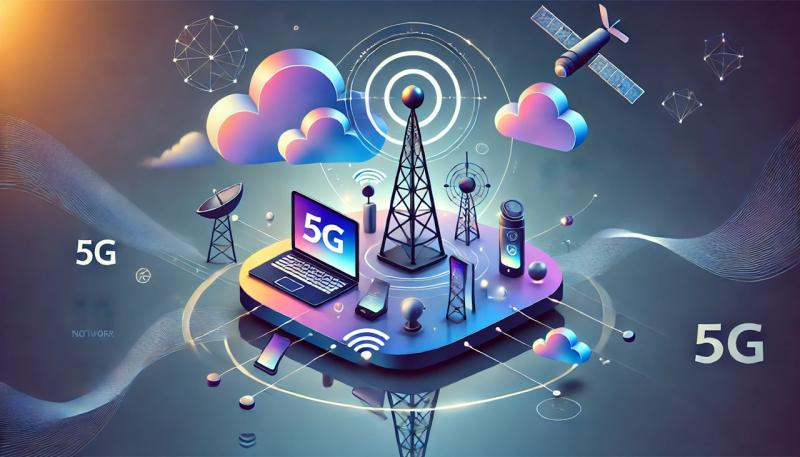
The evolution of telecommunications is accelerating at an unprecedented pace. As businesses and consumers demand faster, more reliable, and seamless connectivity, cellular network providers are at the forefront of technological innovation. From the expansion of 5G networks to the integration of satellite communications, the industry is undergoing a transformation that will redefine global connectivity.
In this article, we’ll explore the future of cellular network providers, focusing on the impact of 5G, the role of satellite technology, and what lies ahead for the industry.
1. The Continued Expansion of 5G Networks
5G technology has already begun reshaping how people and businesses connect. With faster speeds, lower latency, and increased network capacity, cellular network providers are rolling out 5G to meet the growing demands of mobile users, businesses, and IoT applications.
Key Benefits of 5G for Businesses and Consumers:
Higher Speeds: 5G delivers download speeds up to 100 times faster than 4G, making activities like streaming, remote work, and cloud computing more efficient.
Ultra-Low Latency: The near-instantaneous response times of 5G enable real-time applications such as autonomous vehicles, telemedicine, and smart city infrastructure.
Increased Capacity: 5G networks can handle a significantly higher number of connected devices, making them essential for IoT applications and smart devices.
As cellular network providers continue expanding 5G infrastructure, they are also exploring ways to improve coverage in rural and underserved areas, ensuring equitable access to high-speed connectivity.
2. Satellite Integration: The Next Frontier in Connectivity
A significant challenge in mobile communications has been providing coverage in remote or hard-to-reach locations. While traditional cell towers have limitations, cellular network providers are turning to satellite technology to bridge the connectivity gap.
How Satellite Networks Are Changing the Game:
Global Coverage: Unlike cell towers that have geographic restrictions, satellite networks can provide connectivity anywhere on the planet, including oceans, deserts, and mountainous regions.
Disaster Resilience: Satellite integration offers reliable communication during natural disasters, emergencies, or infrastructure failures, making it a crucial technology for disaster response and government agencies.
Hybrid Connectivity Models: Some cellular network providers are experimenting with hybrid models that combine terrestrial cell towers with satellite networks, ensuring seamless connectivity for users moving between urban and remote areas.
Companies like SpaceX’s Starlink, Amazon’s Project Kuiper, and OneWeb are partnering with cellular network providers to enable satellite-to-smartphone connectivity, reducing reliance on traditional ground-based infrastructure.
3. The Rise of Private 5G Networks
Enterprises are increasingly looking for secure, dedicated communication solutions tailored to their operational needs. This has led to the emergence of private 5G networks—customized wireless networks managed by businesses rather than public cellular network providers.
Why Private 5G Networks Are Gaining Popularity:
Enhanced Security: Businesses have full control over network security, reducing vulnerabilities associated with public networks.
Customized Performance: Private networks can be tailored to specific needs, such as ultra-low latency for industrial automation or high reliability for healthcare facilities.
Operational Efficiency: Industries like manufacturing, logistics, and energy are using private 5G to power automated systems, robotics, and IoT applications.
Major cellular network providers are now offering private 5G solutions to businesses, ensuring a flexible and scalable alternative to traditional wired infrastructure.
4. AI and Automation in Network Management
The growing complexity of modern networks requires smarter management solutions. To optimize efficiency, cellular network providers are turning to artificial intelligence (AI) and automation.
How AI is Transforming Cellular Networks:
Predictive Maintenance: AI can analyze network data to predict potential failures before they occur, minimizing downtime and improving service reliability.
Dynamic Network Optimization: AI-driven systems can adjust bandwidth allocation and prioritize traffic in real-time to enhance user experience.
Enhanced Security: Machine learning algorithms detect and mitigate cyber threats, ensuring data integrity and protection against network breaches.
By leveraging AI, cellular network providers are making networks more adaptive, efficient, and secure—ensuring seamless connectivity in an increasingly digital world.
5. The Transition to 6G and the Future Beyond
While 5G is still being deployed worldwide, research into 6G has already begun. Expected to launch commercially around 2030, 6G aims to revolutionize mobile communications once again.
What to Expect from 6G:
Speeds Exceeding 100 Gbps: 6G will offer speeds that make today’s 5G look slow, enabling high-resolution holographic communication and immersive virtual reality experiences.
Terahertz Frequency Bands: Unlike current radio waves, 6G will utilize terahertz waves for higher data transmission rates and more efficient network usage.
AI-Driven Networks: Fully autonomous networks will self-optimize and self-repair, reducing human intervention in network management.
Smart Cities and Beyond: 6G is expected to integrate with AI-driven smart city infrastructures, autonomous vehicles, and advanced IoT systems on an unprecedented scale.
Although 6G is still in the research phase, cellular network providers are already laying the groundwork for what will be the next era of connectivity.
Conclusion: The Evolving Role of Cellular Network Providers
The future of cellular network providers is marked by rapid advancements in technology, from widespread 5G adoption to satellite integration, private networks, AI-driven management, and the eventual arrival of 6G. As connectivity becomes more essential to everyday life and business operations, providers must continue to innovate, expand coverage, and improve network efficiency.
For businesses and consumers, staying informed about these advancements will help in making strategic decisions about connectivity solutions. Whether it’s adopting private 5G networks, leveraging satellite integration, or preparing for future innovations like 6G, the way we connect is evolving—and cellular network providers are leading the charge.
Post Your Ad Here
Comments