Periodontal Gum Disease - Causes, Symptoms & Ayurvedic Treatment
Abstract
Oral health is maintaining our gums, teeth, and tongue healthy to avoid any oral issues like bad breath, mouth ulcers, gum pain, gum bleeding, tooth pain, and in severe cases, bone also gets affected. Healthy gums should look pink, and firm, not red or swollen. Healthy Gum acts as a barrier between bacteria in your mouth and prevents these harmful bacteria from entering the body. In this article, we will read about very common periodontal gum diseases that are gingivitis and periodontitis.
Introduction
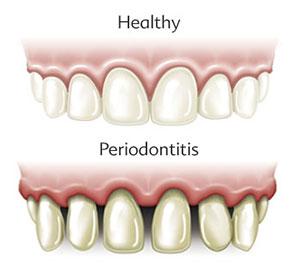
When we don’t maintain our oral health then the person has many oral issues like toothache, bad breath, mouth ulcers, gum bleeding, tooth cavities, and in severe cases bone that supports the teeth might get involved leading to many periodontal diseases like Gingivitis and Periodontitis. Gingivitis involves the gums and teeth whereas on the other hand, Periodontitis involves the bone which supports the teeth. Gingivitis leads to Periodontitis. Gingivitis is a reversible periodontal disease but periodontitis is irreversible periodontal disease.
Signs of Unhealthy gums
- Gums that bleed during brushing and flossing.
- Gums that are red, fluffy, and tender.
- Gum that is separated or pulled away from the teeth.
- Pus forming between your teeth and gums.
- Constant foul smell from the mouth
What is Gingivitis?
Gingivitis is inflammation or infection of tissue around the gums of the teeth. It can be seen in children (varies from 8 years to 18 years), adults, and older. It is one of the most common types of gingival disease. It is the inflammation of the gingival tissues caused by the infection. It is reversible but left untreated may lead to periodontitis.
Types of Gingivitis
Gingivitis can be categorized into two types and that is-
1. Acute Gingivitis
Acute Gingivitis starts very quickly and is often triggered by trauma or infection. Its symptoms are red swollen bleeding gums. It causes more discomfort and pain in the gums.
2. Chronic Gingivitis
Chronic Gingivitis develops over some time due to consistent plaque buildup. Its symptoms might take a long duration to be apparent and have the same symptoms as acute gingivitis. It is a long-term condition.
Symptoms of Gingivitis
The symptoms of gingivitis are as follows
- The presence of inflammation is confined to the gingiva tissue.
- Redness (Change in the color)
- Swelling (Edema) in the gingival tissue
- Bleeding upon provocation
- Change in the consistency (Sponginess of the gingiva)
- No clinical attachment loss of the gingival tissue or radiographic bone loss
- Bad breath
Causes
- Changes in the hormones (It may occur during pregnancy, puberty, or menopause).
- Some other diseases like HIV, diabetes, and cancer lead to higher chances of gingivitis.
- Family history (people whose parents have gingivitis have a high chance of developing it)
- Vitamin C deficiency:- Patients not getting enough Vitamin C have a high chance of getting gum diseases.
- If a patient is a chronic smoker then he/she loses the ability to fight with infection.
- Some medications like oral contraceptives and steroids can also cause gum diseases.
How is Gingivitis diagnosed?
Gingivitis can be diagnosed in the following ways:-1. Physical Examination:- It can be done by examining the sensitive teeth.
2. Radiographic X-rays:- It can be done by taking radiographic X-rays.
3. Medical History:- By taking the medical we can come to know about the patient’s eating habits and general health.
Treatment
Its treatment can be done in following ways
- By Scaling
- By Giving Antibacterial Mouthwashes or Antiseptic gels
- By Doing Flap Surgery
What Are Possible Complications From Gingivitis?
Possible complications may include
- Infection in the jaw bone or gingiva
- Abscess in the gingiva
- Abscess in the jaw bone<
- Ulceration of the mouth caused by various bacteria
- Loss of the teeth
What Are The Things Patients Can Do At Home?
- The patient should avoid Smoking.
- The patient should brush their teeth at least twice a day.
- Regularly wash your mouth with antiseptic mouthwash or antiseptic gels.
- Ensure adequate intake of Vitamin C.
- The patient should eat a balanced diet.
- The patient should avoid taking sugary products.
What is Periodontitis?
Periodontitis is a chronic bacterial infection that affects the gums and the bone supporting the teeth. It is most commonly seen in adults 30 years of age and older people. When the gingivitis is left untreated that cause leads to periodontitis.
Types of Periodontitis
There are several types of Periodontitis and are:-
1. Aggressive Periodontitis
This type of periodontitis is a very rare, fast-processing gum disease that causes rapid tooth destruction and tooth loss. It mostly affects younger people less than 30 years old, but can also occur in children. It causes bad breath, pus around the gums, and loose teeth.
2. Chronic Periodontitis
This type of periodontitis causes inflammation around bone loss around the teeth. It is the most common type of periodontitis and can occur at any age. There are swollen, red, and bleeding gums. Chronic Periodontitis is not curable but can be managed. It can progress from gingivitis.
3. Necrotizing Periodontitis
It is a severe gum disease that destroys gum and bone. It usually affects the periodontal ligament and alveolar bone. It usually appears as a lesion on the gums. More common in HIV and immunosuppressant patients. It usually causes pain, a metallic taste in the mouth, and gingival necrosis.
4. Systemic Periodontitis
There is a condition where the chronic periodontitis inflammation of the gums spreads to the other parts of the body. It develops in patients who already have systemic diseases such as respiratory disease, heart disease, and diabetes mellitus.
Symptoms of Periodontitis
The symptoms of periodontitis are as follows:-
- Gums that are swollen or puffy
- Gums that are bright red, dusky red, or purplish
- Gums that bleed easily without provoking
- Patients also have receding gums or longer-appearing teeth
- Patients have bad breath for a longer period
- The patient may feel an unpleasant taste in the mouth.
Causes
There are various causes of Periodontitis some of which are:-
- Poor Oral Hygiene:- Patients having bad oral hygiene have the chance of getting periodontitis like not brushing properly.
- Hormonal Changes:- Hormonal changes during pregnancy, menopause, and puberty lead to chances of getting periodontitis.
- Certain Diseases:- Some diseases like Rheumatoid arthritis, HIV, and diabetes have a high chance of getting periodontitis.
- Smoking:- Smoking and chewing tobacco also lead to periodontitis.
- Plaque build-up:- Not brushing your teeth properly which in turn leads to plaque build-up and later on causes periodontitis
- Unhealthy Diet:- Eating lots of sugar and a diet lacking Vitamin C (helps in collagen synthesis) which in turn makes gums more prone to periodontitis.
- Stress:- If a person is a permanent stress taker which in turn affects the body’s ability to fight disease.
- Medications:- Antidepressants, Steroids, and Oral contraceptive medications lead to the chances of getting the disease.
- Teeth Grinding:- Some people have a habit of teeth grinding (usually at night) which wears off the enamel layer and leads to many dental problems like tooth sensitivity, tooth cavities, and so on.
How can Periodontitis be diagnosed?
Periodontitis can be diagnosed in the following ways:
1. Visual Examination:- The patient can be diagnosed by seeing the gums, or plaque. 2. Palpation:- Healthy gums are firm whereas in periodontitis the gums are swollen. 3. Radiographic X-rays:- In radiographs, bone loss can be seen. 4. Medical History:- By taking medical history we can come to know about the patient's habits.Treatment
Periodontitis as a whole requires surgical and nonsurgical treatment which also needs lifestyle changes. Some of the treatments are
1. It can be treated by Scaling to resolve the underlying cause. 2. We can also give Antibiotics or topical Antibiotics. 3. Tell the patient to brush accurately. 4. You can also tell the patient to change their lifestyle. 5. Mouthwashes like Turmix mouth rinse to decrease the rate of harmful microorganisms in the mouth.What Are the Possible Complications of Periodontitis?
There can be possible complications of periodontitis some of which are
- Tooth Loss:- In severe cases, there can be tooth loss.
- Gum Abscess:- The patient may also face pus-filled bone which is called a gum abscess.
- Receding Gums:- Gingiva gets pulled away
- Rheumatoid Arititis:- Patients dealing with periodontitis may activate joint inflammation.
- Heart Diseases:- The patient may get more prone to heart strokes.
AYURVEDIC OVERVIEW
In this Article, we read about Periodontal Gum Diseases and their types that as gingivitis and periodontitis. This disease affects our gums and bones. In Ayurveda, these diseases are due to our body doshas which are Kapha, Vata, and Pitta. In this disease, there are Kapha and Rakhta doshas that vitiate the gums. In Ayurveda, there are many ways to manage Periodontal Gum Disease some of which are
1. Oral Rinse & Gargling (Gandusha and Kavala)
There are oral cleansing techniques in which some medicated fluids are used to drain nasal discharge before spitting it out. The Kavala takes the fluid in the mouth and then swishes it in the mouth for a few minutes which helps to reduce the bacteria, bad breath, bleeding gums, and tooth decay.
2. Neem
Neem is also called Nimbaka or Nimba. Which has anti-bacterial, anti-fungal, and anti-inflammatory properties that help to fight germs and gum disease. In India using neem twigs has been classically used from historic times.
3. Babool
Babool is also called Babhula or Babhul. It has anti-microbial properties that prevent gum bleeding and give strength to our teeth. It also helps to fight gum diseases.
4. Irimeda
Irimeda is an adaptable herb. This herb has an anti-inflammatory property which reduces gum pain and strengthens the teeth.
5. Triphala
Triphala is a mixture of three fruits Amalki (Emblica Officinalis), Bibhitaki (Terminalia Bellirica), and Haritaki (Terminalia Chebula). This herb is widely used to prevent tooth decay and gum diseases.
6. Turmeric
Turmeric is also known as Curcumin. Turmeric has various properties like anti-inflammatory, anti-oxidative, and anti-bacterial properties. Turmeric helps to relieve the pain in teeth, gums, tooth decay, and any other oral infections. It can be used by making a paste, or mouthwash. Keep the paste for about 5 minutes so that it sits on the teeth and then wash it off.
7. Clove
Clove is also known as (Syzygium Aromaticum) which has antifungal properties (due to the presence of eugenol), and antioxidative properties. It helps to improve gum health and gum pain.
Herbal Remedies By Planet Ayurveda for Periodontal Gum Diseases
Planet Ayurveda is a company that has GMP CERTIFIED, HACCP CERTIFIED, HALAL CERTIFIED, ISO CERTIFIED, and many more. They make products not only for humans but for pets as well under the supervision of MD Practitioners. They make products that are 100% natural and have no side effects. These products do not contain any kind of synthetic materials or preservatives. These products help in managing various health problems.
1. Gum Care Powder
This powder contains natural herbs like Sonthi ( Zingiber Officinale),
Haritaki (Terminalia Chebula), Mustak (Cyperus rotundus), Pong (Areca Catechu), and many other herbs. Helps maintain our gums, and teeth healthy. Gum powder has various benefits like plaque build-up, fighting bacteria, soothing gum inflammation, and freshens breath.
Method of Application:- This powder is gently massaged on teeth and gums with 3-6 grams.2. Triphala Capsules
These Capsules contain Haritaki (Terminalia Chebula), Bibhitaki (Terminalia Bellirica), and Amalaki (Emblica Officinalis). Triphala helps to maintain our three body doshas (Kapha, Vata, Pitta) and our digestive system. These capsules help in maintaining good oral health and pacify all the vitiated body doshas.
Dosage:- Take 1-2 Capsules twice a day with plain water after meals.
3. Arjun Saar
Arjun Saar is made up of the natural herb Arjuna ( Terminalia Arjuna) which controls bleeding and Amla (Emblica Officinalis) which is rich in antioxidants and helps in collagen synthesis. It helps in maintaining three body energies (Vata, Pitta, and Kapha). Oral mucosa has a predominance of kapha which leads to dental problems. Arjun Saar helps to reduce bad breath, gum, and teeth-related problems like gum bleeding, tooth cavities, pain in gums, and toothache.
Application:- Massage your teeth and gums with 3-6 gms gently. Rinse it after 2-3 minutes with lukewarm water.
4. Coral Calcium Complex
These are capsules made from using natural herbs like Coral (Praval Pishti), Agate (Akik Pishti), Ayurvedic Herbs (Jawar Mohra Pishti, Kamdudha Ras), Pearl (Mukta Pishti), Giloy Satva (Guduchi). It helps maintain the calcium level in the body and mouth as well. Coral complex capsules show a significant remineralizing effect on carious enamel. These capsules will provide strength to the outer covering of the teeth (Enamel). Calcium in our saliva helps repair the places where acids are made.
Dosage:- Take one capsule twice daily after a meal with plain water.
5. Khadiradi Vati
Khadirati Vati contains many herbs like Catechu (Acacia Catechu Extract), Arimeda (Acacia Leucophloea), Karpoora (Cinnamomum Camphora), Manjistha (Rubia Cordifolia), Amalki (Phyllanthus Emblica), and so on. It helps in balancing the three doshas kapha, vata, and pitta. It not only supports oral health hygiene but is also useful in many other diseases like stomatitis, throat ailments, anorexia, and tonsillitis.
Dosage:- Take 1-2 tablets daily twice a day with lukewarm water.
Conclusion
In light of this information, we read about Periodontal Gum diseases that are Gingivitis and Periodontitis. Gingivitis is the Inflammation of the gingival tissue caused by an infection which is common in children and adults. But if left untreated may lead to Periodontitis. In Periodontitis mainly there is the involvement of the bone which leads to tooth loss and many other severe conditions, more common in adults of age 30 years and old age people. This condition is irreversible but its symptoms can be controlled. There are modern treatments for gingivitis and periodontitis but can be managed by using home remedies like Turmeric, Neem, Triphala, Irimeda, Clove, and Babool. We also discussed Ayurvedic herbs like Arjun Saar, Triphala Capsules, Gum Care Powder and so on which help to manage Periodontal Gum Diseases. For further details visit www.planetayurveda.com
Post Your Ad Here
Comments