What Are The Applications Of The Gurley Porosity Tester In Industry?
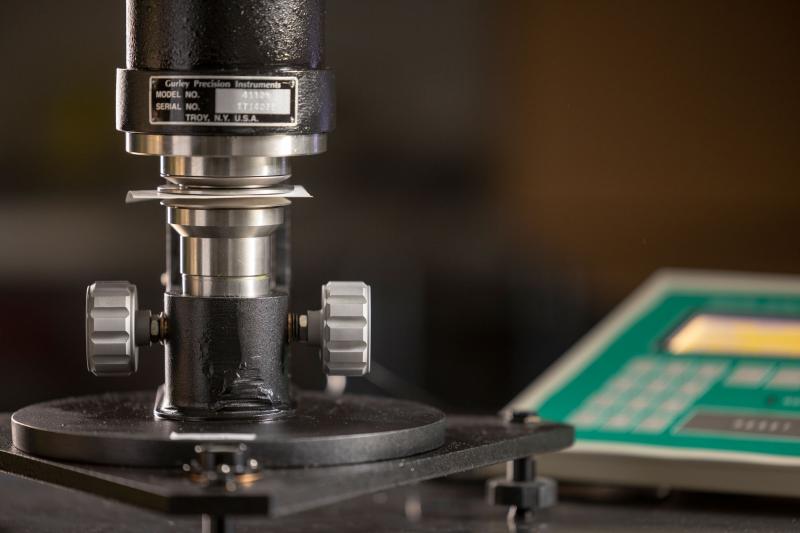
Utilization of Gurley Testers in Paper Manufacturing
The Gurley porosity tester plays a crucial role in the paper manufacturing industry, where permeability is a key factor in determining the quality and usability of paper products. Paper manufacturers use this testing method to assess air resistance, ensuring the right balance between breathability and density.
Printing paper, tissue, and specialty papers require different porosity levels depending on their intended use. High-porosity paper may allow excessive ink absorption, leading to smudging, while low-porosity paper may cause ink to sit on the surface, leading to longer drying times. The Gurley tester helps maintain consistency in paper quality by evaluating its ability to allow air to pass through, which directly impacts performance in printing and packaging applications.
Assessing Filtration Efficiency with Gurley Porosity Measurements
Filtration materials are designed to allow controlled air and fluid passage while preventing unwanted particles from passing through. Industries such as pharmaceuticals, healthcare, and environmental protection rely on precise porosity measurements to ensure their filtration systems function optimally.
The Gurley porosity tester determines how effectively a filter material can regulate airflow and block contaminants. It helps manufacturers design filtration membranes with appropriate pore structures for different applications, from air purification systems to industrial-grade liquid filtration. Maintaining uniformity in porosity is critical in applications where even minor deviations can affect performance, such as medical masks, air conditioning filters, and industrial wastewater treatment membranes.
Role of Gurley Testing in Textile and Non-Woven Industries
The textile and non-woven industries require porosity testing to optimize fabric breathability, water resistance, and overall functionality. Clothing manufacturers, for instance, use Gurley porosity testing to evaluate the air permeability of fabrics used in sportswear, ensuring they allow sweat evaporation while maintaining comfort.
Non-woven materials such as geotextiles, disposable hygiene products, and medical gowns undergo rigorous porosity testing to meet industry standards. In medical applications, materials must strike the right balance between blocking contaminants and allowing necessary air exchange, making the Gurley porosity tester an essential tool for quality assurance.
Quality Control in Packaging Materials Using Gurley Testers
Packaging materials, particularly those used for food and pharmaceutical products, must regulate moisture and air exposure to ensure product freshness and longevity. A packaging material with excessive permeability could lead to premature spoilage, while insufficient permeability might trap excess moisture, causing damage to the product inside.
Gurley porosity testing helps manufacturers fine-tune packaging films, paper-based packaging, and barrier coatings to achieve the desired levels of protection. This is especially important in vacuum-sealed packaging, where controlling air exchange is crucial for extending shelf life. Companies also use porosity measurements to optimize packaging for medical supplies, ensuring sterility is maintained without compromising usability.
Evaluating Construction Materials through Gurley Porosity
In the construction industry, materials such as insulation, roofing membranes, and concrete coatings must balance air permeability with durability. The Gurley porosity tester is employed to assess the breathability of construction materials, ensuring they provide adequate ventilation while preventing excessive moisture buildup.
Insulating materials with carefully controlled porosity contribute to energy efficiency by regulating indoor air exchange. Similarly, roofing membranes must allow some air passage to prevent condensation and mold growth while maintaining weather resistance. Porosity testing ensures that construction materials meet regulatory requirements and perform effectively in varying environmental conditions.
Innovative Uses of Gurley Testers in Emerging Technologies
As industries continue to develop new materials and applications, the Gurley porosity tester is finding innovative uses in advanced technologies. In battery and fuel cell production, porosity testing helps optimize separator membranes that regulate ion flow while preventing short circuits. This contributes to the efficiency and longevity of energy storage solutions.
In aerospace and automotive industries, lightweight composite materials with controlled porosity are being developed to enhance fuel efficiency and aerodynamics. Gurley porosity testing plays a role in ensuring these materials meet precise performance criteria. Additionally, in 3D printing, porosity testing helps manufacturers refine printing materials to achieve the desired mechanical and thermal properties.
Conclusion
The Gurley porosity tester is an indispensable tool across multiple industries, from paper and textiles to filtration, packaging, construction, and emerging technologies. Its ability to measure air permeability with precision allows manufacturers to refine material properties, optimize performance, and ensure compliance with industry standards. As materials science advances, the role of porosity testing will continue to expand, providing innovative solutions across diverse applications.
Post Your Ad Here
Comments