BIM Level of Development
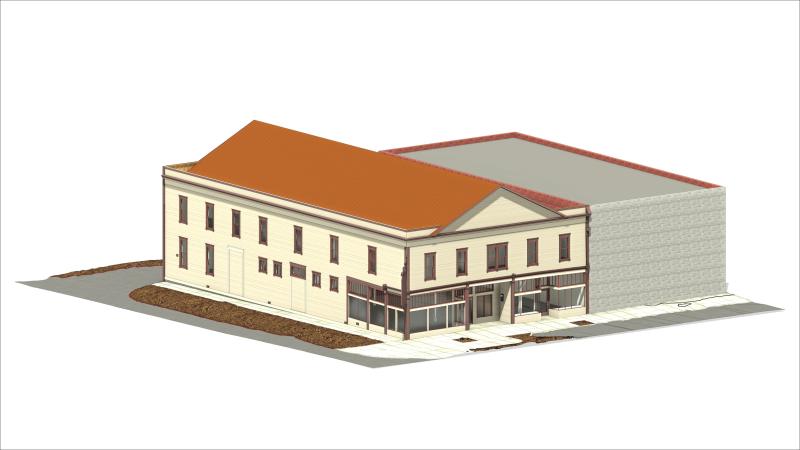
Building Information Modeling is a collaborative process that uses digital 3D models to illustrate the physical and functional features of a building.
One of the most important concepts you’ll come across within BIM workflows is the Level of Development or LOD. LOD refers to the degree of accuracy and dependability of the data represented in a BIM model.

What is the Level of Development (LOD)?
Level of Development is a widely used uniform standard in Building Information Modeling. It describes the level of detail and precision of a model, depending on the stage of a project’s life cycle.
You’ll have the most accurate information at each stage, from conceptual design through construction and maintenance as well. Read more about BIM on the bim-services-provider.com.
Benefits of Using LOD in Construction Projects
- One of the biggest benefits is greater accuracy and predictability. LOD gives specific standards on the level of detail and information that should be provided in a BIM model. This early design clarity aids in designing potential design flaws. For instance, if a structural beam ended up being just a few inches off, the model would be able to identify this before construction begins. This proactive approach allows for costly mistakes to be avoided.
- Another major benefit is improved coordination between disciplines. LOD creates a common framework for architects, engineers, and contractors to work together without missing a beat.
- LOD also serves an important role in facility management and lifecycle planning. After the completion of the construction phase, the detailed BIM model becomes a useful tool for property managers. It lays out documents from the location of each HVAC system to the specs of all electrical components.
- Another benefit provided by LOD is improved conflict resolution and quicker decision-making. The model provides an incredibly rich, accurate depiction of the real-world building. This helps teams quickly identify and resolve design conflicts before they snowball into bigger challenges.
The Five Levels of Development
Understanding the LOD in Building Information Modeling is very important. Most importantly, it ensures clarity and consistency across your construction projects. Each level sets the detail and precision of the model for each phase of development.
Let’s unpack each level to give you a better idea of their intended audience and use.
LOD 100: Conceptual Design
At this level of development, it’s all about the big picture. The model features very rudimentary geometry and is intended to convey the overall concept of the project.
It doesn’t yet get into materials, finishes, or detailed measurements. Consider it a concept drawing that captures the spirit of the project. This level allows stakeholders to grasp the high-level scope and sustainability of the design without getting lost in the weeds.
For example, early site planning might include approximate building footprints and heights, which are useful for zoning discussions or preliminary cost estimates.
LOD 200: Schematic Design
The goal of this phase is for the model to establish overall forms, rough sizes, and possible placements of all aspects. So for instance, walls, doors, and windows are depicted as blocky objects with rough guesses as to their scale and location.
This level is essential for testing various design alternatives and choosing the best option with complete and total information.
It may further allow windows to be left as placeholders but will not determine what type or material they are to be.
LOD 300: Detailed Design
It is in LOD 300 that things started to take a turn for the detailed. The model should embody complete, correct geometry and exact data to convey the overall design intent in its entirety.
At this level, a door is more than a placeholder. It has precise dimensions, well-defined material specifications, and manufacture, and installation instructions. This level permits the integration and coordination between multiple disciplines including architecture, structural engineering, and mechanical systems.
LOD 350: Construction Documentation
With LOD 350, the model takes a step past design intent to illustrate how different elements will function with each other.
The model isn’t limited to one beam, it’s an opportunity to see how that beam connects to a column. Most importantly, it captures critical components such as bolts, plates, and welds.
This development level provides the contractor with the information required to appreciate how the various components come together or don’t.
LOD 400: Fabrication and Assembly
At this level of development, the model is fabrication-ready. This means it has very specific geometric controls, fabrication tolerances, and assembly instructions for how the design will be produced.
A resulting precast concrete panel, for instance, would have precise dimensions, reinforcement, and lifting points detailed. This level is essential for preventing mistakes in production and guaranteeing parts fit together like a glove during the building phase.
LOD 500: As-Built Documentation
LOD 500, the final stage, is all about recording the as-built condition of the project. This covers all dimensions, materials, and systems as built.
Finally, it flags all changes from the initial design due to in-field modifications. This level is extremely valuable to facility management, allowing for seamless maintenance and operation of the facility.
Post Your Ad Here