Improving Warehouse Safety With Indoor Tracking Systems
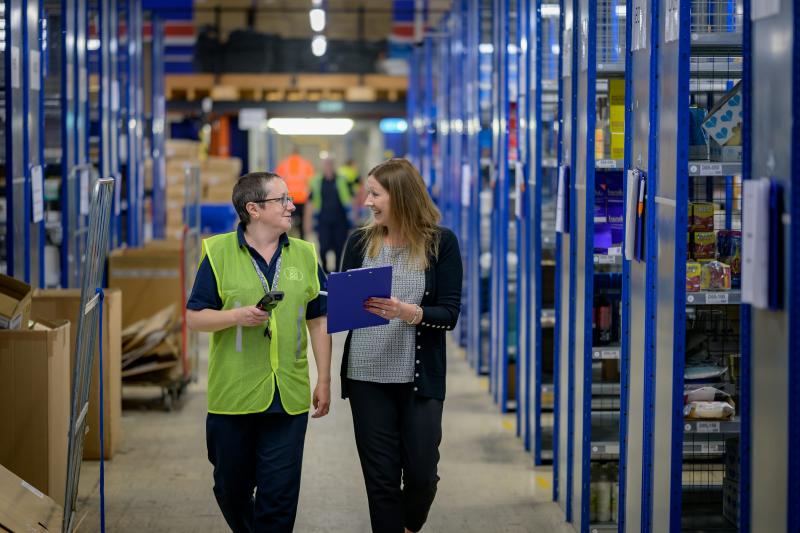
Warehouses — the backbone of supply chains, are often faced with safety challenges due to their fast-paced, dynamic environments. Erratic management between heavy machinery and workers on the ground and managing an inventory can be chaotic if not organized in a sequence. Smart indoor location tracking systems for warehouses can process real-time actual location data and be a solution for warehouse safety management, which has been a game-changer in how we lead smarter business operations while improving safety.
In this blog, we have explained how indoor tracking systems improve warehouse safety, lower risks, and ease operations for sustained efficiency.
The Importance of Warehouse Safety Management
A safe warehouse is about preventing injuries to workers, minimizing operational disruptions and maintaining compliance to protect yourself and your employees. It results in a work place full of accidents, low productivity, damaged goods which are all signs of bad safety planning. Traditional safety practices just don’t cut it anymore, given the huge scale and growing complexity of warehouses today. This is why the modern business needs indoor tracking tools that help walk the line between safety and efficiency.
How Indoor Tracking Systems Improve Warehouse Safety
Real-Time Location Tracking for Equipment
Indoor tracking systems help track the real-time position of equipment like forklifts and other tools with high accuracy. With all the information linked, a higher level of safety will be available that would cut down on run-ins with other people or equipment in high-traffic areas since you know where everything is at any given point in time. Managers can utilize location tracking systems for warehouses in order to observe workflow, detect bottlenecks, and prevent dangerous situations before they collapse.
If, say, forklifts were about to enter a pedestrian zone, the location tracking system would alert the operator in advance, which reveals proactive safety enhancement. Workers in restricted zones can also be flagged, preventing incidents due to unauthorized entry.
Enhanced Emergency Response
For emergencies like fires, equipment failures, or chemical spills, indoor monitoring systems help to reduce response times. Managers can spot the employees in peril by utilizing real-time data, and they can assist them in finding the closest exit. This ensures that no man is left behind and equipment such as fire extinguishers or first aid kits are at hand.
However, integrating a monitoring system into emergency protocols helps warehouses expedite evacuation and employee safety during critical situations.
Improved Visibility in High-Density Warehouses
Warehouses typically have limited space, tall racks, and strange equipment racing about. Trackers provide a digital map of the entire facility, which significantly enhances indoor tracking visibility. This minimizes blind spots and enables safe maneuvering in even the most congested areas.
Warehouse safety with indoor tracking systems helps managers spot high-risk areas where there is frequent movement of equipment or narrow aisle settings. With this data, they can plan specific safety things like more signs and one-way walking.
Automated Alerts and Safety Compliance
Automated alerts for compliance with safety protocols are the new power features of modern tracking systems. For example, if a forklift exceeds a speed limit in an area, the operator can be alerted immediately by the system to slow down. Another example is sending alerts if workers are moving into certain zones without the required safety gear.
The inbuilt automated features enhance safety protocols without having to depend on manual inputs. They also enable warehouses to adhere to health and safety regulations, preventing the chance of fines or inspections.
5. Accurate Incident Reporting and Prevention
When something goes wrong, being able to accurately point to indoor tracking systems makes incident reporting and root cause analysis fairly straightforward. This enables managers to check where an accident happened and how, as well as what led to the accident, providing insights that can be taken into action. In case several incidents occur in the same location, there is evidence that there is a design error or a need for more safety regulations.
With this data-driven approach, warehouses can start being more proactive than reactive in their safety management by correcting risks before they turn into problems.
The Role of Technology in Warehouse Safety
Indoor tracking systems are certainly not just location tracking tools but are currently an important aspect of current-day warehouse safety management. Offering unparalleled control and visibility in complex environments, these systems combine IoT sensors with GPS-independent technology and data analytics functionality. A few high-grade systems even go so far as to integrate with warehouse management software, selecting the route that will be fastest without compromising safety behaviors.
At Mapsted, we provide location tracking systems for warehouses that are finely tuned to the challenges presented in these environments. The operating businesses equipped with state-of-the-art indoor tracking techniques can monitor every asset, employee, and equipment in real-time from any location to a safer and more productive workplace.
Benefits of Indoor Tracking Systems for Warehouse Safety
Reduced Workplace Incidents: By alerting employees and tracking their movements in real-time, the likelihood of accidents such as collisions is decreased.
Higher Operational Efficiency: If all operations are safe, then there is no room for disruption of any kind. This means the business will run smoothly.
Compliance: Employed 24-7 continuous checking and control to comply with safety regulations while warding off penalty points.
Reduced Hazards: With fewer wrecks, fewer claims on your insurance policy, and lower liability costs because of fewer damages.
Better Worker Morale: With the majority of your workforce confident that this is a safe work site, worker satisfaction is bound to increase.
With the increasing automation of warehouses, the role of indoor tracking systems will become even more important in warehouse safety management. AI and ML integration will help with predictive safety, such as predicting when things might go wrong using past data. In addition to tracking locations, these systems will also predict hazardous situations and, hence, transform the way warehouses manage safety.
The investment in advanced tracking technology is the foundation for smarter, safer warehouses in your future. This is why businesses need to be able to balance safety even with challenges through systems such as Mapsted and help by keeping ahead of them while maximizing efficiency and well-being.
Conclusion
Gone are the days when warehouse safety was limited to generic procedures; it has or should have progressed to technology-enabled risk management and work environment security. Indoor tracking systems are enabling warehouses to transform their safety practices — from real-time monitoring of employees and equipment on the warehouse floor to automated compliance.
Indoor tracking systems for warehouses is a wise step forward for businesses focused on increasing safety without sacrificing productivity. Such tools are dynamic and data-oriented, something that warehouses can achieve with the help of Mapsted. Location systems built using these devices will offer topic-specific safety management to fulfill requirements stated by the facility.
Post Your Ad Here
Comments