Yellow sapphire- how to spot a fake!
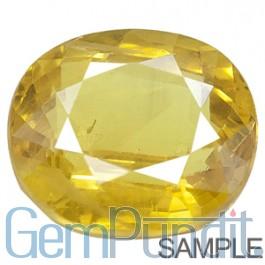
Yellow sapphire or Pukhraj in Hindi is an ancient precious gemstone best known for its earthly yellow hue and significant astrological influence. This amazing stone has long held the admiration and wonder of all kinds of people – from travelers and explorers to kings and queens. Carving and cutting of the natural stone creates the brilliantly lit and cut gemstone that is one of the most valued of all precious stones. A yellow sapphire has considerable sparkle and might display different colors when viewed from different angles.
Yellow Sapphire is the birthstone for Sagittarius and in Indian astrology, Pukhraj gemstone is the rashi ratna for Sagittarius and Pisces. Yellow Sapphire stone strengthens Jupiter (Brihaspati) and brings its wearer wealth, wisdom, spirituality and health. It is associated astrologically with virtues of luck and prosperity. Astrologically the right use of the yellow sapphire gemstones can benefit, especially with fortune and fame in the fields of teaching, professorship, law, trade, business etc.
A perfect yellow sapphire will exhibit an intense yellow to light yellow hue with brilliant clarity and luster. An authentic and 100% natural sapphire will showcase a brilliant yellow radiance with great clarity and negligible color zoning. The center of a yellow sapphire has a color center which emits colors, these color centers are not yet fully understood, however it should be noted that the color of Sapphires can be changed, generally with the help of intense heat and radiation.
Due to the huge demand of colored gemstones in the market, may fraudulent retailers have started to pass off synthetic and other stimulants of natural yellow sapphire, or dull and lusterless yellow sapphires can be heat treated to make them more radiant. Like all other precious gems it should have inclusions which should be visible to the naked eye or under magnification. Otherwise, it is a piece of glass or a synthetic substance. The inclusions are generally like 'feathers' or are like finger print impressions. Liquid inclusions looking like lace are also sometimes visible. Synthetic Sapphires are very common in the market and many traders in order to earn fast money sell them as originals. These are very clear and under magnification show bubble like inclusions. Sometimes feather like inclusions have also seen but they shine abnormally under light.
Another way of spotting a fake or synthetic pukhraj stone is the presence of tiny air bubbles within the gemstone. If the gemstone is of made from glass material, it may develop tiny bubbles under the surface of the stone. A natural sapphire, although flawed, should not have these bubbles.
When comparing a synthetic stone to a genuine one, the differences may not be readily apparent. Manufacturing a synthetic stone is a sophisticated process, and the end result is often similar to the original. It is an imperfect process, however, and by paying close attention to a few physical attributes, the differences between a synthetic and genuine stone are clear.
Author : This article has been written by an astrologer who working with gempundit.com. He provides the information on Yellow Sapphire.
For More Details: http://www.gempundit.com/gemstones/yellow-sapphire-pukhraj
Advertise on APSense
This advertising space is available.
Post Your Ad Here
Post Your Ad Here
Comments