Wood Effect Tiles – Better Than Real Timber?
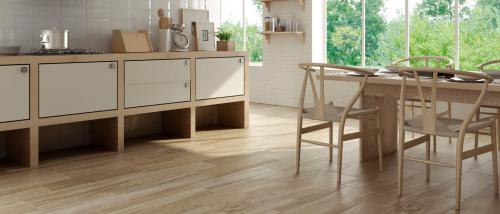
Advances in
technologies in recent times have allowed the tile industry to mount a strong
competitive challenge to the timber merchants, bringing to the high street a
fantastic array of ceramic and porcelain tiles which replicate natural wood
flooring. There are now genuine reasons to consider these reproductions as an
alternative to real wood.
Changes in
Production Process:
Since around the year 2000, the process employed in tile manufacturing evolved from one which was based on traditional “screen” printing to one now based on digital inkjet systems. This resulted in many positive outcomes for the manufacturers.
· Tiles could now be printed right up to the edge
· Designs could be printed on tiles with a relief surface
· Images on tiles were now completely stable, with no pigment bleeding
· High definition design was now possible
These
developments had an enormous impact on the quality of reproductions, to the
extent that visually, it is impossible to tell a wood effect tile from its
natural counterpart. Because of this, tiles have become a serious option for
home owners seeking a timber look for their flooring.
Appearance
and Style:
Just like
the natural product, tiles can be produced in any size. There are plenty of
examples on the market in excess of 2 metres in length. And, as plank widths
can vary, so too can the tiles. So the vast majority of either solid wood or
engineered wood products available will come in sizes that can be replicated in
ceramic or porcelain.
While there
is infinite detail within a piece of timber, and no two pieces are exactly the
same, the tile designers can allow enough variation with a pattern such that
any tile can differ significantly from the next. So within a number of square
metres of wood effect tiles, one would not expect to encounter two tiles alike.
Visually,
this gives the same impression of variety as real wood.
An advantage
that the tile industry has over timber flooring is the ability to produce a
wide range of variations of wood. And at no extra cost. There are countless
examples of distressed wood effect tiles from many producers. Tiles can be made
resembling dyed timber. Some are producing fossilized wood effect tiles.
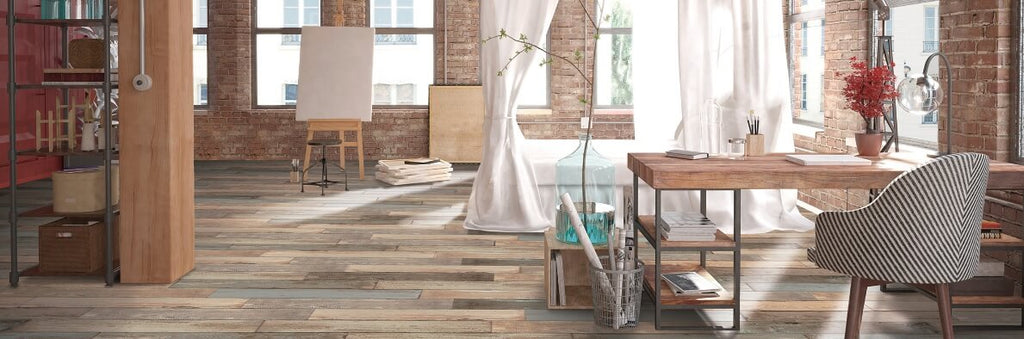
Because of the technology, the appearance of wood effect tiles has a limitless range. While all the major species of natural wood are replicated in minute detail, it is the ability to build on the designs, tweak images, alter colours or hues, add or subtract characteristics, all of which can give tiles an advantage when competing against wood flooring. A quick glance online at images, such as those found at https://tiledevil.co.uk/collections/wood-effect-tiles, shows the breadth of variety on offer.
Maintenance:
Many
customers understandably pay attention to the expected future ongoing
maintenance of their floor.
To preserve
the lifespan of a natural floor, it is important that the correct approach is
taken when undertaking daily or routine cleaning. It is not recommended that a
significant quantity of water is used, as this can be absorbed by the wood and
lead to warping or bowing. Most wood manufacturers will recommend products for
tending to the everyday needs of the flooring.
In the
longer term, due to the surface being subjected to normal wear and tear, the
finishing lacquer or oil will wear away in the areas of most traffic. As a
result these protective coatings will need to be reapplied. In the event that a
floor has sustained more substantial wear, the planks have to be sanded down
and refinished.
With every
sanding, approximately 1 millimetre of the surface depth will be lost. It
follows that eventually, after as few as three iterations of this process have
taken place, that the interlocking tongue and groove will be exposed, and it
will be no longer be possible to repeat the job.
Aside from
the cost of this undertaking, the lifespan of the floor does have a limit
dictated by the amount of use it receives.
Wood effect
tiles, or indeed any glazed tile, require minimal daily maintenance. Crucially,
due to the extreme hardness of the surface, a customer can expect the tile to
last a lifetime. There is obviously never a need to perform any restorative
procedures as is required for timber, as the amount of deterioration of the
glaze through everyday use is insignificant.
While tiles
may break if something relatively heavy should drop onto it, for example a
hammer, they are not susceptible to scratching, denting, or staining. Due to
wood being a natural product, it is prone to absorbing moisture, which can
cause swelling, splitting or buckling. This is particularly true in the event
of a minor flood from the likes of a washing machine.

Cost:
The high
street price of natural woodgrain products can vary wildly depending on the
species. Exotic varieties from plantations that can only be sustained in remote
parts of the world will command a premium of up to fivefold that of more
ubiquitous types. A Brazilian Walnut will generally be far more expensive than
a locally produced Oak.
Many
consumers will have the budget to spend on these high end flooring materials.
Wood effect tiles, on the other hand, can replicate the full range available
without any change in price. This represents a substantial bonus to customers
looking for products that are normally beyond their means. Every style within a range of tiles will be
marked at the same price, irrespective of the design in question.
The
maintenance work mentioned above is also relatively expensive. It is an
addition that needs to be taken into account when reckoning the total expected
cost of the floor over its lifetime.
To Sum Up:
When deciding on whether to lay timber or to go for wood effect floor tiles, a homeowner should consider the costs of each, the ongoing maintenance costs, the longevity, and the design variety that is available to them.



Post Your Ad Here
Comments