When Should You Repair and Replace Your Hot Water System?
At any time, your hot water system could encounter troubles. But you will have to know if the water heater should be repaired or replaced.
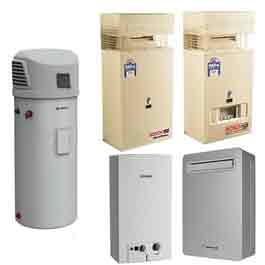
In Perth, almost all water heater system owners are faced with the same decision: should they repair or replace their water heater? However, making the right choice is not that easy; several important considerations must be taken into account.
First and foremost, the water heater system specialists need to be aware of the background information regarding the water heater, which includes:
- The duration of the hot water system
- The state of the water heater
- The problem the hot water system is presently experiencing
Although there are a few exceptions, it is best to replace a storage-type hot water system after 10 years, no matter the issue. Based on water quality and usage, the average lifespan of a modern water heater is 8 to 10 years. As a result, water heaters older than 10 years must be replaced because repairs won't keep them functional for very long.
In addition, even though they are less than 10 years old, some water heater models will need to be changed if they have manufacturing flaws or if their water heater pumps are being recalled.
Anode rod failure is one of the main causes of water heater failure during the first ten years, necessitating professional hot water repairs. All storage-type water heaters, which are suspended within the tank, contain an anode rod. It is also referred to as the "sacrificial anode," which is specifically made to draw in the water's caustic minerals. Additionally, it aids in stopping the tank's corrosive minerals from degrading.
As they dissolve entirely, these minerals will essentially ruin the anode rod. Minerals will begin corroding the tank once the anode rod has been entirely destroyed, which will eventually result in leaks. Anode rods typically last for 4 to 6 years, and eventually, they will need to be replaced in order to fairly extend the life of the water heater. However, the anode rod was factory sealed by the manufacturers, making it challenging to increase the water heater's lifespan.
The choice of whether to repair or replace the water heaters will be made evident by two possibilities.
Situation 1: The Water Heaters That Leak
Determine whether the leak is coming from the top or bottom of the water heater in the first place. If there is water below the water heater but no moisture symptoms are present above the water heater, the tank is probably leaking and has to be replaced.
Once the source of the leak has been identified—either the top of the water heater or above—it is likely to be a plumbing or peripheral component leak, both of which are likely to be fixable. Regardless of the severity, every leak needs to be fixed right away. As a result, once the leak starts, you won't be able to predict how a small leak would grow into a large one and begin to cause harm.
Situation 2: There Is No Production Of Water Heaters
The situation can be fixed as long as the tank is in decent shape and isn't too old. Any component that has failed or is about to fail is indicated by this. These parts may include the burner assembly, gas control, blocked air intake screen, or one of the safety parts. They may also include the pilot assembly and burner assembly. All these conditions can be fixed with the professional help of hot water system repairs.
The conclusion from the entire conversation is that it will be simple to tell if the tank is leaking, at which point it needs to be replaced. It is repairable if the leak did not start in the tank but rather somewhere else. As long as the temperature is neither exceptionally hot nor cold, the system will be repaired if the water heater is not producing any hot water.
Advertise on APSense
This advertising space is available.
Post Your Ad Here
Post Your Ad Here
Comments