What You Should Know About Open Reduction and Internal Fixation?
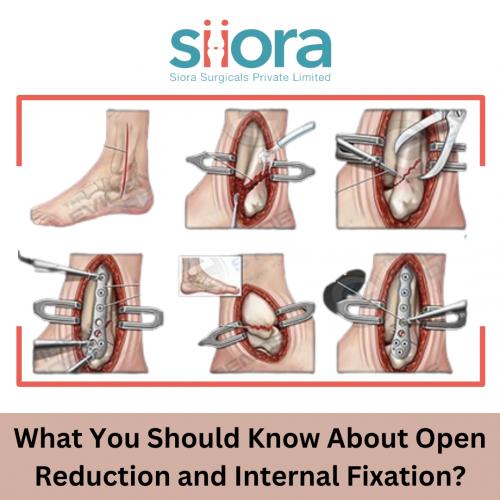
Broken bones are no fun, they cause extreme pain. Overall, it disrupts life in a major way. But fear not, modern medicine has an answer for many fractures: open reduction and internal fixation, or ORIF for short. This orthopedic surgery requires different types of trauma implants including locking bone plate, bone screws, pins, and wires.
What is ORIF?
The normal anatomy of bone gets badly disrupted in the case of a fracture. In a serious break, the pieces (bone fragments) get scattered and misaligned. ORIF is a surgical procedure that tackles this problem in two steps:
Open Reduction
Here's the "open" part. The surgeon makes an incision to access the broken bone and meticulously repositions the fragments into their rightful place. This ensures proper alignment, crucial for healing and function.
Internal Fixation
Now comes the "fixation." The surgeon uses various implants – like plates, screws, rods, or wires – to hold the realigned bone fragments together. These implants act like internal splints, stabilizing the fracture and promoting bone healing.
When is ORIF Needed?
ORIF isn't for every break. Typically, it's used for fractures that are:
Displaced: The bone fragments are significantly out of place.
Open: The bone protrudes through the skin.
Comminuted: The bone is shattered into many pieces.
Affecting Joints: The fracture involves a joint surface, impacting movement.
Unstable: The broken bone tends to move even with splinting, hindering healing.
What to Expect with ORIF Surgery?
ORIF is usually performed under general anesthesia, so you'll be completely asleep during the procedure. The surgery time varies depending on the complexity of the fracture. After surgery, you'll likely stay in the hospital for a day or two for monitoring and pain management.
Recovery after ORIF
The road to recovery can take weeks or even months. Here’s how recovery may look like after open reduction and internal fixation:
Immobilization: Depending on the fracture, you might need a cast or splint for initial support.
Pain Management: Medication will help manage post-surgical discomfort.
Physical Therapy: Rehabilitation exercises are essential to regain strength, flexibility, and movement in the affected area.
Potential Risks and Complications
As with any surgery, ORIF carries some risks, such as infection, bleeding, and implant failure. It's crucial to discuss these potential complications with your doctor beforehand.
Living with Implants
The hardware used in ORIF surgery often stays in place permanently. While some people might experience discomfort or require removal in the future, for most, the implants become a silent partner in their healing journey.
Conclusion
ORIF is a powerful tool for fixing complex fractures and restoring bone health. If you're facing a serious break, talk to your doctor about ORIF to understand if it's the right option for you. Remember, a successful surgery coupled with dedicated rehabilitation can get you back on track to a strong and functional life.
Siora Surgicals Pvt. Ltd. is an experienced manufacturer of a huge range of Orthopedic Implants in India. The company has an in-house manufacturing unit established in the RAI district, Sonepat, Haryana. Operating for over 3 decades, Siora is also known as a leading orthopedic locking plate manufacturers company. You can also avail quality OEM services in the world.
Post Your Ad Here
Comments