What is a tankless water heater and why do we need them?
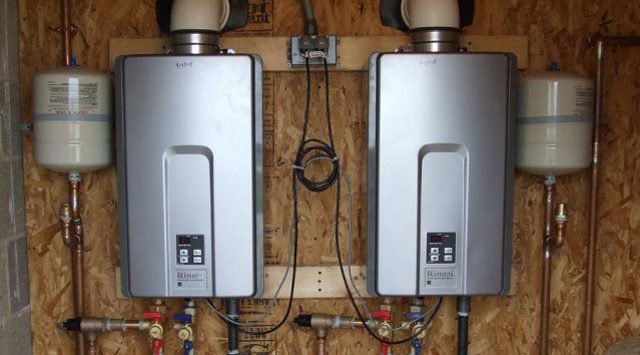
One very significant and the useful household tool is a water heater. It enables us to do everyday tasks easier, especially during very cold weather. There is a wide variety available now in the market for water tanks featuring different specifications and are designed to fit different preferences of different people. The earlier versions of water tanks usually came in limited types and designs. With the modern times, innovations on this product also surfaced. An example of these innovations is the gaining popularity of tank fewer water heaters which has proved to have many advantages to a lot of people especially in this age. Although this type has gained its place, some still use the tanked heaters and both of these types are still being produced by manufacturers to this date.
Types of water heaters
Tankless
Best Tankless water heaters use continuously flowing water which is instantly heated by the coils powered by either gas or electricity as it flows through and does not retain any water in it.
The tank only heats up water as we need, which means that the water is heated up as we turn it on and stops flowing once we get the amount of water we need, thus turning off the heater itself. This is very efficient as it is a no fuss device and takes less time to heat up water, while providing plentiful water as compared to the limited water supply that we can get from the conventional tanked typed. This unit is also helpful in saving energy given some usage conditions.
The mechanism of tankless heater units uses flow sensors. The heater is usually turned off or is not producing heat without water flowing through, but once water is turned on to flow, the flow sensors activate the heating from the coil. The desired temperature is regulated by the part called negative feedback loop and the water circulates through the exchange coils. Without any tank, the water flows freely as long as it is turned on which provided a continuous supply of hot water. These units are also protected from acidic reactions by high-quality acid-resistant coatings which can protect the surface of its vital parts from high temperatures up to 1000°
Tanked type
· Unlike the tanked type, water heated through the tankless types are not stored in a finite chamber and heated there.
However, some people still opt for the common tanked water heater types because the more modern tankless types tend to have a higher initial cost and can’t always be within everybody’s tight fit budget.
The mechanism of tankless heater units uses flow sensors. The heater is usually turned off or is not producing heat without water flowing through, but once water is turned on to flow, the flow sensors activate the heating from the coil. The desired temperature is regulated by the part called negative feedback loop and the water circulates through the exchange coils. Without any tank, the water flows freely as long as it is turned on which provided the continuous supply of hot water. These units are also protected from acidic reactions by high-quality acid-resistant coatings which can protect the surface of its vital parts from high temperatures up to 1000 °C.
Combination boilers
· A combination boiler, also commonly called combi boilers, are heating units that enable the central heating unit to be connected with the domestic hot water or DHW. The DHW provides the hot water we use in the household like our taps or showers. The central heating unit’s power is being diverted by the combination boiler to heat domestic water once DHW is in use. This means that the combination boiler will stop to pump water towards the central heater as it is heating the DHW instead.
The type of a combination boiler is classified through the DHW flow rate. Usually, households powered with a range of 24-54 kWH can produce a flow rate of approximately 9-23 liters per minute. For industrial or commercial establishments that require larger flow rates, larger versions of these units are being used.
In comparison with tankless heaters, combination boilers can be considered to have its advantages as well. It is considerably easier to install in any structure since it does not need any water pipes and-and tanks and can simultaneously supply two taps or showers at a given time. Also, one structure can have more than one combination boilers installed, which can provide better heating system, especially for large spaces. More than one heating system also ensures that in the event that one unit breaks down, another one can still produce heating within the household.
Conclusion
Choosing tankless water heater has many advantages.One advantage of using this type of heater cuts down considerable heating usage of up to 20% because it is using an “on-demand” or “instant-on” feature. This means that it only heats up water once the flow sensor activates it, and only the amount of water we need is being heated up. Unlike the conventional type, it does not need to be constantly heated or to constantly heat up water in a chamber, which saves us plenty of time. The size of this also requires lesser time and effort in installation, since it does not need holding tanks which take up large spaces. It can be installed wherever it is convenient, even outdoors given that it is installed with an anti-freeze kit. Most units also are remotely operated, giving us ease of access.
It is also environment-friendly because it does not emit any harmful gas to the atmosphere. It also saves us the worry of any ruptured tanks that can cause floods. Finally, this unit is considered durable and can even last up to 10 years with proper usage.
Post Your Ad Here
Comments