What Does The Latest Application Architecture Trends Dictate
The programming languages have dramatically improved in the past decade, especially, in the last few years. Today, we have a plethora of programming languages out there, some are specific to web app development while some are ideal for mobile app development. While these languages are evolving at a great pace, the application architecture trends also keep fluctuating.
On observing the application architectures from the era of C++ to the Java programming language, it can be observed that the recent application architecture also represents the same concepts, although with a bit different perspectives. However, the Service Oriented Architecture (SOA) has offered a partial solution to the challenges generated by monolithic systems, but unfortunately, this was not the perfect solution.
Service Oriented Architecture (SOA):
The SOA offers a design pattern while considering the entire software that facilitates every Android apps development company with its features to other apps by implementing a protocol. It basically deploys the Enterprise Service Bus (ESB) to augment the interaction between the applications that are mutually communicating in an SOA.
ESB itself is a software architecture model that ensures agile and flexible communication channel between the applications. This kind of architecture is primarily ideal for EAI (Enterprise Application Integration) for complicated and assorted areas.
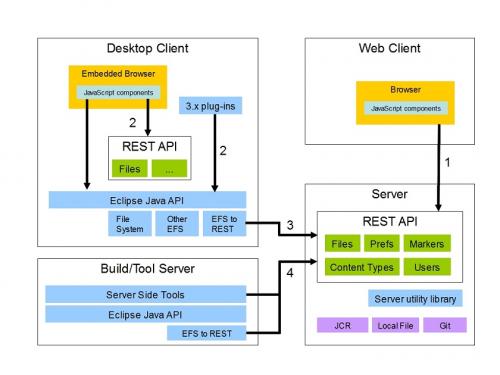
However today, according to the current trend set of app architecture, the majority of apps are designed by integrating APIs. And, this is basically known as microservices.
This is an app architecture design pattern that augments the development of complicated apps. In Microservices, a complex application is segmented into several smaller individual processes that interact with each other via APIs. Since, it includes small decoupled services that are streamlined to perform a small task, it delivers a remarkable performance. APIs are the Application Program Interfaces that facilitate interaction between the services and functionalities of applications.
As in microservices, the services communicate via standardized RESTful APIs, you need not consider the language which is used for developing the microservice. A microservice integrates its very own business logic, app server, data, and app runtime.
APIs are used to offer seamless interaction and integration between different apps. There are myriads of other benefits of implementing APIs while developing an application. Let's have a look at a few of its advantages.
Drive businesses: APIs can efficiently support the interaction across a set of partners. As, the success of a business can be greatly improved with the increasing transaction volume, the APIs can radically augment business values with robust affiliate models.
Rapid innovation and internal collaboration: In a developing organization, if its product line is disturbed (either with the addition of a new product or removal of an existing product), everything becomes implicated and the back-end applications get apparently enmeshed. While by facilitating the integral interactions and processes via the suitable API, you can make the things pretty smooth and flexible. The resources within the company can efficiently perform their task by possessing all the requisite info for further processing beforehand.
Boost your startup business models: One may also hire Android app developers which may employ APIs that can aid in generating completely new businesses on the basis of the traffic on APIs. Some entrepreneurs and startups streamline their business goals and endeavor for that while considering the latest API or a set of APIs.
Improve partner and customer ecosystem: with this approach, you can create a platform and let other contribute to its growth by allowing them to add a significant value to it. While implementing the API in your business you can offer greater customizability at the customer end while garnering valuable consumer loyalty.
However, there are certain protocols that are needed to be followed for handling the APIs in an application. If you are interested in creating an application leveraging the APIs in it, you can accomplish it efficiently by learning those predefined protocols first.

Comments