Understanding causes of hair loss in children and infants
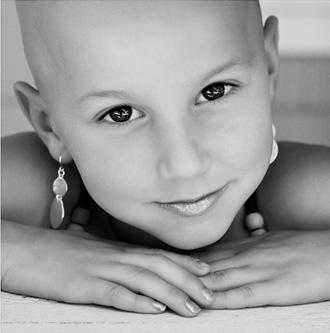
Most parents tend to get alarmed when they realize that their kid’s locks or hair starts to fall. Children, just like adults also face hair loss. Even infants are affected by hair loss due to various reasons. If they are left untreated, then, the issue could actually increase, and leave the child completely bald and ugly looking. Apart from this, it can also cause itching that might spread to the rest of the body. When the child grows older, they could be further susceptible to other kinds of hair loss, and therefore, the parents need to be adequately educated on the following kids hair loss causes:
• Congenital Atrichia: In this case, the child might be born having a normal hair; however, once the kid enters the initial resting period, hair falls out while the process of growth shuts down. For the hair to grow, specific cells require to stay in contact with one another for transmitting and receiving a signal that is required for keeping the hair development cycle functioning.

• Loose Anagen Syndrome: Hair loss in this type is typical, especially in small children having sparse fine hair, which could be easily pulled out. Mostly girls having light hair are affected. Generally the hair does not develop past the neck’s nape. When put under a microscope, hair appears to lack outer and inner root sheath and also have ruffled cuticle.
• Pili Torti: It could be acquired or congenital and is common in girls, having thin blonde hair. The hair fibers are found rigidly twisted that leads to several fractures in the internal cortex layer and cuticle of the hair shaft. Hair is brittle and dry and might stand out of the scalp and breaks at different lengths.
• Triangular Alopecia: This type of hair loss occurs in temporal region on either a single or both sides and generally in triangular shape. Hair absence in this region is present during birth or just later. This is irreversible and permanent, but not progressive. The size and shape of the bald region remains similar throughout lifetime.
• Monilexthrix: It is considered to be a rare condition, which starts in infancy. Even though the infant is born having a normal vellus hair, sooner, it is replaced with brittle, dry hair having beaded appearance.
• Ringworm: It is caused by a certain kind of fungus known as dermatophyte. This is highly contagious and transmitted through others or animals. Mostly, children between the age of 4 and 11 are infected with it. Usually, it starts like a tiny pimple that grows larger and leaves scaly baldness patches having an outline like that of a ring. Hair becomes brittle and then breaks off close to scalp, thus causing ‘black dot alopecia’.

• Uncombable hair syndrome: Children suffering from this particular syndrome have usually silvery blonde glass type of hair, which is unruly and does not lie flat. Combing is almost impossible or difficult. Due to the appearance, it is termed as ‘spun glass hair’. Hair, in this case, stands away from the scalp in a disorderly fashion.
Author
The author is presently associated with http://www.reducinghairloss.com and has been writing on the different types of hair loss that children and infants are facing and how to identify them for providing the right remedy.
Post Your Ad Here
Comments