Types of CHD: Ebstein's Anomaly
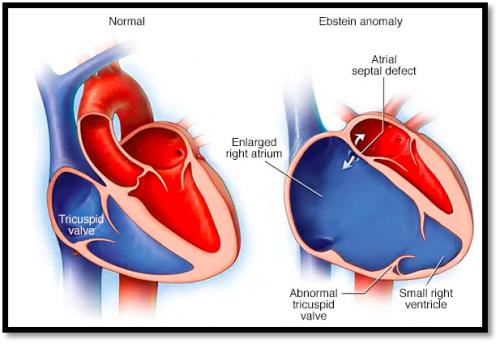
Working as an NGO for child heart surgery, we are well aware of the need to create awareness about the different types of heart diseases affecting children. Today we’re focussing on Ebstein anomaly, which is a rare heart defect that is present at birth (congenital). It is so rare In this condition, the tricuspid valve is in the wrong position and the valve's flaps (leaflets) are in the incorrect shape. As a result, the valve does not work properly.
Blood might leak back through the valve, making one’s heart work less efficiently. Ebstein anomaly can also lead to enlargement of the heart and heart failure.
If a child has no signs or symptoms associated with Ebstein anomaly, just a simple pulse oximetry test can help monitor the child’s heart condition after birth. One might need treatment if signs and symptoms bother or if the heart is enlarging or weakening. Treatment options include medications and surgery.
Some of Ebstein Anamoly symptoms are:
· Shortness of breath, especially with exertion
· Fatigue
· Heart palpitations or abnormal heart rhythms (arrhythmias)
· A bluish discoloration of the lips and skin caused by low oxygen (cyanosis)
It is essential that people are well aware about this type of Congenital heart Defect.
The tricuspid valve normally sits between the two right heart chambers (right atrium and right ventricle). But in an Ebstein Anomaly, the tricuspid valve sits lower than normal in the right ventricle. Because of this, a portion of the right ventricle becomes a part of the right atrium, causing the right atrium to enlarge and not work properly. Also, the tricuspid valve's leaflets are abnormally formed. This can lead to blood leaking backward into the right atrium (tricuspid valve regurgitation). The location of the valve and how poorly it's formed varies from person to person. Some people have a mildly abnormal valve and others may have a valve that leaks severely.
For those of you, who might know about the details of the heart. The heart has four chambers: two atria and two ventricles. The right atrium receives oxygen-poor blood from the body and pumps it to the right ventricle. The right ventricle pumps the oxygen-poor blood to the lungs. The left atrium receives oxygen-rich blood from the lungs and pumps it to the left ventricle.
Four valves open and close to let blood flow in one direction through the heart. Each valve consists of two or three strong, thin flaps (leaflets) of tissue. A closed valve prevents blood from flowing to the next chamber or from returning to the previous chamber.
Oxygen-poor blood from your body flows into the right atrium. Blood then flows through the tricuspid valve into the right ventricle, which pumps the blood to your lungs. On the other side of your heart, oxygen-rich blood from your lungs flows into the left atrium, through the mitral valve and into the left ventricle, which then pumps the blood to the rest of your body.
If you or someone you might know is looking for an NGO for child heart surgery, then guide them to Genesis Foundation, that supports the surgeries of children born with various heart defects. Their website is genesis-foundation.net
Post Your Ad Here
Comments