Take Advantage of Painting Valuation with these tips
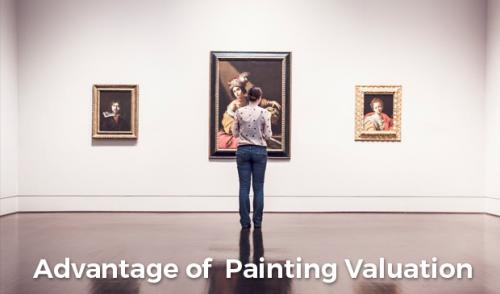
Art valuation can be understood as the estimation of the market value for an art piece and consequently is more financial of nature than aesthetic”. Valuing Art is the act of placing your money’s worth on a painting, a sculpture or other works, prices fluctuate according to the market trends. Most buyers hire appraisal experts in order to get a money value, it is also possible to estimate the price yourself with the right kind of information. Here’s how:
Take a look at the art:
ü Understand the artist’s career: The number of works that an artist completes as an output generally affects the price. Artists who have contributed more are also worth more for each of their piece than ones who simply work less.
ü Check for duplicates: It is because of supply and demand, works of an artist that are one-of-a-kind are worth more than copied or replicated works.
ü Know exactly when the piece was completed: Interestingly, art that’s completed early on in the career of an artist is higher valued than ones completed towards the end of their career. It arises from the generalization that early works are more daring, unpredictable and passionate. Its predictability that decides this part in valuation.
ü Does the piece rightly represent the artist’s work? Work that epitomizes aesthetics for an artist is usually valued higher than tangential pieces.
ü Is the artist well known enough? Artists are generally categorized into three categories: well-known, up-coming and unknown. Well-known artists with a rich collection and repertoire always command bring in more value than ones who are yet to establish themselves.
ü The size matters: The bigger the frame, the more is its value.
ü Has the piece been ever owned by someone important? This can make quite a difference. If it was someone important and well known who owned that particular piece, it will always attach a higher price/value.
UNDERSTANDING THE MARKET:
ü Investigate the demand: The value of art sold in market, fluctuates depending on how willing buyers are for a piece and how willing are they to pay.
ü Market trends: Depending on the demand, the change in art pricing usually arises from changing perceptions of buyers and other material circumstances.
ü Value in the primary/secondary market: The primary market value is the first sale price for apiece, while secondary market value is the amount buyers are willing when the piece is sold for the second time or more.
DECIDING THE FINAL PRICE
ü Judge by the performance of similar pieces: When comparing, go for a price range rather than a fixed amount.
ü Special pieces don’t entertain a fixed price and the value keeps fluctuating: A truly unique piece is always difficult to value. Any price range will consequently be highly volatile.
ü Measure the scale, medium and intensity: Scale defines the size and detailing of an artwork while intensity is about the amount of effort put into it. Medium comprises of the material quality. The three combined gives a polished estimate about the final value of the piece.
Art valuation is a difficult task, if it is done by oneself. Generally it comes with experience and understanding the market, which may take years. However, if you are really interested, it will all be worth it.
Post Your Ad Here
Comments