Student-Centered Learning
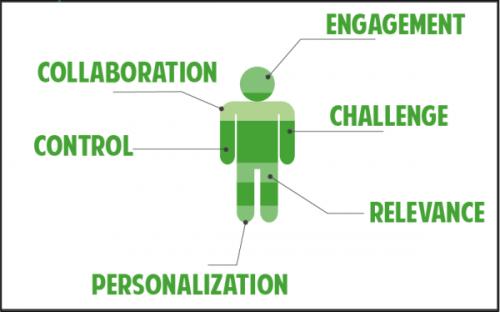
The term student-centered learning alludes to a wide assortment of instructive projects, learning encounters, instructional methodologies, and scholarly bolster procedures that are planned to address the particular adapting needs, premiums, desires, or social foundations of individual understudies and gatherings of understudies. To finish this objective, schools, educators, direction instructors, and other instructive masters may utilize a wide assortment of instructive techniques, from adjusting assignments and instructional systems in the classroom to altogether overhauling the courses in which understudies are assembled and taught in a school.
Since "understudy focused learning" has wide ramifications, and the term may envelop a wide assortment of potential instructional methodologies and scholarly projects, it might be hard to decide accurately what the term is alluding to when it is utilized without capability, particular illustrations, or extra clarification. At times, the term may have a certain, specialized significance, yet in others it might be ambiguous, undecipherable language. For instance, a few teachers utilize the term synonymously with "customized learning" (and related terms), while others see customized learning as one part of understudy focused adapting, yet not a synonymous term or idea. Consequently, it is critical to research unequivocally how the term is being utilized, and what it is alluding to, in a particular instructive connection.
The term understudy focused adapting no doubt emerged in light of instructive choices that did not completely consider what understudies expected to know or what techniques would be best in encouraging learning for individual understudies or gatherings of understudies. For instance, numerous customary ways to deal with educating could be considered "school-focused," as opposed to understudy focused, in light of the fact that schools are frequently sorted out and oversaw in ways that function admirably for hierarchical operations, however that won't not mirror the best approaches to instruct understudies. For instance, it's significantly more reasonable—from an institutional, managerial, or logistical point of view—if all understudies are being taught in classrooms under the supervision of instructors, on the off chance that they are given an altered arrangement obviously alternatives to browse, on the off chance that they all utilization the same reading material and learning assets, or if their training develops as per a foreordained timetable.
Supporters of understudy focused learning need to test or topple numerous regular authoritative or instructional inclinations in schools by making understudy taking in the essential target—i.e., all contemplations that don't somehow enhance or encourage understudy learning would get to be optional (or lower) in significance. The essential method of reasoning is that schools ought to be intended to upgrade understudy learning, not enhance authoritative proficiency.
Change
Going back to the 1930s, if not prior, American instructors have utilized the expressions "educator focused" and "understudy focused" to depict two unmistakable ways to deal with direction. Educator focused commonly alludes to learning circumstances in which the instructor affirms control over the material that understudies study and the routes in which they think about it—i.e., when, where, how, and at what pace they realize it. In classes that would be considered educator focused, the instructor has a tendency to be the most dynamic individual in the room and do a large portion of the talking (e.g., by addressing, exhibiting ideas, perusing out loud, or issuing guidelines), while understudies invest the majority of their energy sitting in work areas, tuning in, taking notes, giving brief responses to addresses that the instructor asks, or finishing assignments and tests (for a related discourse, see direct guideline). Likewise, in educator focused classrooms, instructors might likewise choose to show understudies in ways that are simple, commonplace, or actually favored, yet that won't not function admirably for a few understudies or utilize instructional systems appeared to be best to improve learning.
Interestingly, understudy focused normally alludes to types of direction that, for instance, give understudies chances to lead learning exercises, partake all the more effectively in discourses, outline their own particular learning tasks, investigate subjects that premium them, and by and large add to the configuration of their own course of study. Furthermore, understudy focused guideline is regularly connected with classrooms that element work areas organized in circles or little gatherings (as opposed to columns of work areas that face the instructor), with "independently directed" or "self-managed" learning, or with learning encounters that happen outside of conventional classroom settings or school structures, for example, temporary jobs, apprenticeships, free research ventures, online classes, travel encounters, group administration ventures, or double enlistment courses, for instance (for a related discourse, see learning pathway).
Training specialists and antiquarians have observed that educator focused guideline has been the predominant mode in American government funded schools for over a century, and confirmation proposes that just a little portion of instructional settings in American state funded schools could be considered legitimately "understudy focused" (however a more noteworthy extent of instructors may depict their way to deal with direction as "understudy focused"). All things considered, a few parts of understudy focused direction, for example, the game plan of work areas into circles or little gatherings, or assignments that permit understudies to pick their own perusing materials—have been generally received by instructors. Much of the time, the average instructional setting in government funded schools likely elements a mix of educator focused and understudy focused methodologies.
While understudy focused learning has in some cases been reprimanded as a fluffy idea that alludes to an unclear combination of showing systems, or that implies diverse things to distinctive teachers, as of late some training reformers and analysts have tried to characterize the term with more noteworthy exactness. While the meaning of the term is as yet developing, promoters of understudy focused learning have a tendency to underscore a couple of crucial attributes:
1. Showing and learning is "customized," implying that it addresses the particular adapting needs, premiums, yearnings, or social foundations of individual understudies.
2. Understudies advance in their instruction when they exhibit they have taken in the information and abilities they are relied upon to learn (for a more nitty gritty exchange, see capability based learning).
3. Understudies have the adaptability to learn "at whatever time and anyplace," implying that understudy learning can occur outside of customary classroom and school-based settings, for example, through work-study projects or online courses, or amid nontraditional times, for example, on evenings and weekends. The other opportunity is to use services like this one paperswhite.com
4. Understudies are offered chances to settle on decisions about their own particular learning and add to the outline of learning encounters.
Post Your Ad Here
Comments