Special Properties of Emerald Stone That Makes It So valuable
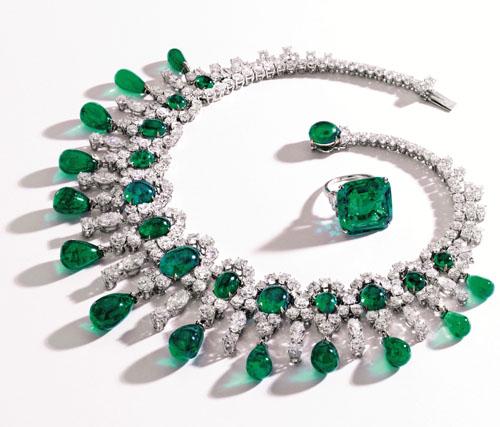
The emerald is refreshing for its
gemstone varities running from light green and sea green/blue to striking
emerald green and light pink Morganite. Its hardness makes the emerald more
scratch and harm free than different gemstones; however, it is likewise fragile
and brimming with gaps that make setting the stone a troublesome procedure.
These and various different attributes and properties of emeralds make it one
the most looked for after and profitable gemstones available.
Emerald stones contain enhancements, or small breaks and mineral deformities.
Emeralds contain fine incorporations which are little breaks that structure inside the gem as it develops. These considerations add shading and refinement to the emerald and frequently increase the value of the stone thus. As indicated by gemstone masters at the International Colored Gemstone Association, the considerations are alluded to as 'jardin'- - French for greenhouse - in light of the fact that they develop normally like a patio nursery inside the stone.
Emerald stones contain considerations, or small breaks and mineral deformities.
Emeralds are known for their green tint, however, they can likewise be pink.
Emeralds are extreme stones with a hardness positioning of 7.5 to 8 on the Mohs Scale where 10 is the hardest. This makes the emerald a sturdy stone once it's set for adornments. In any case, with the hardness comes the downside of weakness which makes the emerald effectively harmed amid the cutting procedure. It highlights sloped edges and rectangular shapes to keep from pulverizing the stone. The weakness of an emerald relies on upon the measure of treatments it contains and directs the kind of cut most appropriate for an emerald in crude structure. The harder the stone, the more adjusted the cut must be.
Emeralds are hard to cut.
The excellence of emeralds is not measured by their clarity,but instead their coloring. Extra minerals, precious stones and deformities are likewise considered incorporations that make one emerald not quite the same as the following. The more "imperfections" an emerald contains, the more exceptional its profundity of shading.
Emeralds contain the uncommon component called beryllium. Beryllium is a metal component with a nuclear number of 4 that must be framed synthetically through responses between granitic shakes and shakes that need ordinary measures of silica. At the point when these stones contain the components chromium or vanadium, the beryl responds through creating distinctive intensities of shading in the stones. These responses take into consideration the wide varieties in the green, blue, salmon and pink tints particularly connected with emeralds.
The excellence of emeralds is characterized through the imperfections that add profundity to their shading.
The radiance of emeralds is portrayed all through the business as vitreous. The term portrays the sparkle of the emerald as glass-like and it differs relying upon the emerald's regular refractivity- - geometric proportion of the point at which light hits the precious stone - straightforwardness and structure. Emeralds regularly rank between 1.5 to 1.6 on the refractive scale. In correlation, the refraction rate of a precious stone is 2.4. Be that as it may, it's the shading force of the emerald that give it a particular level of shine and refraction which, as a rule, is more profitable than the cost of a precious stone.

Post Your Ad Here
Comments