Shortenings Market Global Forecast To 2022
Summary:
The global shortenings market is projected to reach USD 4.57 Billion by 2022 in terms of value, at a CAGR of 4.2% from 2017. The objective of this study is to define, segment, and project the size of the shortenings market on the basis of key ingredient, source, variant, application, and region, and to provide detailed information about the crucial factors influencing market dynamics (drivers, restraints, opportunities, and industry-specific challenges). The market opportunities and competitive landscape of market leaders are also studied for the stakeholders. Competitive developments such as expansions & investments, partnerships, agreements, joint ventures & collaborations, new product launches, and acquisitions in the shortenings market are covered in the study.
Research Methodology
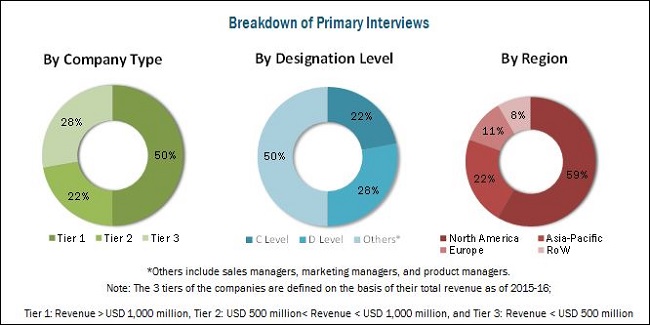
This report includes estimations of market sizes in terms of
value (USD million). Both top-down and bottom-up approaches have been used to
estimate and validate the size of the shortenings market and of various other
dependent submarkets in the overall market. Key players in the market have been
identified through secondary research, and their market share in respective
regions has been determined through primary and secondary research. All
percentage shares, splits, and breakdowns have been determined using secondary
sources, such as reports published by as reports published by the Institute of
Shortening and Edible Oils (ISEO), the American Oil Chemists' Society (AOCS),
and the Argentina Association of Fats and Oils (ASAGA) have been verified
through primary sources.
Market Ecosystem
The various contributors involved in the value chain of
shortenings include oilseed growers, fat & oil processors, manufacturers,
suppliers, distributors, intermediaries, and end-use industries. Various types
of oilseed grow in different regions Asia-Pacific countries are major suppliers
of palm oil- and palm kernel oil-based specialty fats and oils, while European
and North American countries are large-scale suppliers of rapeseed oil- and soybean
oil-based specialty fats & oils, respectively. The leading players in the
market prefer a vertically integrated business model, which includes procuring
the oilseed, crushing, refining, processing, blending, and byproduct production
such as oleochemicals and feed. Maximum value addition is observed in the
stages such as oil fractionation process, oil blending, and packaging.
The market is dominated by key players such as Archer Daniels Midland Company (U.S.), Cargill (U.S.), AAK AB (Sweden), Wilmar International Limited (Singapore), and Bunge Limited (U.S.). Other players in this segment include Manildra Group (Australia), Associated British Foods (U.K.), Ventura Foods, LLC (U.S.), ConAgra Brands (U.S.), and International Foodstuff Company Holdings Limited (UAE).
The shortenings market is projected to grow at a CAGR of 4.2%, in
terms of value, from 2017 to reach a projected value of USD 4.57 Billion by
2022. Shortenings find a wide range of applications in the confectionery,
bakery, and snacks & savory sectors. The factors such as increase in demand
for shortenings in various food applications, and rise in demand for bakery and
confectionery products has fueled the growth in the market. Affordability,
convenience, and health benefits are the main factors that drive the baked
foods market. The market for products such as breads, cereal, cakes, biscuits,
and pastries is well-established in Europe. Whereas, demand for bakery and
confectionery products is increasing in the Asia-Pacific region with the growing
per capita consumption of breads and baked goods.
On the basis of key ingredient, the global shortenings market is
segmented into oil, butter, lard, tallow, and others. The oil segment dominated
the market owing to its major use in the production of various shortening
products and wider availability.
On the basis of source, the global shortenings market is segmented
into vegetable and animal. The vegetable segment dominated the market. The high
market demand for vegetable shortenings in the industry can be attributed to
the increase in awareness for healthy, fortified, non-hydrogenated trans-free
vegetable shortenings.
The shortenings market is segmented on the basis of application
into bakery products, confectionery products, and snacks & savory products,
and others including sauces, gravies, and soups. The bakery products segment
accounted for the largest share in the market. The change in consumer
preferences toward the trans-fat-free products has led to the increase in
demand for shortening products made with modern processes such as
interesterification.
The shortenings market is segmented on the basis of variant into
solid, liquid, cake/icing, all-purpose, and others. The solid segment dominated
the market in 2016, whereas the all-purpose segment is projected to grow at the
highest CAGR followed by the cake/icing segment. All-purpose shortenings are in
demand owing to their versatile nature and multi-functional characteristics.
This versatility helps them to blend well with other ingredients and give a rich
and uniform taste and texture to cakes, cookies, biscuits, pie crusts, and
pastries.
The Asia-Pacific region dominated the market and accounted for the
largest share, in terms of both value and volume, in the global shortenings
market, in 2016. The Asia-Pacific region comprises developing economies such as
India, China, Malaysia, and Indonesia. With the rise in population and
improvements in the purchasing power of consumers in developing countries such
as China and India, the market in this region is expected to witness a high
growth in the future. The changes in eating habits of consumers in this region
have resulted in a rise in the consumption of bakery products and snacks. These
factors drive the shortenings market in the Asia-Pacific region.
The consumption of trans-fatty acids is strongly associated with
an increased risk of cardiovascular diseases and cancer. As a result,
additional regulations are laid down on the usage of liquid oils directly in
sweet goods and icings. Thus, awareness regarding the negative health effects
of trans-fatty acids is affecting the confectionery ingredients industry, and
in turn, the shortenings market.
The market is dominated by key players such as Archer Daniels
Midland Company (U.S.), Cargill (U.S.), AAK AB (Sweden), Wilmar International
Limited (Singapore), and Bunge Limited (U.S.). Other players in this segment
include Manildra Group (Australia), Associated British Foods (U.K.), Ventura
Foods, LLC (U.S.), ConAgra Brands (U.S.), and International Foodstuff Company
Holdings Limited (UAE). The key players adopted strategic developments such as
new product launches, acquisitions, joint ventures, expansions, collaborations
& partnerships, and agreement & investments, in order to explore the
market in new geographies.
Contact:
Mr. Rohan
Markets and Markets
UNIT no 802, Tower no. 7, SEZ
Magarpatta city, Hadapsar
Pune, Maharashtra 411013, India
1-888-600-6441
Email: sales@marketsandmarkets.com
Post Your Ad Here
Comments