Saree: The way of Manufacture
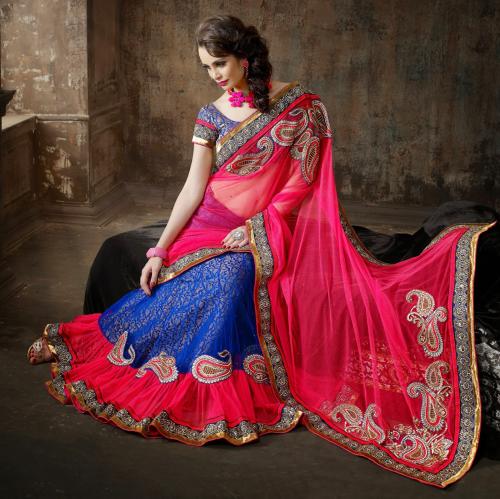
Saree is the
most elegant cultural fabrics that defines the beauty of an Indian Woman. In
India Saree is not just using as formal every day. It's also quite useful
fabrics that use at festivals, and special occasions. There are lots of
designs, Colors and patterns of Saree that every woman use according to her
requirement. By the Indian culture formally ladies use the Saree after getting
married. Its wearing process is also different from the different regions like
Gujarati, Marathi, South, West, Rajasthani and many more. With the cultural
wearing patterns it has also lots types like Chikan, Banarasi, Tant, Jamdani,
Tanchoi, Shalu, Baluchari, Kantha, Ikat Silk & Cotton, Katan Sari, Chanderi,
Bandhani, Paithani, etc.
Generally
the length of Sarees do not more than 5 meters, but some sarees are also using
more than 5 meters as the requirement. The Saree has some important parts that
use for applying the finishing touches like Border, Laces, Pallu, Achkan, etc. when
the Saree is on the way of manufacture, the manufacturer’s caring about all the
parts and also for the Colors, Patterns and Designs. The Saree wears women
never hope about how to manufacturer. She just cares about just its patterns,
colors and designs. In this article you will understand the concept of Saree
Manufacture.
A Saree from
Rayne shape to Market is going lots of process. First of all it's extremely
woven on mechanical looms as well as made from synthetic fibers, for example,
Polyester, Nylon, or even Rayon. After making the Gray from Rayne it is going
for Bleaching and Dyeing in Jet dyeing machine. In dyeing machine when the raw
materials become the certain materials, its second process is for printing. In
printing machine fabrics got the designing with colors of printing. So as the
requirement of designs and colors the certain materials print.
And then it
is going for finishing. In finishing machine all the fabrics with the unwanted
colors and dusts were removed. So after printing the materials it needs for
finishing so the third process is finished. After finishing it is going for
washing. In washing all the unwanted printings, colors and dusts were washed
and the Saree will almost ready for selling in the market. Today when every
Indian women need her Saree more expensive so that they want it with the
diamond, gold, pearls, and other precious stones. So after finishing sarees are
going to the Embroidery Machine or every for Hand work crafting. So in the end
the Indian traditional wear “Saree” become ready.
Post Your Ad Here
Comments