Rocket Propulsion Systems: A Detailed Overview On Current and Future Potentials
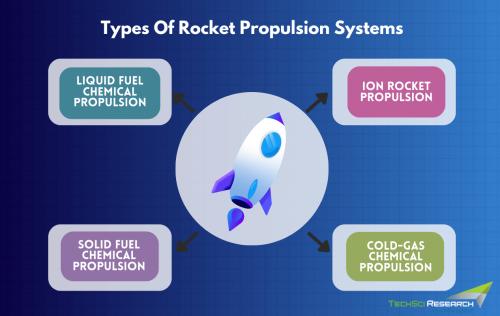
Rocket propulsion systems are the muscle and heart behind human exploration of space, enabling spacecrafts to overcome Earth's gravity and journey into outer space. These systems harness the principles of Newtonian physics, particularly his third law of motion, stating that for every action, there is an equal and opposite reaction. In the principles, rocket propulsion involves expelling mass at high velocity in one direction to generate thrust in the opposite direction, propelling the spacecraft forward. The most common type of rocket propulsion is chemical propulsion, which relies on the combustion of propellants like liquid hydrogen and liquid oxygen to produce hot gases that are expelled through a nozzle, generating thrust. This method powers most launch vehicles and spacecraft, including crewed missions to the International Space Station and robotic explorers sent to distant planets. Other than space rockets, rocket propulsion systems are integral to the functionality of missiles, providing the necessary thrust for propulsion. These systems are crucial for achieving high speeds of about 5,600 to 10,100 mph to 17,000 mph, along with maneuverability, allowing missiles to reach their intended targets effectively.
Rocket propulsion systems use various types of fuels, depending on the specific design and requirements of the rocket. The choice of fuel depends on factors such as efficiency, availability, storability, and environmental impact. For example, Liquid Hydrogen is considered a popular choice for rocket fuel as it is ideal for upper stages of rockets and deep space missions. Kerosene (RP-1) is commonly used with liquid nitrogen. Though it is less efficient than liquid nitrogen, it offers higher energy density, making it easier to handle. Other fuel forms used in rocket propulsion systems include Liquid Oxygen, Methane, Solid Propellants, etc.
According to TechSci Research report “Propulsion Systems Market – Global Industry Size, Share, Trends, Opportunity, and Forecast, Segmented By Type (Air Breathing Engines, Non-Air Breathing Engines, Electric Propulsion Engines), By Application (Aircraft, Spacecraft, Missiles, Unmanned Aerial Vehicles), By Region, Competition 2018-2028F”, the global Propulsion Systems Market has valued at USD 293 Billion in 2022 and is anticipated to project robust growth in the forecast period with a CAGR of 6.48% through 2028. The global propulsion systems market is experiencing a substantial growth trajectory, driven by a multitude of factors. Advancements in technology, such as the development of innovative propulsion systems, have revolutionized the industry.
For More Information Visit: https://tinyurl.com/ys95y8y9
Post Your Ad Here
Comments