Practice management software usage type across developing countries
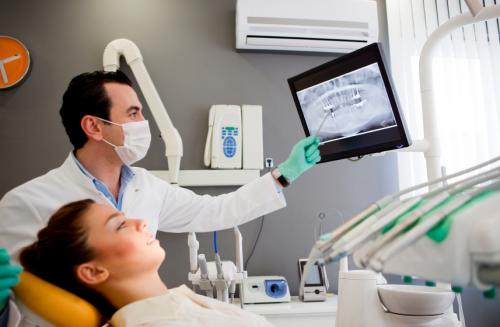
Both private and government physicians are now requiring
more support for their practice activities. In developing countries, various
types of medical software had been employed by private physicians to address
their practice challenges. But for their successful scalability, what is
required is better sustainable sources of funding, greater support for the
adoption of new technologies and better ways of evaluating impact as found in
developed countries. Hardware intrinsic security (HIS) technology has been developed
in developing countries more for transactional purposes on mini and mainframe
platforms. The recent HIS technology have the advantage of PC technology,
client-server models and telecommunications to achieve integration. In the
absence of governmental version of primary care software in many developing
countries, there is a tendency of family physicians using too many software
with different quality, which are often not compatible with each other.Some of
the most popular examples of medical PMS available in developing countries are
Care2X, OpenEMR, MirrorMed, Open Dental, and Technology Assisted Practice
Application Suite. Our systematic-review of 57 studies found that a wide
variety of PMS and EMR systems are used in developing countries; with their
overall effects although not so excellent, but the trends were on positive side
on the practice of physicians.
Key examples of
successful practice management software implementation
Studies in literature reveal many types of PMS system in
developing countries spanning eastern to the western part of the globe as seen
from studies considered in our systematic-review.
On Clinical practice analysis data; study of Hamadeh found
that, there was a good impact of automation on patient care, missing medical
records, appointment scheduling, referral rates, and repeat prescriptions after
using such technology.
Study of Ferrara had also found that; an open architecture
(based on the introduction of a middleware of common health care-specific
services) can not only reduce the effort necessary for allowing existing
systems to interwork, but also it established a functional and information
basis for the whole health organization
Study by Higashi et al. in the area of hospital-based cancer
registry in Japan by applying medical software found that this type of database
can not only provide an infrastructure for future clinical and health services
research, but also it can support quality measurement and improvement of cancer
care
Study of Nitsuwat and Paoin in Thailand had found that
International Classification of Diseases-10 (ICD-10) ontology in the ICD coding
software can facilitate successful implementation of ICD in developing
countries without any adequate number of competent ICD coders[
Qualitative study of Some et al. on women's perceptions of
home births in two medical districts of Burkina Faso using QSR International (A
qualitative research software developer based in Melbourne, Australia, with
offices in the United Kingdom, the United States and Japan), qualitative data
management software for managing their interviews were positive
In their study of a generic personal digital assistant
(PDA)-based data collection software-eSTEP by Yu et al. it was found that this
software directly interfaced with EpiData and also it significantly reduced
errors in data entry. This eSTEPS field trial proved that, PDA was more
efficient than paper for public health survey data collection
Study of Marchal and Kegels on HRM software found that they
could identify conditions for successful high commitment management of health
service managers; appropriate decision spaces for healthcare managers and a
pool of reasonable well-trained health workers for hospital sector after using
this technology
Study of Ali et al. had found that Information from the
model data management structure software helped others to construct reliable
databases for large-scale epidemiological studies in less developed countries
The study of Hovenga has found that the nursing profession
must develop its domain knowledge constraint models (archetypes open EHR)
collaboratively in an international context
Study of Hussain et al. found after using SPSS software in
his study that; a significant number of doctors were not aware that obstructive
sleep apnea could occur in nonobese individuals (33%), women (42%), and
children (39%)
Study of Maimbolwa et al. used EPI INFO, an epidemiological
statistical software package, to analyze the quantitative data and they found
that midwives had an opportunity to ensure that care given during childbirth is
clinically safe and culturally sensitive
Study of Liu and Liu on usage of geographic information
systems based software had shown that this kind of approach had practical
significance to flood fighting and control in developing countries like China
Improved technology of computer hardware and software
coupled with less cost and better access to this technology is now establishing
telemedicine as an acceptable standard practice as found in the study of Kurec,
creating a good scope of PMS
Study of Niinimäki and Forsström found that voluntary
evaluation practice can be an invaluable source of information in terms of
developing new software in medical e-prescribing
Automated computer-software-assisted Pap test ability to
reduce human resource costs and its adoption in a model using only biologists
and pathologists for screening was found to be more economically advantageous
as found in the study of Della Palma et al
The study by Liu et al. found that standardized wound
information management by standardized techniques of acquisition, transmission,
and storage of wound information after using wound Clinic Management Software can be used
widely in hospitals, primary medical institutions, surgical clinics of China
Study by Pawlik et al. revealed that only few commercial
software met the needs of an acute pain service, hence they developed and
implemented a program-Schmerzvisite, Medlinq, Hamburg, Germany in the acute
pain service of a University Hospital with positive results
In the study of Rubegni et al. (2009) they designed a
reliable hardware structure for future scaling. This software facilitated the
classification by pathology, patient and visit, with an advanced search option allowing
access to all images and the possibility of comparing two or more digital
images
A study in Oman which evaluated physician satisfaction with
the EMR system, found both positive impact in areas of communication, data
entry and retrieval, patient care, and reduction of medical errors as well as
negative aspects, such as loss of confidentiality of information and
software-related problems, which needs to be solved for their better
applicability.
[ Source : http://www.ncbi.nlm.nih.gov/pmc/articles/PMC4408703/
]
Post Your Ad Here
Comments