Popular Beef Jerky with New Technology
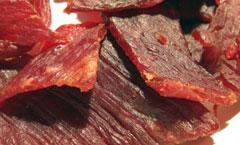
The term Jerky is used to describe meat (typically beef) that has been thinly sliced, cured and dried rapidly for purposes of preservation . the "Ch'arki", which means “to burn (meat)”.a name derived from the Quechuan language of the Incas. later evolved into what we now call jerky. The discovery of Jerky allowed humans to both store food for long periods of time and have an easily carried, dense source of nutrition to take with them on journeys. Jerky is both flavorful and compact and almost any meat (except pork) can be made into jerky. modern Jerky was born in South America .The beef jerky of today is often flavored with spices to accentuate the flavor. The nutritional composition of beef jerky provides several dietary benefits.
Beef jerky offers a high dose of the macronutrient protein. One ounce of beef jerky supplies 9.41 g of protein . Protein is the building block of the body's cells, and is one of the most important substances Proteins are derived from plant and animal sources, and are formed by amino acids. Animal protein, such as red meat(beef jerky), contains all nine essential amino acids, making beef jerky a high-quality protein. Beef jerky low in fat. is also free of saturated and trans fat, By comparison, 1 oz. of rib-eye steak contains just under 7 g of fat and 3 g of saturated fat. One ounce of beef jerky supplies 2.3 mg zinc, 21 percent of the recommended daily value. The 1.54 mg of iron found in this food satisfies 8.5 percent of the iron required daily by women and 19 percent of that required by men. contains vitamin K, thiamine, riboflavin, niacin, vitamin B-6, folic acid and vitamin B-12. Vitamins play a similar role to minerals, regulating normal functions such as digestion, tissue growth and respiration.
beef jerky is actually a healthy snack. It is a great for lunches, after work snacks, traveling and camping. Jerky also has a long shelf life, which makes it perfect for family preparedness kits. As the industrial age in America approached many companies saw the potential of producing jerky products in large quantities are concentrating more on all-natural ingredients and intriguing new flavors to meet consumer demand for healthier, better-tasting products and to attract new customers. Demand for new flavors and all-natural jerky will sustain industry growth. There are many popular flavors ranging from hot and spicy to tart and tangy. pepper flavor, sweet and sour teriyaki, honey bar-b-q and the list goes on. Today millions of people around the world now enjoy jerky products.
Jerky is a form of meat preservation in which fresh meat is dried to prevent it from spoiling .meat was boned and defatted, cut into slices and pounded thin, and rubbed with salt. Drying meat to its proper moisture content helps preserve it to keep the meat fresh for longer periods of time. The meat was then dry by dried (adjust the microwave meat drying equipment’s temperature at 160 Degree Celsius) or smoked over a fire. There are many variations on the theme and foods were influenced by the techniques developed in the evolution of jerky production. For example microwave techniques .Microwave meat drying Equipment is take microwave techniques widely used for the further processing of meat products, sterilizing and drying meat at the same time. jerky producers adopted new technology to meet the high sanitation and improving working conditions and efficiency.
2 people like it


Advertise on APSense
This advertising space is available.
Post Your Ad Here
Post Your Ad Here
Comments