Mughal Empire Brave Hearts Story
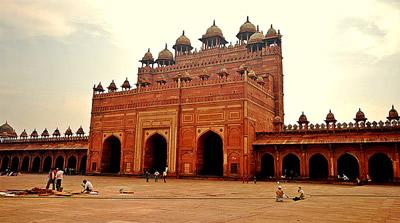
The Mughal Empire in India was founded by Babur, also known as
Zahir-ud-din Mohammed, born in 1482 in Ferghana in Central Asia, a descendant ofTimurlane. With Central Asia in turmoil in 1501, Babur fled
his native Ferghana and gained the great city of Samarkand, but he could not
hold it. He next captured Kabul in 1504, with the intention of creating his own
kingdom in Afghanistan.
However,
for Babur, Afghanistan was only the stepping stone to the greatest conquest of all: India. For seven centuries, India had
been the ultimate prize for all Muslim conquerors from Central Asia, and Babur shared that dream.
This is
best Brave
Hearts Stories for Mughal Empire In 1505, Babur staged his first raid into
northern India, then controlled by Sikander, one of the Lodi dynasty of Muslim sultans in Delhi. The Lodi dynastyhad also come to India from Afghanistan. Surprisingly, Sikander took no real action against
Babur’s incursion, a fact that was not lost on Babur in the future
The
troublesome Afghan tribes delayed Babur’s plans until 1526, when he invaded
India in force. He met the Lodi sultan Ibrahim outside Delhi at the Battleof
Panipat. Although Babur commanded only 12,000 men and Ibrahim about 100,000 and
1,000 elephants, Babur used his men well, armed with matchlock muskets and
cannon, and won the battle. The Lodi forces were defeated and Ibrahim killed.
Establishing his capital in Delhi, Babur then conquered most of northern India,
establishing the Mughal (Mogul, Moghul) Empire.
Babur
died in 1530 and his son Humayun succeeded
him as the second Mughal emperor. However within 10 years Humayun lost his
empire. He fled to Persia, then ruled by the Safavid dynasty. This time of exile instilled in Humayun and his
son a profound respect for Persian ways so that when they conquered India again
their rule was influenced by Persian culture. Persian would become the official
language for Mughal India.
In 1555,
Humayun raised another army in Persia with the support of Persian shah Tahmasp
I and set out to reconquer his kingdom from Sher Shah, who now ruled in
northern India. By August 1555, he had reentered Delhi in triumph but died in
1556. His son Akbar, then only 13, took power in 1556.
But Akbar
won a decisive victory at the Second Battle of Panipat and became the padishah
and undisputed ruler of the realm. Having crushed his Afghan and Hindu foes at
Panipat, Akbar moved to consolidate his rule of Afghanistan and northern India.
Akbar
began to implement a program of cooptation with his Hindu subjects to neutralize the threat of a Hindu uprising against his rule. He
married a Hindu princess and his son and successor Jahangir was born of this marriage.
Hindus
were invited to join the bureaucracy that governed his empire and became an
important part of Mughal administration. Akbar wisely allowed the Indian
princely states a large degree of autonomy so long as they recognized him as
their padishah.
[sources : http://epicworldhistory.blogspot.in/2012/05/mughal-empire.html]
Post Your Ad Here
Comments