Marine Engines Market Size - Growth, Future Prospects, and Competitive Analysis 2027
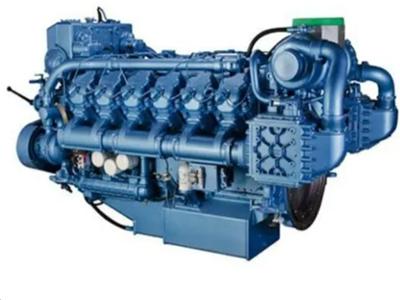
The latest market report published by Credence Research, Inc. The Global Marine Engines Market By Power Range (Up to 1,000 HP, From 1,001 to 5,000 HP, From 5,001 to 10,000 HP, From 10,001 to 20,000 HP and Above 20000 HP), By Vessel Type (Commercial Vessel, Offshore Vessel and Others), By Fuel Type (Heavy Fuel Oil, Intermediate Fuel Oil, Marine Diesel Oil, Marine Gas Oil, Hybrid), By Engine Type (Propulsion Engine and Auxiliary Engine), By Number of Cycles (Two Stroke Engines and Four Stroke Engines) – Growth, Future Prospects, and Competitive Analysis, 2019 – 2027
The global marine engines market plays a pivotal role in the maritime industry, powering vessels that transport goods and people across the world's oceans. These engines are the heartbeat of ships, enabling them to navigate the seas efficiently and reliably. As the industry continues to evolve, it is essential to explore the key trends and factors shaping the marine engines market.
Market Size and Growth
The marine engines market has experienced steady growth over the years, driven by increasing global trade, rising demand for energy-efficient engines, and the need to reduce emissions. According to industry reports, the market is expected to reach a valuation of over $13 billion by 2025, with a compound annual growth rate (CAGR) of around 4% from 2020 to 2025.
Environmental Concerns
One of the most significant trends in the marine engines market is the growing emphasis on environmental sustainability. Stricter regulations aimed at reducing emissions of pollutants like sulfur oxides (SOx) and nitrogen oxides (NOx) have led to the development of cleaner and more fuel-efficient engines. Manufacturers are investing in research and development to produce engines that meet these stringent requirements, thus reducing the environmental footprint of maritime transportation.
Browse the Full Report: https://www.credenceresearch.com/report/marine-engines-market
LNG-Powered Engines
In response to environmental concerns, liquefied natural gas (LNG) has emerged as a promising alternative fuel for marine engines. LNG-powered engines produce fewer emissions than traditional diesel engines and are becoming increasingly popular in the shipping industry. LNG bunkering infrastructure is also expanding, supporting the adoption of LNG as a marine fuel.
Hybrid and Electric Propulsion
The marine industry is gradually moving towards hybrid and electric propulsion systems. While traditional engines will continue to dominate the market, the adoption of hybrid and electric technologies is on the rise, especially for smaller vessels and ferries. These systems not only reduce emissions but also offer quieter and more efficient operation.
Digitalization and Connectivity
Digitalization and connectivity are transforming the marine engines market. Manufacturers are incorporating advanced sensors and data analytics to monitor engine performance in real-time, enabling predictive maintenance and optimizing fuel efficiency. This digital transformation enhances the reliability and safety of marine engines, reducing downtime and operational costs for shipowners.
Global Trade and Fleet Expansion
The growth of global trade continues to drive the demand for marine engines. The expansion of shipping fleets, particularly in emerging markets, is propelling the market forward. Additionally, the rise of e-commerce and the need for fast and efficient logistics are increasing the demand for larger and more powerful marine engines to transport goods across the world.
Conclusion
The marine engines market is evolving in response to environmental concerns, technological advancements, and the demands of a growing global economy. Manufacturers are investing in cleaner and more efficient engine technologies, and the industry as a whole is becoming more environmentally responsible. As the maritime sector continues to navigate these changes, the marine engines market is poised for sustained growth and innovation in the years ahead, ensuring that ships remain the lifeblood of global trade while minimizing their impact on the environment.
List of Companies Covered:
Some of the major players profiled in the report include MAN SE, Hyundai Heavy Industries Co., Ltd., GE Transportation, Anglo Belgian Corporation NV, Shanghai Diesel Engine Co., Ltd., The Volvo Group, Caterpillar Inc., Cummins, DEUTZ AG, Wartsila Oyj Abp, John Deere, Kongsberg Maritime, Daihatsu Diesel Mfg. Co., Ltd., Brunswick Corporation, Mitsubishi Heavy Industries, Ltd., and others.
By Segmentation Type
By Engine Type
- Propulsion Engine
- Auxiliary Engine
By Power Range Type
- Up to 1,000 HP
- 1,001–5,000 HP
- 5,001–10,000 HP
- 10,001–20,000 HP
- Above 20,000 HP
By Type
- Two Stroke
- Four Stroke
By Fuel Type
- Heavy Fuel Oil
- Marine Diesel Oil
- Marine Gas Oil
- Others (LNG, LPG, hybrid fuels such as LNG-HFO, LNG-IFO, LNG-MDO, LNG-MDO-HFO, LNG-MGO, LNG-MGO-HFO, MGO-HFO, and nuclear fuel)
By Vessel Type
- Offshore Support Vessels
- Oil Tankers
- Bulk Carriers
- General Cargo
- Container Ships
- Product Tankers
- Tugs
- Others (Bunkering & fleet replenishment vessels, dredger, and landing crafts)
By Geography Type
- North America (U.S. and Rest of North America)
- Europe (U.K., Germany, France, and Rest of Europe)
- Asia Pacific (Japan, China, India, and Rest of Asia Pacific)
- Rest of World (Middle East & Africa (MEA), Latin America)
Contact Us:
Office No 3 Second Floor,
Abhilasha Bhawan, Pinto Park,
Gwalior [M.P]
474005 India
Phone: +91 6232 49 3207
Email: sales@credenceresearch.com
Visit: https://www.credenceresearch.com

Post Your Ad Here
Comments (1)
Henry James12
Best Investing Tips Worldwide
Hello! Read my Crypto Investing tips on my articles, images and Rev Pages. Thank you! Henry