Know About the Parts and Properties of Safety Footwear for Mens
Safety footwear for mens is designed for protecting the wearer from possible work hazards. There are various components that make up a pair of safety footwear. These components comprise soles, safety toe guards, electro static dissipating ratings, electrical hazard ratings, and metatarsal guards.
The reason behind developing safety footwear for mens and safety boot for womens is to protect health, prevent injuries, and save lives of workers involved in hazardous occupations or dangerous adventures. Protective footwear is recommended when one is working in areas where there are dangers of foot injuries due to objects piercing the soles, or due to rolling or falling objects. Safety toe guards have been incorporated in safety footwear with the aim of ultimately reducing the possible danger of foot injuries. The two fundamental requirements that all safety footwear must comprise are compression and impact. The toe must be having a minimum clearance within the toe area of the footwear of 16 / 32” for men’s safety shoes and 15 / 32” for safety boot for womens.
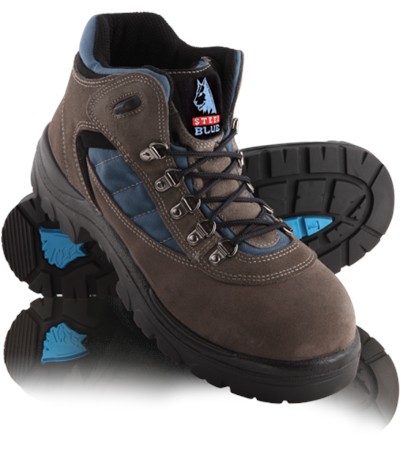
There are various kinds of safety toes like alloy toe, composite toe, steel toe, and titanium toe. Although, all these kinds of toes allow for superior protection, composite toes and steel toes are the most popular.
Metatarsal Guards: These guards protect the toe area and the upper foot from probable “drop” hazards. These are guards that can be attached to safety footwear both externally and internally. Each human foot has 26 bones. Most of these bones, present on the upper foot, are metatarsal bones. The name of the protective gear has originated from the name of these bones. Keeping each bone protected is essential so that a worker can function freely without any injury or pain.
EH or Electrical Hazard: Safety footwear designated for electrical hazards protects the wearer against hazardous open circuits up to 600 Volts. These kinds of footwear are appropriate for workers employed in factories or plants. Plant operation personnel are generally the most susceptible to electrical hazards. The construction of EH safety shoes consists of a sole and heel combination that is generally molded into a single piece with the upper boot without any metal or nails. These shoes should be able to endure applications of 14,000 V at 60 Hz for 60 seconds, with leakage in excess of 3.0 mA. These safety shoes can also protect a wearer against open circuits up to 600 Volts or less under drier conditions. However, these EH non-conductive footwear should never be worn in environments that need conductive footwear or near explosives.
The above-discussed information related to metatarsal guards, safety toe guards, and soles aims to educate and protect workers. When a worker knows about the kind of foot protection he needs, he would look to purchase and use safety footwear for his own good.
The reason behind developing safety footwear for mens and safety boot for womens is to protect health, prevent injuries, and save lives of workers involved in hazardous occupations or dangerous adventures. Protective footwear is recommended when one is working in areas where there are dangers of foot injuries due to objects piercing the soles, or due to rolling or falling objects. Safety toe guards have been incorporated in safety footwear with the aim of ultimately reducing the possible danger of foot injuries. The two fundamental requirements that all safety footwear must comprise are compression and impact. The toe must be having a minimum clearance within the toe area of the footwear of 16 / 32” for men’s safety shoes and 15 / 32” for safety boot for womens.
There are various kinds of safety toes like alloy toe, composite toe, steel toe, and titanium toe. Although, all these kinds of toes allow for superior protection, composite toes and steel toes are the most popular.
Metatarsal Guards: These guards protect the toe area and the upper foot from probable “drop” hazards. These are guards that can be attached to safety footwear both externally and internally. Each human foot has 26 bones. Most of these bones, present on the upper foot, are metatarsal bones. The name of the protective gear has originated from the name of these bones. Keeping each bone protected is essential so that a worker can function freely without any injury or pain.
EH or Electrical Hazard: Safety footwear designated for electrical hazards protects the wearer against hazardous open circuits up to 600 Volts. These kinds of footwear are appropriate for workers employed in factories or plants. Plant operation personnel are generally the most susceptible to electrical hazards. The construction of EH safety shoes consists of a sole and heel combination that is generally molded into a single piece with the upper boot without any metal or nails. These shoes should be able to endure applications of 14,000 V at 60 Hz for 60 seconds, with leakage in excess of 3.0 mA. These safety shoes can also protect a wearer against open circuits up to 600 Volts or less under drier conditions. However, these EH non-conductive footwear should never be worn in environments that need conductive footwear or near explosives.
The above-discussed information related to metatarsal guards, safety toe guards, and soles aims to educate and protect workers. When a worker knows about the kind of foot protection he needs, he would look to purchase and use safety footwear for his own good.
Advertise on APSense
This advertising space is available.
Post Your Ad Here
Post Your Ad Here
Comments