JulianConstruction.com: Bolting Mudsills to a Cement Foundation
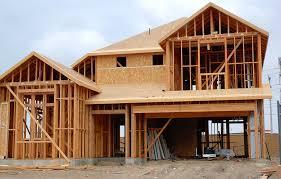
Do you know if your house is bolted to the foundation? Bolting is a type of seismic retrofitting that secures a home’s mudsill to its concrete foundation. Mudsill is the horizontal wood that sits on top of the foundation. It is the bottom of an exterior wall that connects the frame of the house to the footing.
Mudsills that aren’t connected to the foundation
(or poorly connected) will start to move during a quake, along with the walls
they are attached to. This motion can cause gas lines to break and electrical
wires to pull out. Floors can also be damaged. If the shaking is severe, the
entire building may end up collapsing.
When the mudsill is properly anchor bolted to the
concrete, it prevents the home from slipping and sliding during seismic
activity.
Bolting a home to its foundation became a Uniform
Building Code requirement in 1949. However, it took almost 10 years for local
government to implement the code. Consequently, most homes built before 1960
have not been bolted to their foundations. Without bolting, an earthquake can
shake the home off of its foundation.
You can check to see if your home’s mudsill has
been bolted by going into your crawl space or basement and looking for thick
bolts across the top of the sill. You should see bolts every 4 to 6 feet. There
should also be steel anchor plates connecting the edge of the sill to the
foundation’s side.
If you find any rusted bolts, they will need to be
replaced. Rusted bolts are more common in moisture-prone areas.
Also look for recessed bolts. When the foundation
is poured and bolts aren’t sticking up high enough, the mudsill around the bolt
needs to be chiseled to get the nut on. This can make it difficult to tighten
the nuts and virtually impossible for any anchor plates to be installed.
Recessed bolts should be replaced.
An important point regarding bolting is the depth
of penetration into the concrete. There are minimum and standard depth
requirements depending on the type of anchor bolts being used. A foundation
contractor can determine if bolts are at the proper depth.
Replacing bolts can be difficult because of the
tight space. A foundation repair expert will know which bolts need to be
replaced in addition to having all of the tools that will be needed to get the
job done right.
Bolting is only one part of the retrofitting
process. Even homes that are bolted can suffer severe damage from a quake if
the cripple walls haven’t been braced properly. The cripple wall is the short
wall between the first floor and the foundation. Cripple walls need
reinforcement with sturdy materials like plywood. Stucco and wood siding does
not provide enough support for the walls.
The best way to find out if your home is properly
bolted, is to contact a foundation contractor, a specialist in this area, and
ask for a free inspection. Getting help from a foundation repair expert will
save you time, money and potential damage from the next big quake.
Julian De La Torre, expert in Los Angeles foundation inspection, repair & house bolting (Los Angeles) and founder of Julian Construction (http://www.julianconstruction.com) in Los Angeles, has inspected over 15,000 structures for building & safety and done more home foundation repair (Los Angeles) than anyone else (http://julianconstruction.com/about/ ). See their video: https://www.youtube.com/watch?v=6I8j7dXzpj4
Post Your Ad Here
Comments