I Can Tow That Because I Tow My Boat
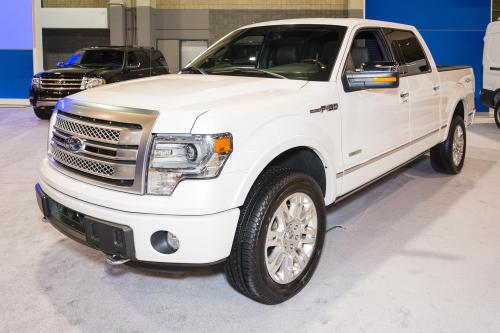
It might sound obvious, but many times people in Utah and elsewhere don’t understand that just because you can tow your boat, that doesn’t mean you can put something like a tractor on the same truck. When it comes to towing something, it is important to remember that not all trucks are engineered equally. In fact, be sure to take into account the width, length, engine size and vehicle weight when you are choosing to tow something, because, for example, not even all Ford F150 trucks of the same year are rated to tow the same amount of weight.
How much weight can your truck handle? Most of the time, your tow capacity can be found in your owners manual, but if you have lost your manual, contact a dealer in Utah or elsewhere in the Intermountain West.
Year-by-year, trucks are going to have a different towing weight limit. For example, Ford’s website shows how an F150 in 2006 had a tow capacity of 8,000 lbs, but the 2016 model can tow about 11,300 lbs. Another factor that contributes to how much weight your Ford F150 can handle is its gross vehicle weight, or GVW. If your GVW is 20,000 lbs and your truck weighs 5,000 lbs, then you have 15,000 lbs for tow weight; however, you also need to subtract the weight of people in the truck and anything in the truck bed.
Now that you understand how much weight your truck is able to handle, here are some other things to check to help ensure safe towing, whether you're in the mountains of Utah or the plains of Kansas.
There are two main connections to connect to your Ford F150 when you are towing. First is the tow ball. This is the primary connection between your truck and trailer. There are three main sizes of tow ball, so make sure you have the right size and that it’s latched properly to prevent accidents. The other connection is the safety chains. There is one on the left and one on the right. These should cross under the trailer tongue and hook near the ball on the opposite side. The next step is to check your lights and brakes. If you have electric brakes, they work through your light connection—so make sure your lights are connected before you drive. Finally, check your tire pressure to make sure you don’t have a flat and properly secure your load to prevent accidents.
Finally, there are several cautions to take when on the road. A truck like the Ford F150 is already wider and longer than many vehicles. But often when you connect to a trailer, your width and length increases even more, so make sure to give yourself more time to merge with traffic. This also means you need to mind your turns, especially in canyons like those you’d find in Utah. A final adjustment you should make is to your braking time. When you tow a trailer, you take longer to stop and start—so whether you are in Utah or Texas, give yourself plenty of room to prevent an accident.
Ryan Muir is an automative writer for Fusion 360, an SEO and content marketing agency. Information provided by Henry Day Ford. Follow on Twitter.
Post Your Ad Here
Comments