How to Profit From Solar Energy
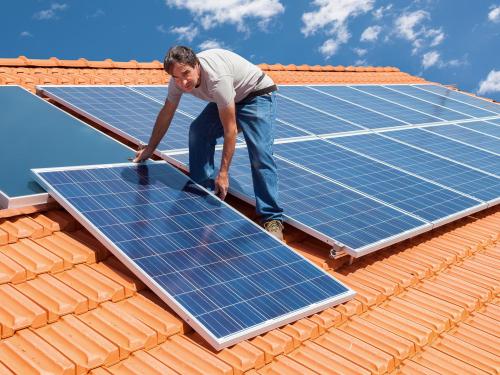
Once considered a costly endeavor only undertaken by particularly well-off tree-hugging environmentalists, recent advancements in solar power technology have made solar energy a viable option for both businesses and consumers.
While renewable energy sources are more in demand when gas prices are high, with the availability of tax credits, payment plans and solar power loans, solar can be profitable even in the midst of low oil prices.
The U.S. Department of Energy (DEA) estimates today’s solar generation costs roughly 13 cents per kilowatt-hour—around 14 percent more expensive than fossil fuel-powered electricity. However, the cost of solar is experiencing an exponential downfall, thanks to material advancements, increased energy efficiency and a market surplus of Chinese-produced photovoltaic panels.
In addition, the initial cost of solar is significantly offset by state and federal-level subsidies and grants, solar power loans and other financing options. Net metering allows consumers to offset the cost of utilities by feeding energy into the grid. If a home photovoltaic system generates more electricity than is used, consumers can actually profit from their energy bills.
Particularly efficient solar installations can also generate revenue by selling energy back to the utility provider. Selling solar energy can be especially profitable by taking advantage of time-of-day payment structures where electricity is in high demand during the day.
While in most instances, this practice will merely reduce one’s overall utility costs, users in some areas can net a profit when their solar panels produce excess energy. Conversely, when solar installations stop producing at night, the consumer can buy energy back from the grid at a lower rate.
Even for consumers who are less interested in the finer dynamics of energy supply and demand, photovoltaic installations can still reap a profit over time, with little effort. Studies show the average solar system pays for itself within seven to 15 years and in as little as two to four years in states with higher incentives and options for solar power loans.
On average, solar installations return two to four times their cost in saved electricity bills. And for consumers concerned about the resale value of their home, not to worry: in many states, solar panels are property-tax exempt. This means that adding a solar installation to your yard or roof could actually increase the value of your home, without costing anything in property taxes.
If the multitude of tax incentives and solar power loans aren’t enough to convince you to install solar panels on your own house, there’s always the stock market. Most large solar power manufacturers and installers have had a great year so far, seeing double-digit returns on investment.
What are you waiting for? Consider photovoltaic installations and solar power loans, and don’t let the sun set on the chance for serious solar power profits.
Natalie Benoy is a renewable energy writer for Fusion 360, an SEO and content marketing agency. Information provided by Elements Capital Group. Follow on Twitter.
Post Your Ad Here
Comments