How to Prevent the Dangers of Scuba Diving
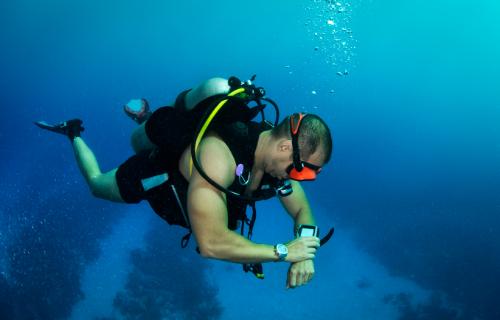 Scuba diving is one of the most exciting and popular activities nowadays. People worldwide are eager to scuba dive to admire the mysterious world hidden under the water, untouched by humans.
Like all extreme activities, scuba diving also has its difficulties and dangers. So, I think that before diving into the deep mysterious waters, you should learn what dangers you may run into and how you can avoid and overcome them.
It is worth stressing that scuba diving today has become much safer than it was a dozen years ago. Both the diving equipment and conditions have greatly improved, making your dive much more enjoyable and secure. However, you still may come across dangers while diving. I want to point out some of them.
Let me first speak about the dangers that are connected with the marine world. Some people think that sharks are the main danger of all scuba divers. However, this point of view is not correct. Shark attacks on scuba divers are extremely rare. If the divers dive into the safe areas, no shark attacks will take place.
If you are a starter, take an experienced buddy with you for the first several times. They are already familiar with aggressive animals and poisonous plants and will protect you from such dangers.
Now, look. You have probably climbed up a mountain, haven’t you? You have perhaps felt that while climbing up the hill, it becomes more difficult to breathe because the air is denser up there. Or why do the astronauts wear their special equipment? Because there is absolutely no pressure in space and people can’t breathe at all.
Now the same is with the underwater. As the water is denser than the air, the deeper you go into it, the more pressure you experience. This very thing causes barotrauma. Barotrauma under the water may lead to important consequences. Your ears, lungs, chest cavity, stomach and other organs that contain air may be affected by barotrauma.
The speed of descending and ascending should be taken into serious consideration. If you descend and ascend too fast, your lungs may get over-expanded, which will lead to serious health problems, disabilities, even to death. Because of a fluid build-up in the lungs, you may suffer from pneumonia. Consider these things before diving into the water.
Decompression sickness is also a common thing among divers. This is again connected with the descending and ascending speed. If you descend and ascend too quickly, bubbles will be formed in your blood, which will lead you to decompression sickness. Middle-aged divers come across this problem more often than young ones. The young organisms quickly adapt to these changes.
This type of injury is called nitrogen narcosis. The most dangerous thing in nitrogen narcosis is that you often do not feel that you are being intoxicated. You feel very well: not a single sign of weakness. Everything happens within a second, and the diver becomes incapable of doing anything.
Fortunately, nitrogen narcosis is not as common as barotrauma or decompression sickness, as not many divers decide on such a deep dive.
There are also many other dangers you may come across in the course of your dive. Before starting to scuba dive, I advise you to learn as much about underwater life as you can. Diving Picks will help you and greatly find solutions in difficult situations.
As you see, the dangers of scuba diving are primarily controllable. As I have already mentioned, it has never been safer to scuba dive than it is today. The only thing you should do is to be a responsible diver by staying healthy, wearing a piece of safety equipment and reacting quickly in unpredictable situations.
Advertise on APSense
This advertising space is available.
Post Your Ad Here
Post Your Ad Here
Comments