How to Choose a Wedding Dress
Do
your research
Before
you even begin to look around, research gowns. You should always have a bit of
knowledge about dresses (and know some of the lingo) before you even set foot
into a bridal shop. There are also many bridal magazines that will provide a
ton of information, including Brides, Modern Bride, Bridal Guide, Wedding
Bells, etc. All of these magazines have websites, where you can find quick
information without paying for the magazine.
Decide
on a silhouette
Wedding
dresses are made in several different silhouettes. Before considering anything
else, know which type of gown will flatter your figure the best. Look at photos
of each type. You can browse wedding website message boards and member profiles
for photos of real women wearing gowns, rather than relying on professional
photos of models wearing them.
Ball
gowns have very full skirts and generally will look beautiful on any body type,
unless the bride is very short and small. In this case, it may be overwhelming
to her small frame. Ball gowns generally either have crinolines built in or a
slip you must wear to support the shape of the gown. Be advised that this extra
fabric can be heavy and bulky and will require extra care to wear.
A-lines
usually have a fitted bodice with a skirt that flares gently from the waist to
form an "A" shape. They generally work for everyone as well, and are
a terrific choice for someone who would like to hide lower body flaws, but does
not want a ball gown. A-lines are not as full as ball gowns.
Sheaths
flatter women with slim, balanced figures. They shouldn't be worn by brides who
dislike their figures. This gown will not hide any flaws. If you think your
thighs or butt are too big, you'll be miserable in this type of dress. Don't
try to pull it off because you found a gown you love in this style. You don't
want to risk being uncomfortable or self conscious on your wedding day, or
regretting your choice every time you look at wedding photos.
Empire
waist gowns have a skirt that falls from just below the breasts. Although
usually listed with various waistline types and not always considered a type of
silhouette, they are a wonderful choice for a casual, non-formal wedding, or
weddings in a tropical climate. They're usually made of light, flowing fabric.
They're also excellent for pregnant brides, because they provide extra room in
the waist, making them a comfortable choice. They also won't draw as much
attention to the belly as a dress with a lower waistline would.
Envision
your wedding
Picture
yourself on your wedding day. What are you wearing? What silhouette is your
gown? What fabric? Is it embroidered or beaded? What color is it? With so many
choices for the dress, it can be overwhelming to look through hundreds or
thousands of them. Some brides have said that after looking through racks and
racks of dresses, they all begin to look the same. So before you even set out
to try them on, envision your wedding day and how your dress looks, and jot
down a list of things that describe the dress of your daydreams. You don't have
to know all the wedding dress terms. Just write down a description of the gown
you're envisioning. Example list: "princessy, satin, some shade of white
but not pure white, spaghetti straps a-line wedding
dresses uk."
Consider
the circumstances
A
wide variety of factors can affect what makes a particular dress appropriate to
the occasion.
Formal
ceremonies usually call for floor length gowns and long trains, while informal
ceremonies (especially destination weddings) are a terrific place to wear a
shorter gown without a train at all (or a "sweep" train, which just
barely brushes the floor). Another example: in some cases, strapless gowns are
considered inappropriate for very formal ceremonies.
If
you're getting married in the winter, you may not want to be a very light, thin
fabric unless you plan to be inside the entire time. If you're having a beach
wedding in the middle of July, you may not want to wear a heavy fabric like
duchess satin.
While
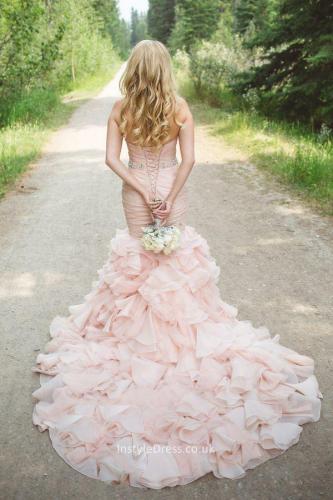
the most traditional ceremonies will call for a white gown, in many cases,
wedding dresses don't have to be pure white anymore! Many women choose dress
colors that best complement their skin tones, ranging from diamond white to
ivory to champagne to actual colors (pink, blue, red). Pick the color you feel
most beautiful in.
Decide
on a budget
When
deciding on your budget, you don't need to set a very specific price. Just make
it a general range, such as $500 - $1000, or even $1000 - $2000. You can always
break this rule later if you're able to and really want to, but it helps to
have a general range. Some experts suggest devoting 10% of the overall wedding
budget to the bride's attire. Just be sure to remember that "attire"
includes not just the gown itself, but the other stuff: veil, shoes, slip,
jewelry, gloves, etc. All of these things are optional, of course (except for
the slip, which is usually necessary to keep the dress from going between your
legs when you walk). But you'll have to factor in the price of whatever items you
decide to wear with your gown.
Post Your Ad Here
Comments