Holy Rosary Beads
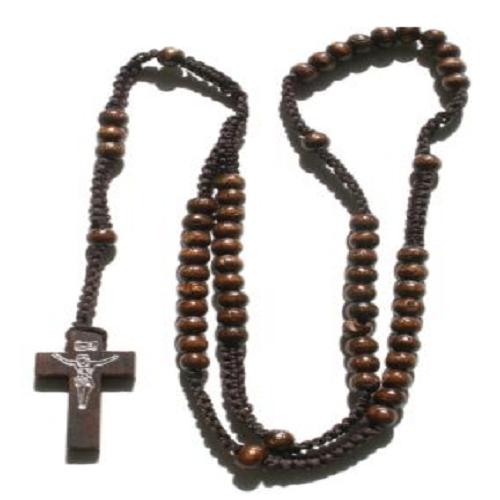
For many religious people, the use of Holy rosary beads forms part of their daily routine, using these prayer beads to physically count the component prayers said daily by moving their fingers along the beads as each prayer is recited. The plus side to not having to mentally keep track of prayers allows the mind to focus fully on the meditation, rather than the prayer count. Set up in sets of ten Hail Marys, these beads aid people towards saying their prayers in the appropriate sequence.
The use of the Holy rosary beads has been a long-standing custom, established by Pope Pius V, who during the 16th century, categorized the mysteries into the three main sets that is still in use today: The Joyful Mysteries, the Sorrowful Mysteries, and the Glorious Mysteries.Along with these identified mysteries, Pope John Paul II added another category in 2002, called the Luminous Mysteries. This has brought the number of mysteries to a total of twenty.
The origin of the use of these prayer beads are not very clear and are subject to debate. Many believes that it comes from the prayer rope which has been in use since the early 13th century. Despite the debate that is continuing, one thing that we know is that the naming originated from the Latin word that means “Crown of Roses”. The rose, which has been seen by many as the queen of all flowers are used, symbolising a true devotion and importance.
There is no set material that should be used when making these Holy rosary beads. Although majority of the beads today are made from glass, wood or plastic, materials such as semi-precious stones that includes agate, coral and epidote to just name a few, bone, or crushed flowers was commonly used in the past. The old silk or thread that has been used to string the beads together has also been replaced by the modern day beads that is made as a series of chain-linked objects and that requires no additional string or thread.
While the use of Holy rosary beads for counting prayers are the used custom, other counting devices such as ones fingers or mental recollection may be used by some during their meditation. Regardless of the method used, the focus should remain on the importance of the meditation and contemplation. The need for focus, worship, respect and the purity of your intention is what makes your prayer session successful.
Although a priest might prescribe praying the rosary as a form of repentance after a confession session, reciting the rosary is meant as less of a punishment and more of a spiritual reflection on the growth the person has experienced by learning from past sins.
Post Your Ad Here
Comments